

About Pellet3D
Pellet3D works with South African workshops and factories that need large-format 3D printing built around pellet extrusion rather than filament. From Midrand, our team handles machine supply, installation, operator training and aftercare for furniture, mould and production tooling work.
What our team handles
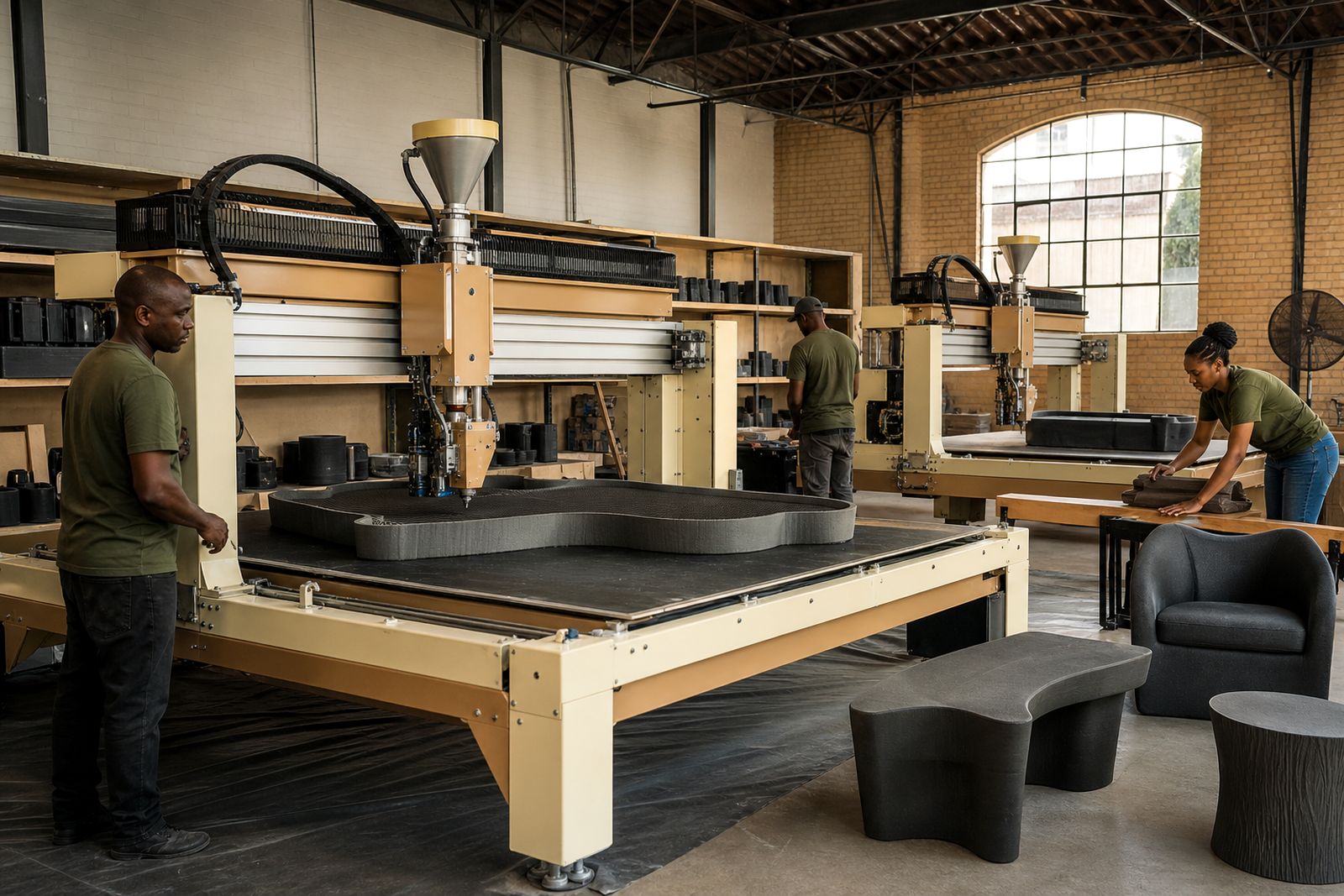
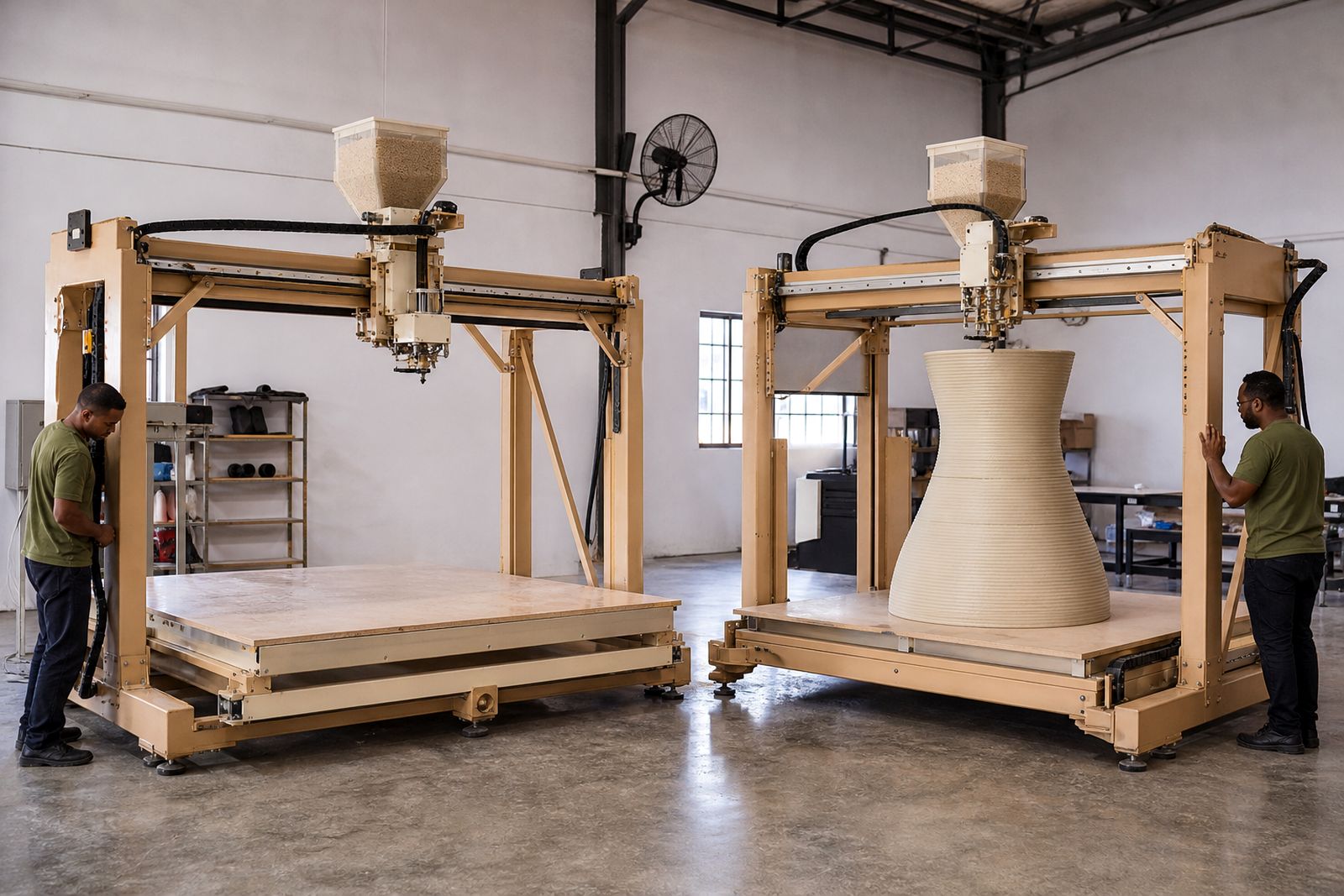
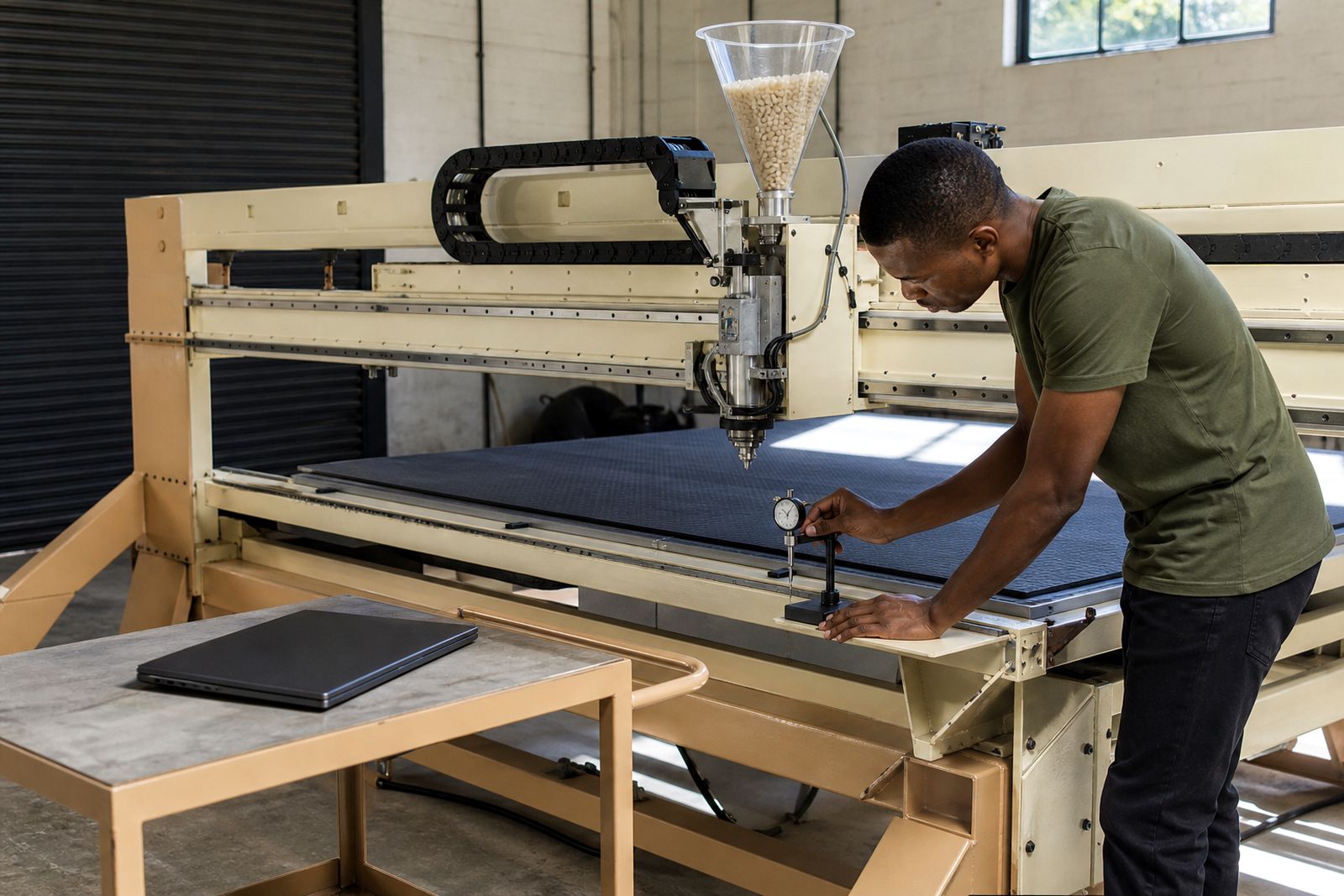
Pellet3D is focused on one part of additive manufacturing: pellet-fed large-format 3D printers for real production environments. We supply machines that extrude plastic granules through a screw extruder, then support the practical work around them, including machine selection, site planning, material guidance, slicing input, commissioning and service. The aim is not to sell a box and disappear. It is to place equipment that suits the work, the floor space and the operators who will run it every week.
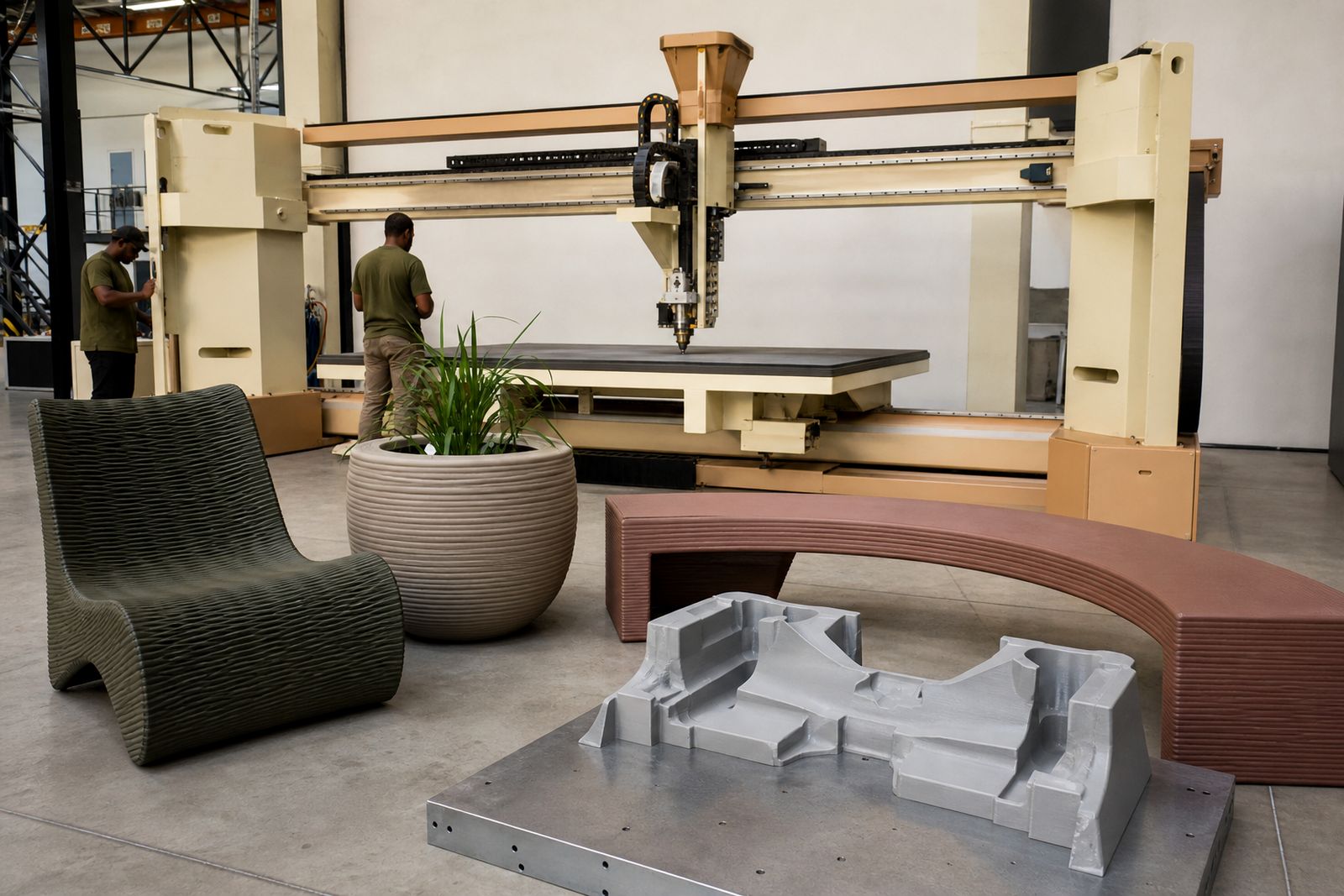
Our work is centred on large parts where pellet printing starts to make sense in both output and running cost. That includes furniture pieces, display items, moulds, casting patterns, thermoforming tools and layup forms. We do not sell filament printers, we do not run a volume print shop, and we do not develop furniture ranges for clients. Our part is the machinery, the process and the support around it.
- Pellet-fed printers for large-format work
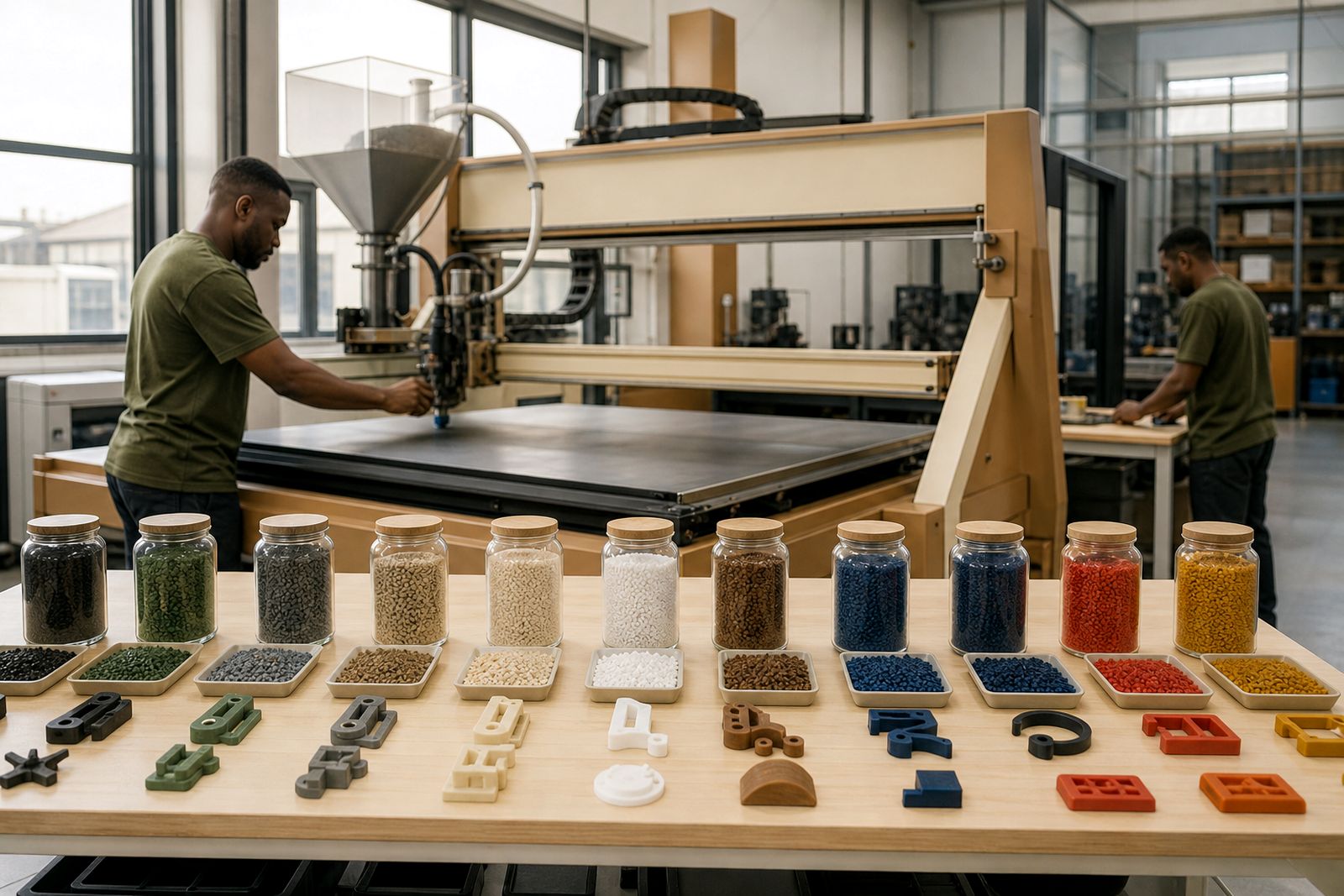
- Guidance on materials such as PLA, PETG, ABS, PP and fibre-filled grades
- Advice on nozzle choice, slicing settings and print strategy
- Installation, operator training, service visits and spares support
The clients we work with
The clients that approach Pellet3D are usually already making things at a meaningful scale. Some are furniture studios moving from prototypes to repeatable production. Some are manufacturing plants that need patterns, fixtures or moulds produced in-house. Others are fabricators and display teams looking for a practical route to large one-off pieces without building every shape by hand.
Because pellet systems behave differently from small filament machines, most enquiries start with questions about application fit rather than just machine size. A furniture workshop may need clean external surfaces and repeatable wall thickness. A mould shop may care more about stiffness, post-machining allowance and thermal behaviour. A composites team may focus on tool geometry and print orientation. Those differences matter, and they shape the recommendation.
- Furniture makers producing chairs, benches, tables and planters
- Tooling and mould teams making patterns and forming tools
- Display and architectural fabricators building large visual pieces
- Factories adding additive capacity for jigs, forms or development parts
How the work is shared across the team
Projects move through a few roles, each with a clear job. The sales lead deals with the first brief and checks whether pellet printing suits the parts being planned. The applications specialist looks at geometry, materials and print strategy, including large-nozzle settings and likely finishing steps. The installation technician handles delivery planning, machine positioning, setup and the first production checks on site. For support after handover, the service technician and parts coordinator deal with wear items, maintenance planning and fault finding.
That division keeps decisions grounded. Technical questions stay with technical staff and site issues are handled by people who have actually worked around machine placement, extraction, pellet handling and operator workflow. It also means a client is not pushed toward a setup that looks good on paper but feels awkward on the factory floor. In practice, a lot of value sits in these small calls, like choosing the right pellet feed arrangement or avoiding a material path that will absorb too much moisture in coastal conditions.
Our Midrand base and national coverage
Pellet3D operates from Midrand between Johannesburg and Pretoria, which gives us good reach into Gauteng industry while keeping the N1 corridor close for travel and freight coordination. Our premises are set up for machine discussions, technical planning and support coordination rather than walk-in retail. Clients usually arrive with drawings, part sizes, material questions or a rough production target, and that gives us enough to start narrowing the options.
From Midrand, we install and support equipment in every province. Site conditions differ more than many people expect. Inland workshops may mainly need stable material storage and floor space planning. Coastal sites often need stricter pellet drying discipline because humidity can show up quickly in print quality, layer bonding and surface finish. Factory power, access for offloading and municipal rules for general industrial occupancy also need checking before a machine is placed, even when the site looks straightforward at first glance.
From first brief to running production
A typical job starts when a client sends details through our contact form. The first step is to understand the intended parts, the materials being considered and how the machine will fit into existing production. We ask about part types, expected print frequency, finishing methods, available floor space and operator experience. If the application is better served by another route we say so plainly, because pellet systems are at their best on the right kind of work.
Once the machine route is clear, we help map the practical setup. That covers printer class, pellet handling, nozzle approach, expected maintenance points and the workflow around slicing and print preparation. Installation includes positioning, setup, basic calibration and operator instruction. Training is not just a button-by-button walkthrough. It covers material behaviour, moisture control, print path choices, shutdown routines and the habits that reduce wasted pellets and failed large parts which can get expensive quickly.
- Application review and machine matching
- Site planning for access, placement and operating space
- Material and slicing guidance for large-nozzle production
- Commissioning, operator training and handover on site
Aftercare that stays practical
Support after installation matters more on large-format equipment than many buyers expect. A machine may be sound mechanically and still produce poor parts if pellets are stored badly, drying is inconsistent or operators change settings without understanding the knock-on effect. Our aftercare covers service input, replacement parts and technical guidance tied to actual production use, not generic advice copied from small printer setups.
We also help clients work through the normal changes that happen after a machine lands on the floor. A team may start on PLA for development, then move to PETG or PP once the job settles. A mould application may need a different nozzle strategy than a furniture shell. Surface finish targets can shift after the first articles are assessed. Those adjustments are part of the process, and the support around them needs to be steady and realistic, not flashy. If you are assessing pellet-fed large-format printing for a workshop or factory, our contact form is the right place to start the conversation.
Questions we get asked
Do you only work with furniture manufacturers?
No. We work with furniture makers, tooling teams, display fabricators and factories that need large printed parts, moulds, patterns or production aids.
Can Pellet3D help with materials and slicing?
Yes. We advise on pellet material choices, drying needs, screw-extrusion considerations and slicing settings suited to large nozzles and large parts.
Do you offer printing as a production service?
No. Pellet3D supplies, installs and supports pellet-fed large-format 3D printers rather than running contract printing at volume.
Also worth a look
Tell us about the job
Send sizes, materials and where you are through our contact form, and we will come back with the practical options.
Open the contact form