

Pellet materials
Pellet-fed large-format 3D printing opens up a wider material range than many filament systems used for smaller parts. This page gives a practical view of PLA, PETG, ABS, PP and fibre-filled grades so you can match the pellet to the part, the finish and the workshop conditions.
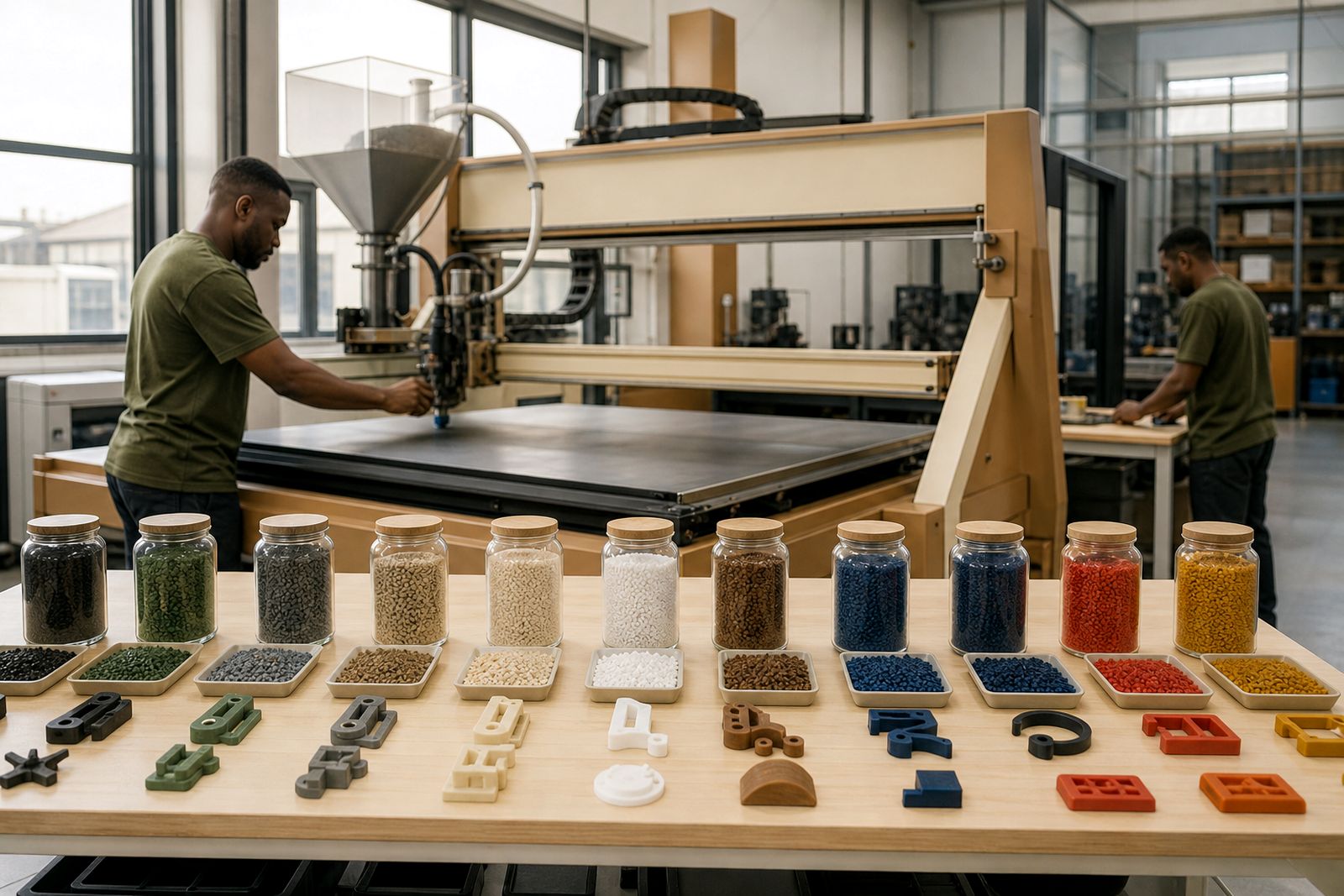
Materials that suit big printed parts
Pellet systems process plastic granules directly through a screw extruder, which changes the way material selection works on large parts. When you are printing a bench, planter, casting pattern or thermoforming mould, the material affects layer bonding, stiffness, warping, surface finish and how the part behaves once it leaves the machine.
For most South African workshops, the choice is not about finding a single best pellet. It is about balancing print stability, ambient temperature, post-processing and the end use. A studio making display pieces may lean one way, while a factory building tooling for repeated use may need something quite different.
- PLA is often chosen for easier processing and clean dimensional behaviour.
- PETG suits many general-purpose parts where toughness matters.
- ABS is useful where higher heat resistance is needed.
- PP can be a good fit for chemical resistance and lower weight.
- Fibre-filled grades help when added stiffness is more important than cosmetic finish.
Start with the job, not the pellet name
A large-format print should be specified from the application backwards. Furniture, moulds and display structures all put different demands on a machine and on the polymer. That is why we look at geometry, wall thickness, expected loads, outdoor exposure and finishing plans before pointing a workshop toward one grade or another.
Large nozzles and thicker bead widths can make a material look forgiving during printing, but big parts still store stress. A chair shell, for example, needs a different approach from a foundry pattern. If the part must be sanded, coated or machined after printing, that also affects the choice. Some materials trim cleanly while others need more care around edges and corners.
We also consider local conditions. Midrand workshops may run in fairly steady indoor temperatures, while coastal sites deal with more humidity and some inland factories get hot by midday. Those practical details matter more than brochure claims, and they can save a lot of wasted pellets.
A practical comparison for common pellet grades
The list below is a good starting point when narrowing down material options for large parts.
- PLA: usually the easiest route for stable printing, patterns, prototypes, display items and indoor furniture components.
- PETG: a solid middle ground where you want better impact resistance and a part that handles workshop use well.
- ABS: often selected for tooling, mould-related work and parts that may see warmer service conditions.
- PP: worth considering for chemical resistance, lower density and applications where flexibility is acceptable.
- Fibre-filled pellets: best where stiffness and reduced movement are needed, though nozzle wear and surface texture need more attention.
There is no short-cut here. A pellet that behaves well on one geometry can be awkward on another, especially when spans get wider and print times get longer. We help clients compare likely print behaviour with the intended use instead of relying on generic material labels.
How workshop conditions change material choice
Pellet printing depends heavily on consistent material feed and moisture control. Some grades are more sensitive than others, and damp pellets can show up quickly in bead quality, surface marks and weak layer bonding. Drying and handling are therefore part of material selection, not something to think about later.
Another factor is machine setup. Screw speed, temperature profile, nozzle size and cooling strategy all affect the way a pellet grade runs. A material that looks ideal on paper may need a different slicing approach to hold corners, bridges and top surfaces on a large mould. That is one reason we advise on both materials and print settings together.
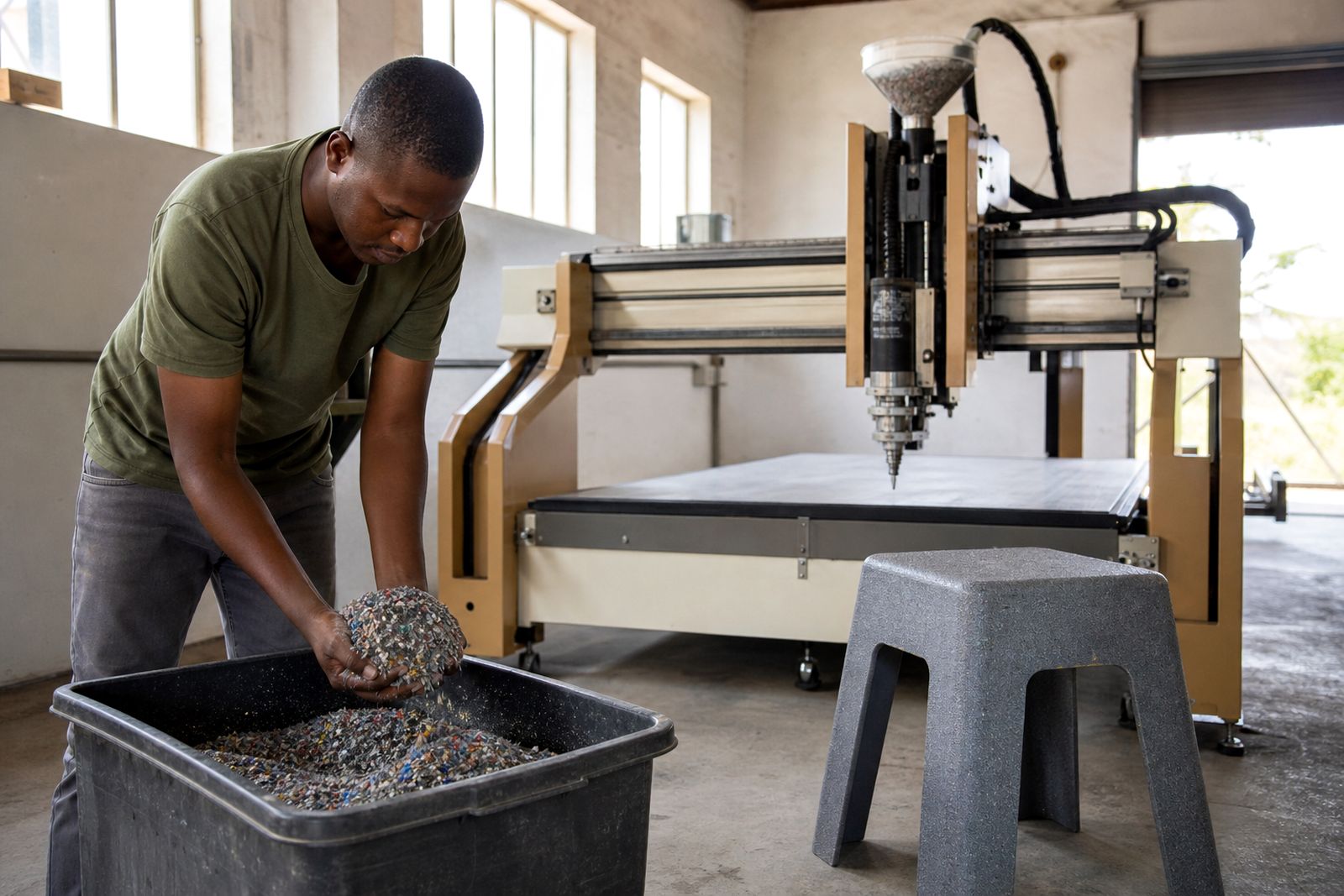
Where a workshop wants to trial recycled or regrind feedstock, the material route needs even more care. Consistency, contamination and moisture become more important, and some jobs are better candidates than others.
Furniture, moulds and architectural work need different priorities
Furniture parts are often judged on appearance as much as strength. For those jobs, the pellet needs to print predictably across long runs and leave a surface that can be finished without too much extra labour. Planters and display pieces may need similar visual control, but often with less concern about point loading.
Moulds and tooling bring another set of demands. Dimensional stability, heat behaviour and machinability move higher up the list. A thermoforming mould or composite layup tool may need a material that can take finishing and hold its shape over repeated cycles, while a casting pattern may be more about accuracy and surface preparation.
- Display pieces usually prioritise finish, manageable print behaviour and post-processing.
- Furniture often needs a balance of stiffness, impact resistance and appearance.
- Patterns and moulds tend to favour stability, heat tolerance and clean machining.
- Composite tools may call for fibre-filled grades where extra rigidity helps.
Choosing the next step for your factory or studio
If you are moving into pellet printing for the first time, it helps to shortlist two or three materials around the real production need rather than trying every option. A workshop making indoor furniture may start with PLA or PETG. A team focused on tooling may look first at ABS or a fibre-filled grade. Where chemical exposure or lower weight matters, PP deserves a proper look.
We supply, install and support pellet-fed large-format 3D printers for workshops and factories across South Africa, and we advise on material fit, slicing, site needs and operator training. If you want help narrowing the field, send the intended part type, approximate size, expected environment and any finishing steps through our contact form. That usually gives enough context to point you toward the right pellet family without wasting time on materials that do not suit the job.
What our Pellet 3D Printing customers say
Verified Google reviews
Questions we get asked
Which pellet material is best for large-format furniture parts?
It depends on the use and finish. PLA can be a good starting point for indoor furniture and display work, while PETG may suit parts that need more toughness. Where higher heat resistance or added stiffness matters, ABS or fibre-filled grades may be more suitable.
Can pellet printers run recycled or regrind material?
Some jobs can use recycled or regrind pellets, but consistency, moisture and contamination need careful control. The right choice depends on the part, the finish required and how stable the feedstock is from batch to batch.
Do all pellet materials need drying before printing?
Drying needs vary by material and storage conditions, but moisture control is a major part of dependable pellet printing. Wet pellets can affect extrusion quality, bonding and surface finish, especially on large parts with long print times.
Tell us about the job
Send sizes, materials and where you are through our contact form, and we will come back with the practical options.
Open the contact form