

Installation, training and service
Pellet3D handles site preparation, commissioning, operator training and ongoing service for pellet-fed large-format 3D printers. This support section helps workshops and factories match their needs to either installation and training or service and spares.
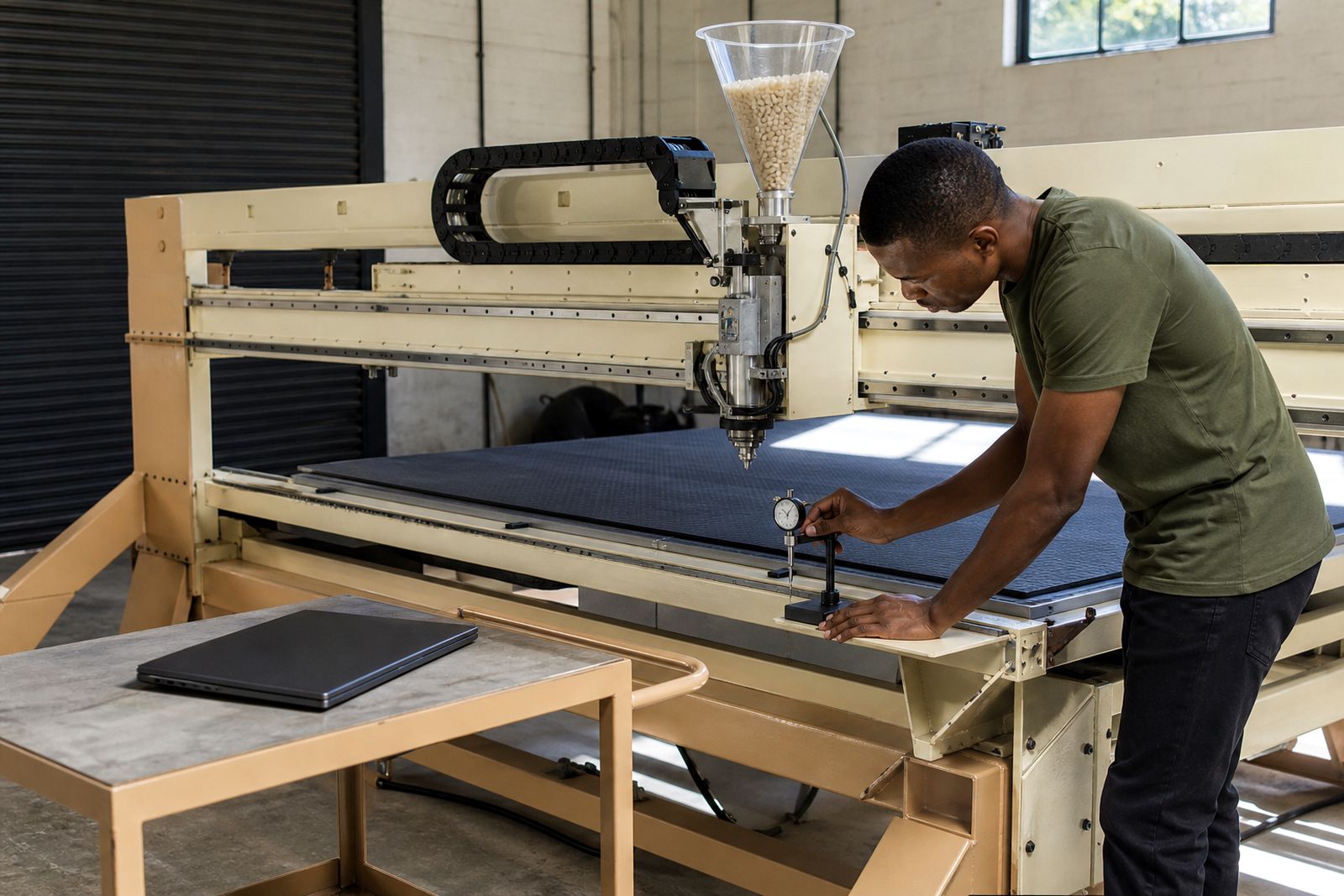
Support that starts before the machine arrives
Large-format pellet printing asks more of a workshop than a small prototyping machine. Floor space, access for rigging, material storage, ventilation and operator workflow all affect how well the printer settles into daily production. Our team works through those points before delivery so the installation day is not spent fixing avoidable site issues.
We cover practical matters that matter on South African factory floors, including power quality, dust control, pellet moisture management and the room needed to move large printed parts safely. In coastal areas, humidity often changes how pellets need to be stored and dried, while inland workshops may need a closer look at dust and heat around the machine.
- Site review for floor space, access routes and machine position
- Power and environmental checks relevant to pellet extrusion equipment
- Advice on pellet handling, drying and nearby material storage
- Planning for operator access, cleaning and part removal
Commissioning on a real production floor
Installation is more than placing the printer and switching it on. Commissioning includes mechanical checks, heating system verification, screw extruder setup, nozzle fitment, motion calibration and a first production-style print to confirm stable pellet flow. That process gives the operator a machine that is set up for actual work, not only for a showroom test.
Where the application is furniture, moulds or large display pieces, we also look at how the printed part will be lifted, trimmed and moved to the next stage. A chair shell, a bench section or a mould block each puts different demands on support strategy and cooling, so the machine settings need to match the job rather than a generic sample.
Training that covers material, slicing and machine handling
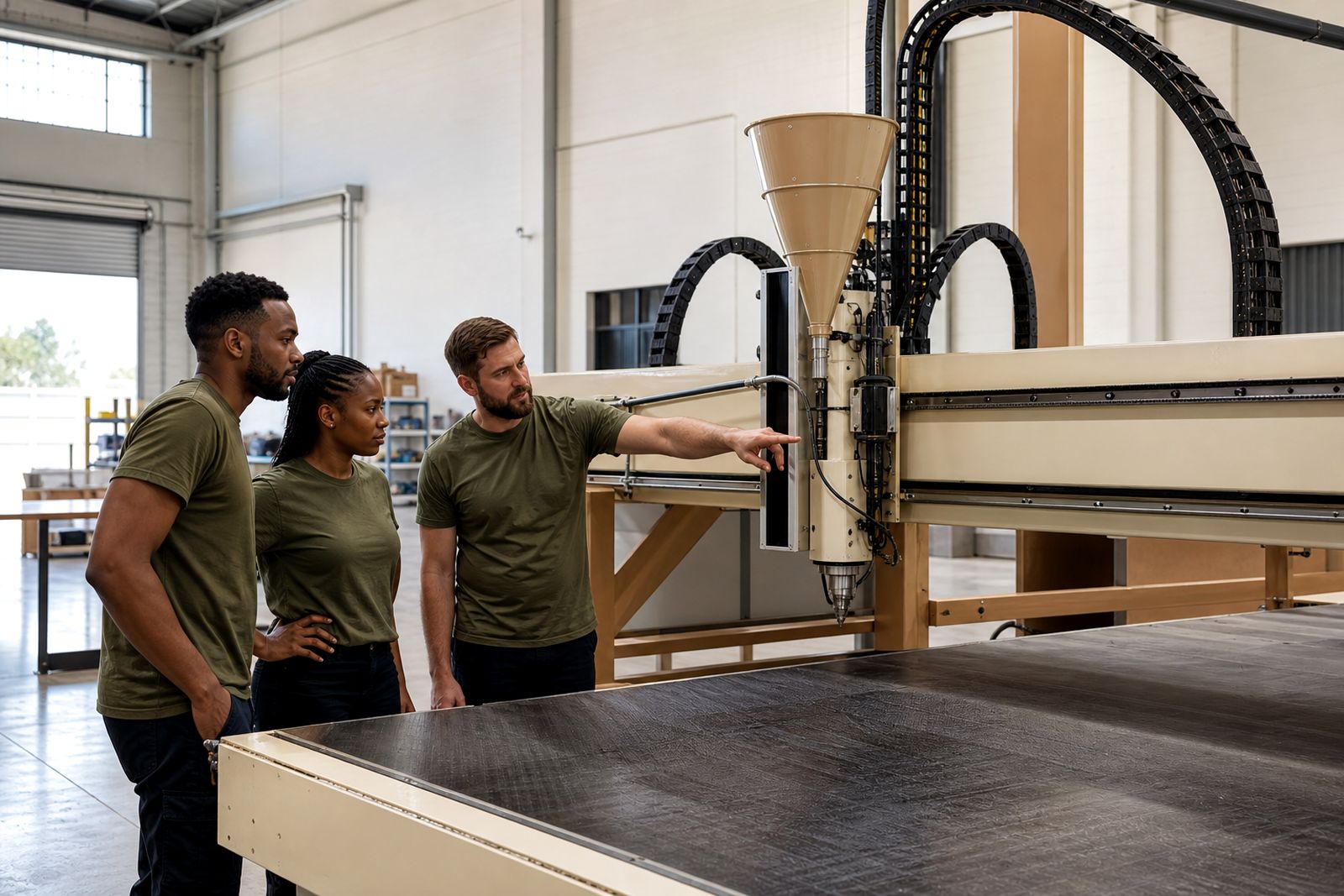
Operators need more than a button-by-button handover. Pellet systems behave differently from filament machines because the screw extruder, larger nozzles and pellet feed all influence layer shape, print speed and consistency. Training therefore covers both the machine and the process around it.
We guide teams through slicing choices for larger bead widths, material drying habits, start-up checks and basic fault tracing. The aim is to help your workshop print usable parts with less trial and error and less wasted material, it saves a lot of frustration on big jobs.
- Loading and managing pellets for steady extrusion
- Working with PLA, PETG, ABS, PP and fibre-filled grades
- Large-nozzle slicing, bead overlap and layer height choices
- Bed preparation, warm-up routines and shutdown procedure
- Cleaning, nozzle changes and daily operator checks
Choosing between installation and training or service and spares
This support section is split into two practical routes. If you are preparing for a new machine or a relocation, the installation and operator training page is the right place to start. If you already run a pellet printer and need maintenance help, replacement wear parts or technical guidance, the service and spares page is the better fit.
- Choose installation and operator training when the machine is new to your site, the team is new to pellet printing, or the workflow still needs to be set up.
- Choose service and spares when production is already running and the focus is maintenance, troubleshooting, consumable wear items or restoring print consistency.
- Use both when a machine is being moved, upgraded or handed over to a new operating team.
If the situation sits between those categories, send the job details through our contact form and we can point you to the most suitable support path.
A practical comparison of support needs
Different workshops ask for different levels of help. A furniture studio printing one-offs needs a different handover from a factory making tooling or mould sections repeatedly. The list below gives a grounded way to compare typical needs.
- Furniture and benches: stronger focus on surface consistency, visible seams, part handling and repeatable material drying.
- Moulds and tooling: closer attention to dimensional control, slicing strategy, stable bead placement and downstream machining allowance.
- Display and architectural pieces: more planning around segmentation, assembly points and moving large parts through the workshop.
- New operators: more time on machine routines, pellet behaviour and print recovery after a stop.
- Experienced additive teams: more attention on process tuning, material changes and maintenance planning.
Ongoing service across South African provinces
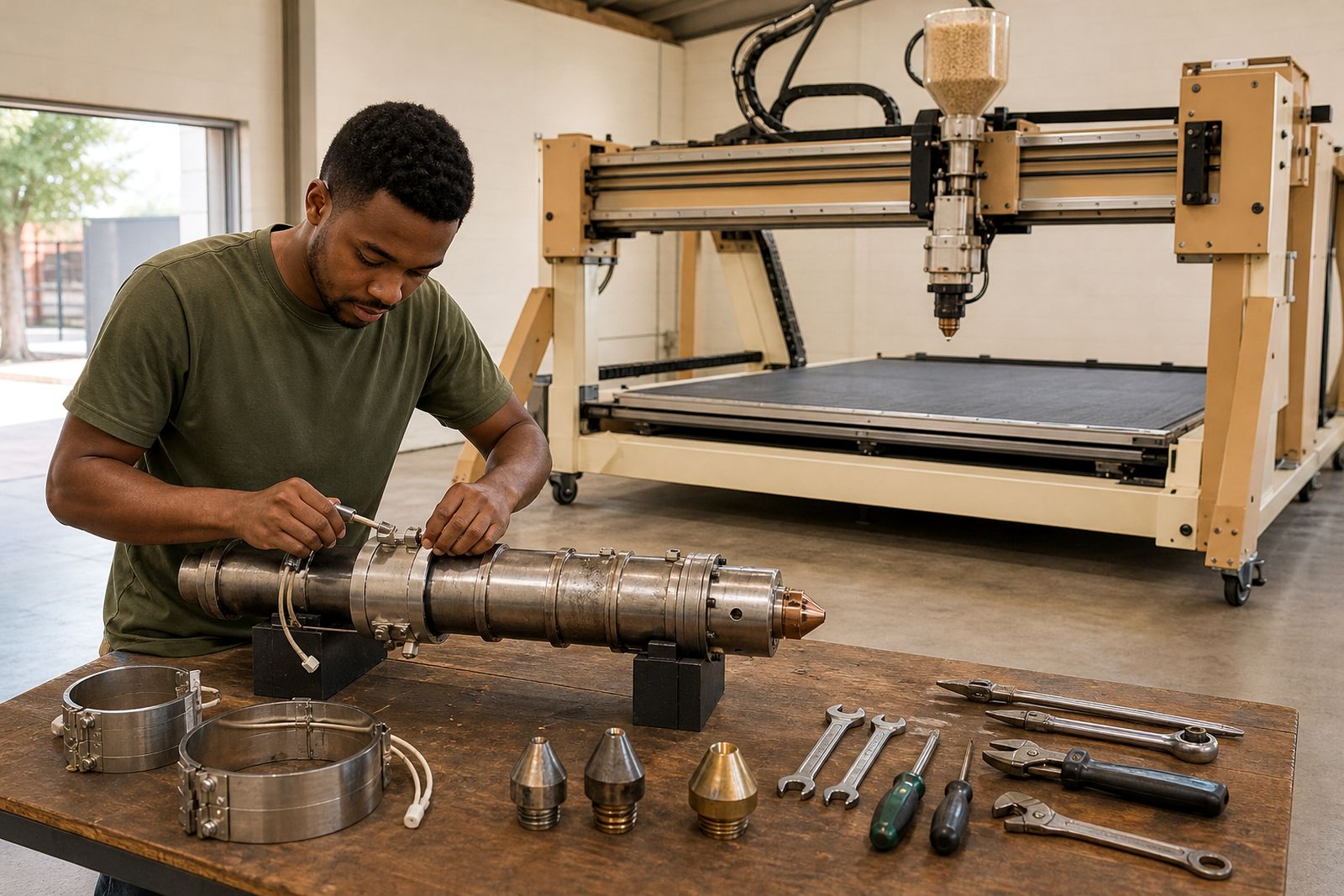
After commissioning, support usually shifts to upkeep and print stability. Pellet extrusion systems have wear points that need regular attention, especially around nozzles, feed paths, heaters and components exposed to abrasive filled materials. A service plan helps keep output consistent and reduces the risk of avoidable stoppages.
From our Midrand base between Johannesburg and Pretoria, Pellet3D supports workshops and factories in every province. We assist with routine servicing, fault finding, spares and operating guidance tied to pellet-fed large-format machines only. We do not sell filament printers, take on contract production at volume or design furniture for clients.
For a new installation, a machine move or support on an operating unit, send the site and application details through our contact form.
What our Pellet 3D Printing customers say
Verified Google reviews
Questions we get asked
Do you support workshops outside Gauteng?
Yes. Pellet3D installs and supports pellet-fed large-format 3D printers for workshops and factories in every province, with coordination from Midrand.
Can you train operators on materials as well as machine use?
Yes. Training includes machine handling together with material behaviour, drying practice, slicing for larger nozzles and routine operator checks.
Do you service filament-based 3D printers?
No. Our support is for pellet-fed large-format 3D printers that extrude plastic granules through a screw extruder.
Tell us about the job
Send sizes, materials and where you are through our contact form, and we will come back with the practical options.
Open the contact form