

Pellet-fed large-format 3D printers
Pellet3D supplies pellet-fed large-format 3D printers for workshops and factories that need furniture, moulds and oversized parts made directly from plastic granules. From Midrand, we help teams across South Africa plan the machine, material flow, training and service around real production work.
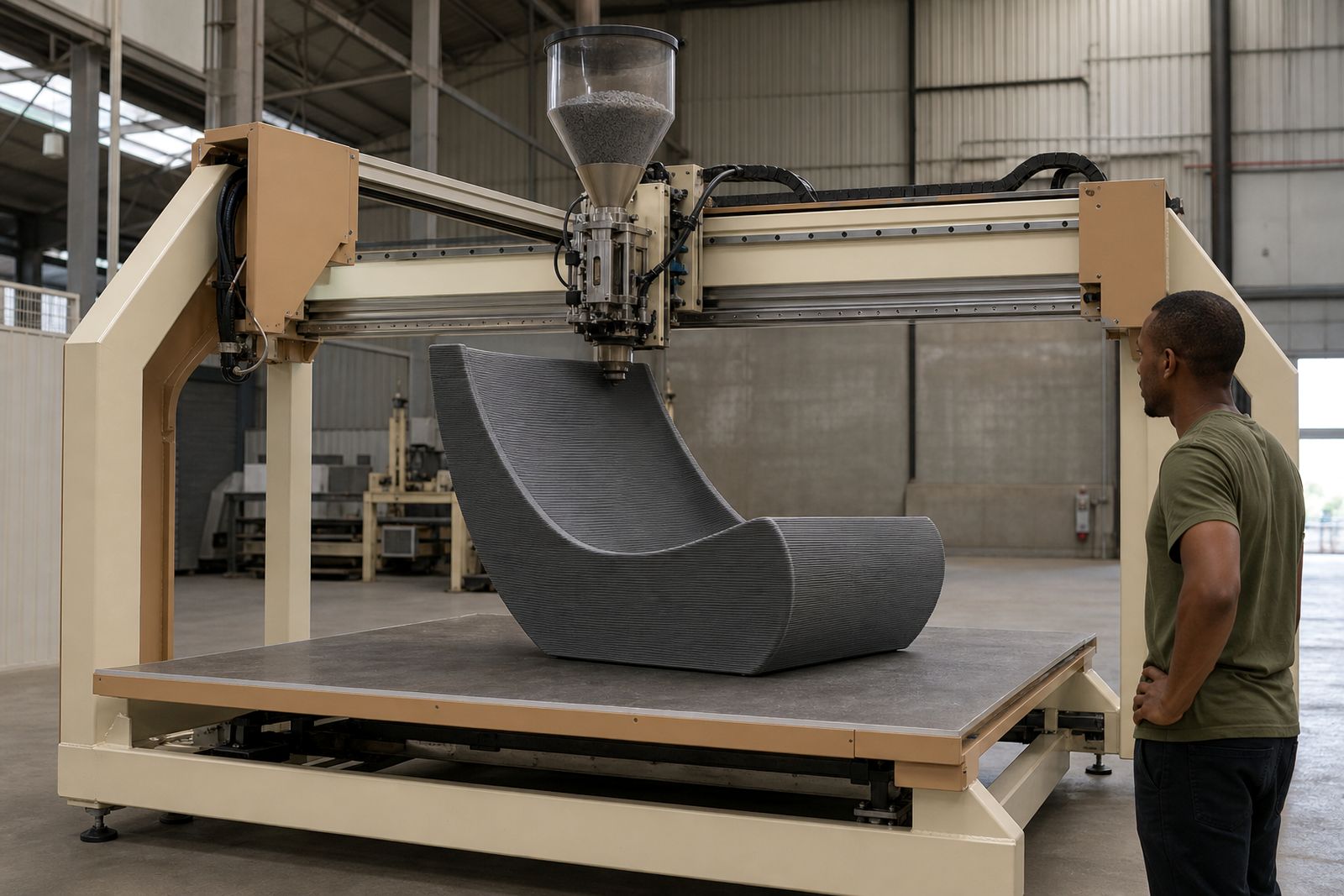
Print the big parts straight from pellets
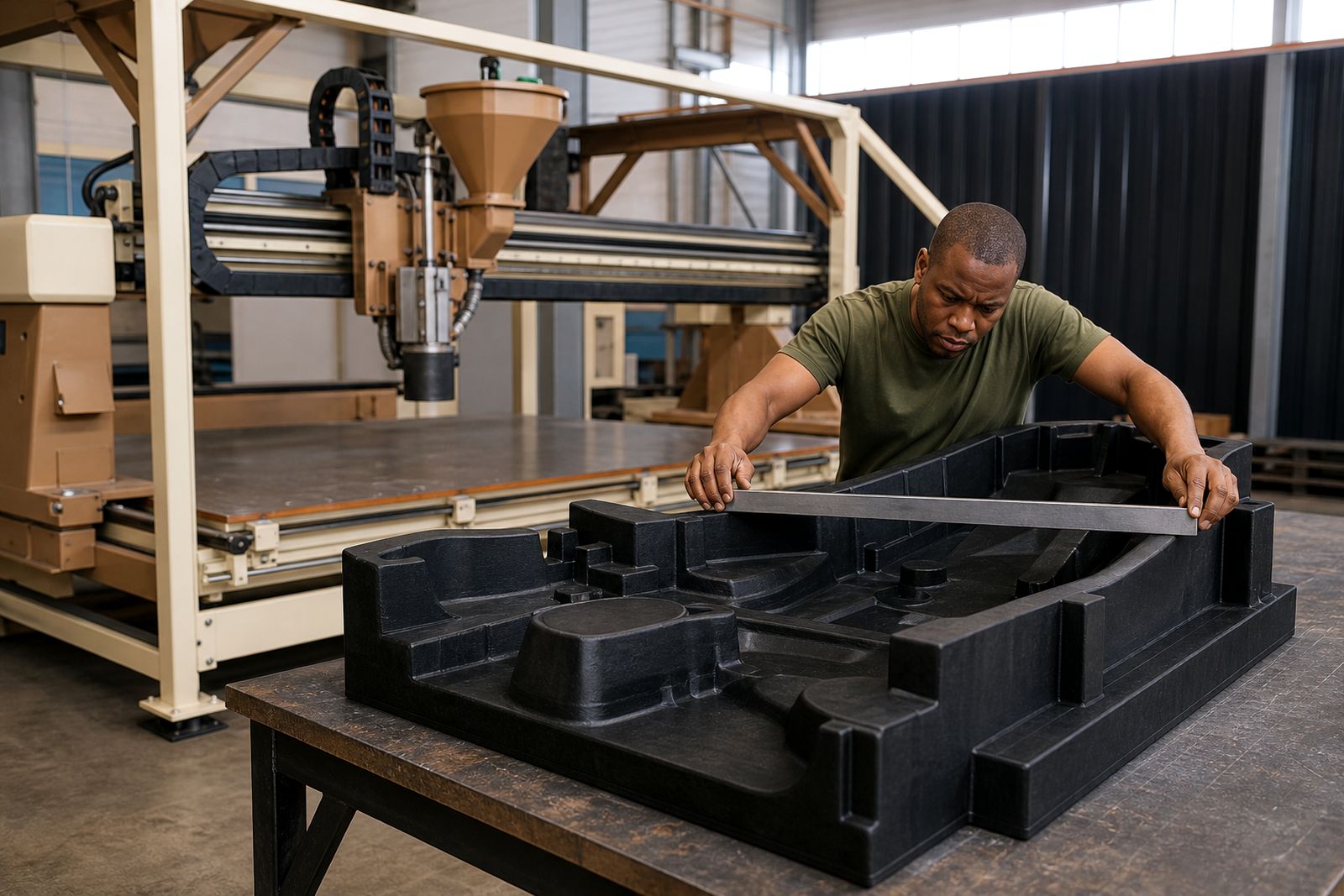
Pellet-fed systems work differently from filament machines. Instead of feeding plastic strand through a hot end, these printers use plastic granules in a screw extruder, pushing material steadily for larger bead sizes and faster deposition on big work. That matters when the part is not a sample on a shelf but a chair shell, a planter, a bench, a display form or a mould face that has to move into the next production step.
Our scope covers the machine, site planning and practical setup around the machine. We advise on printer format, material choice, large-nozzle slicing, pellet drying and feeding, operator training and ongoing service support. We do not sell small filament printers, we do not take on volume contract printing, and we do not design furniture for clients. The work here is about giving your team the right pellet-printing platform and helping it run properly on your floor.
- Pellet extrusion for large-format additive production
- Machine selection for furniture, moulds and oversized components
- Guidance on materials including PLA, PETG, ABS, PP and fibre-filled grades
- Slicing input for larger nozzles and heavier bead widths
- Installation, operator training, service and spares support
Where to start
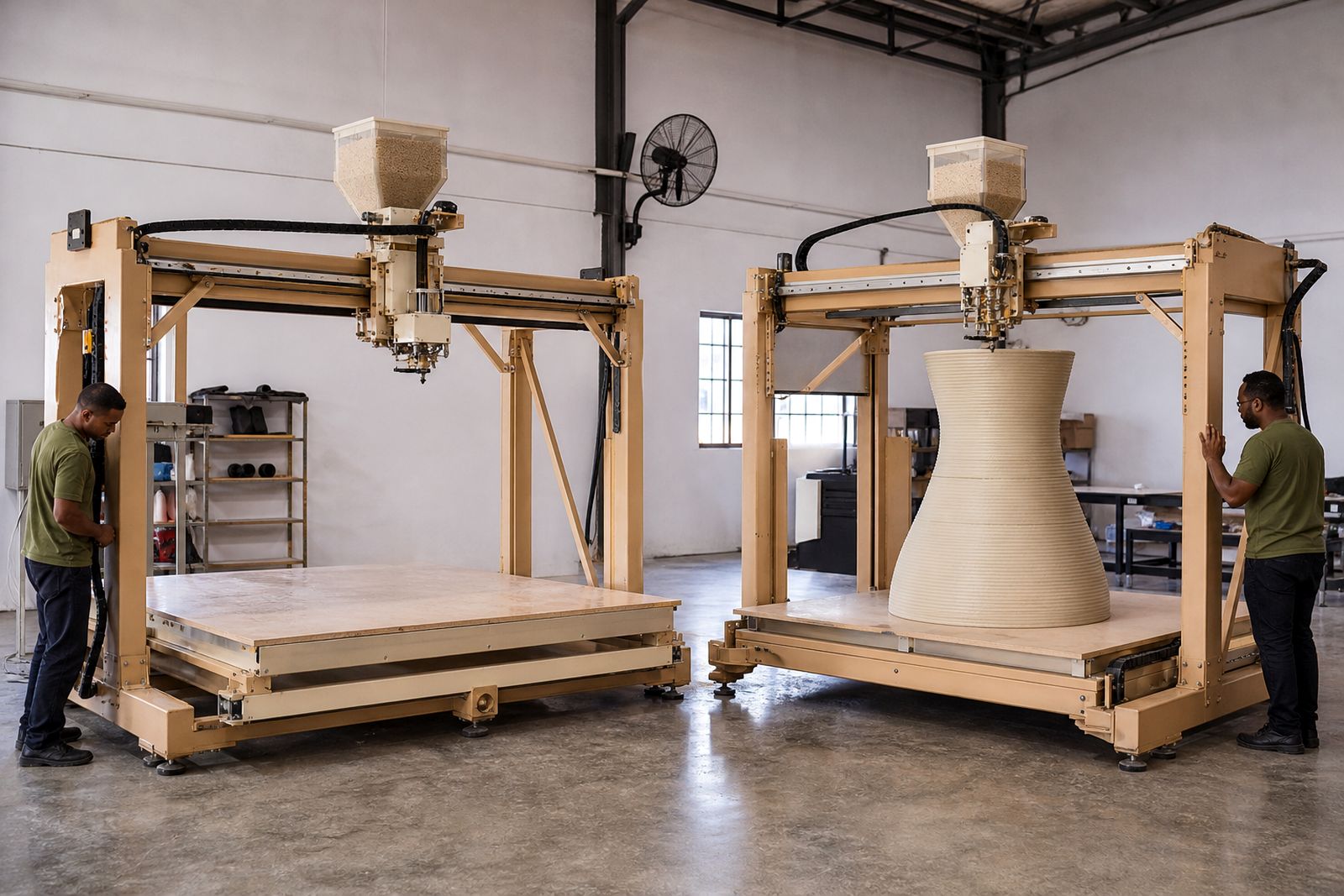
Our pellet 3D printers
Compare gantry layouts, screw extruders and material handling for large printed parts in furniture, tooling and display work.
Read more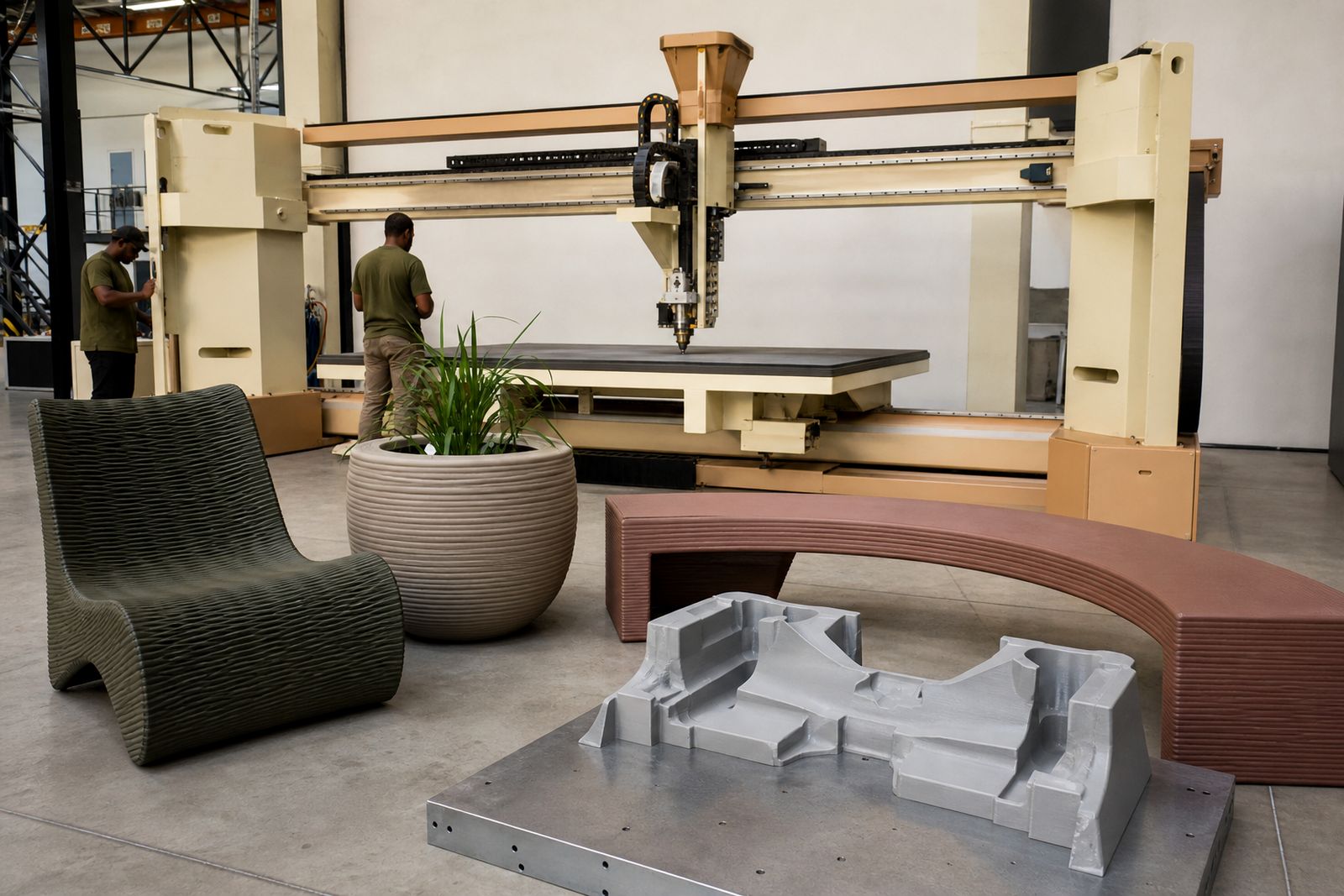
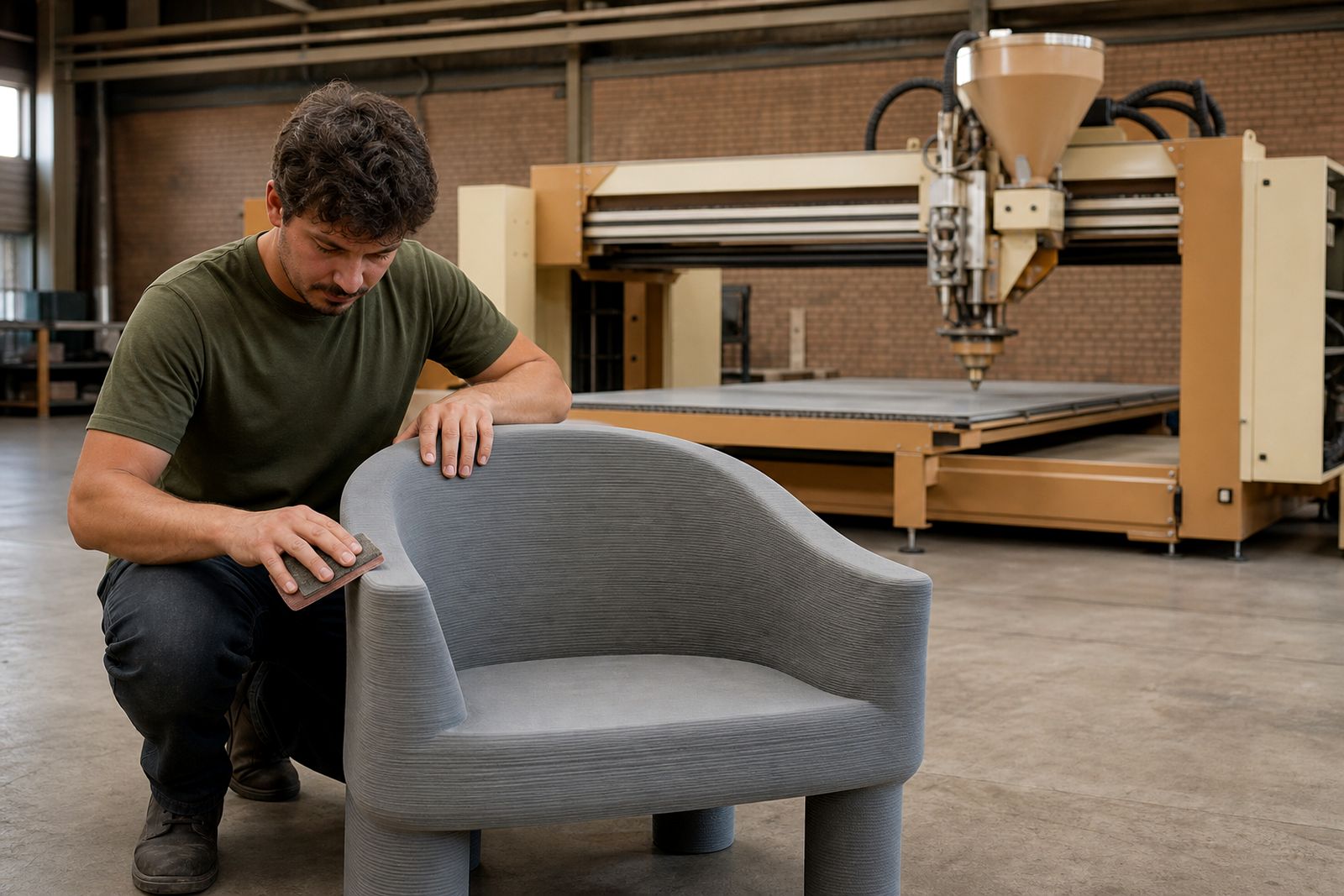
What people print with pellets
A practical look at furniture, moulds, patterns and large display work made with pellet-fed printers.
Read more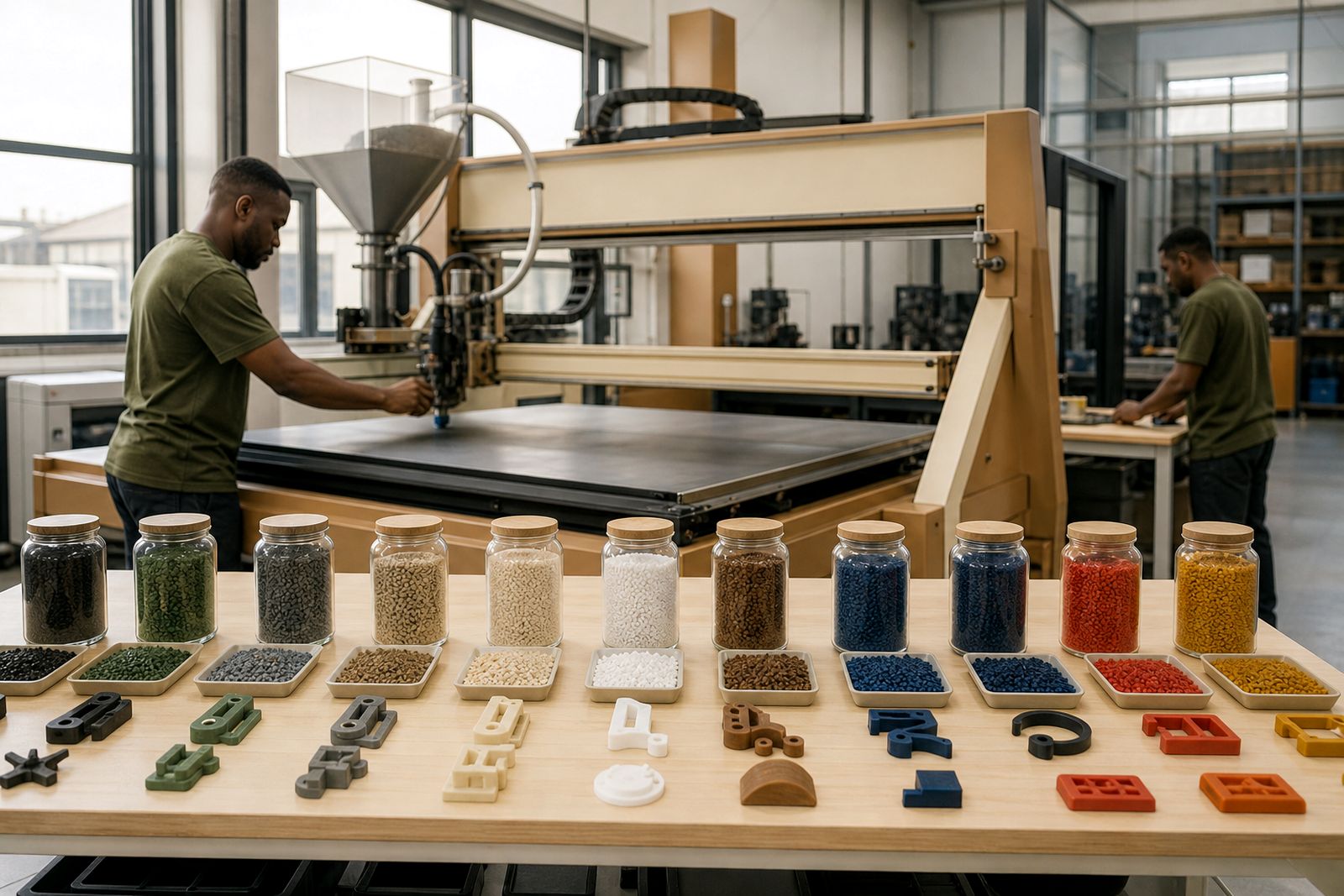
Pellet materials
Compare common pellet materials for large printed parts, moulds and furniture work in South African workshops.
Read more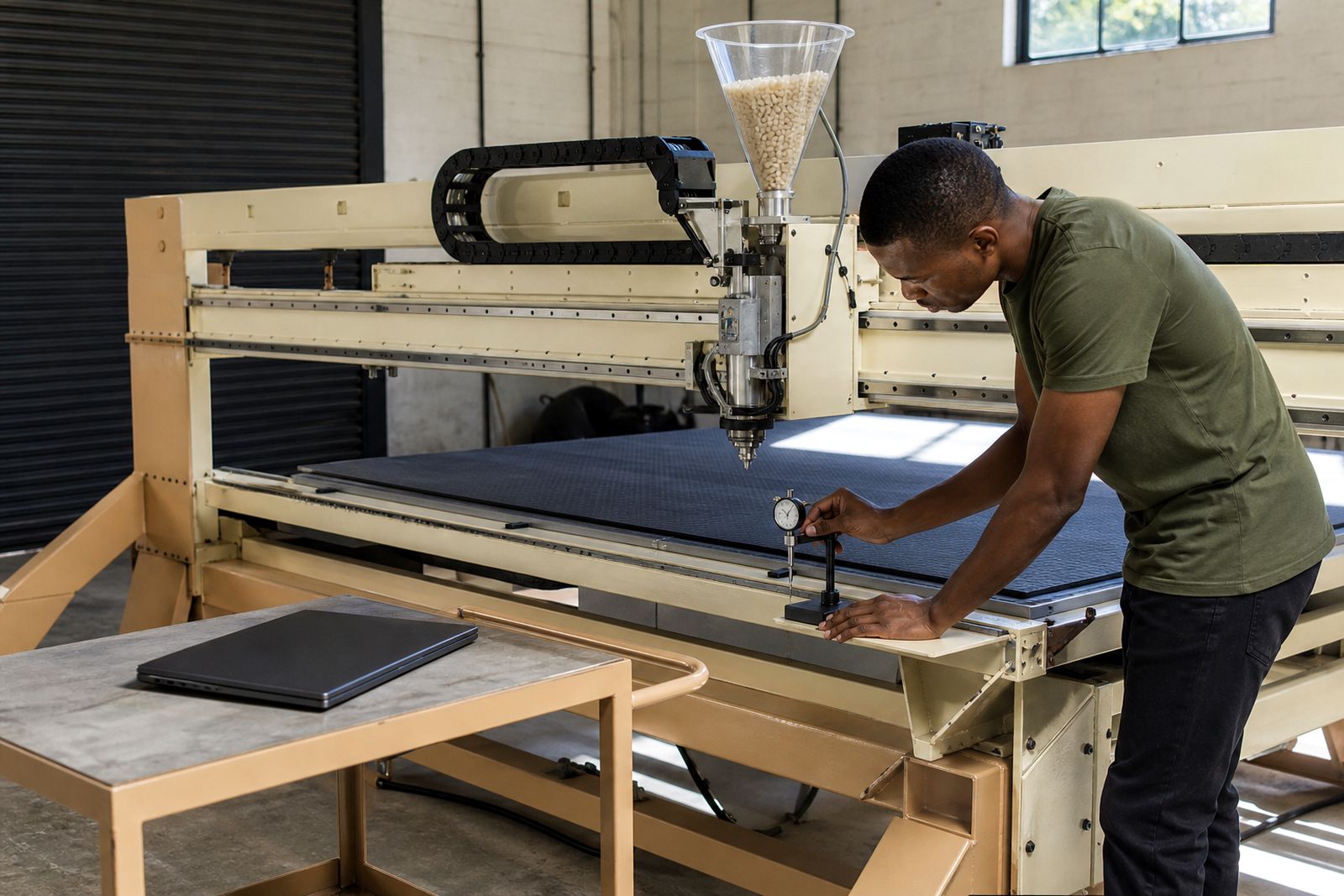
Installation, training and service
Support for pellet printer setup, operator training, maintenance planning and service across South Africa.
Read more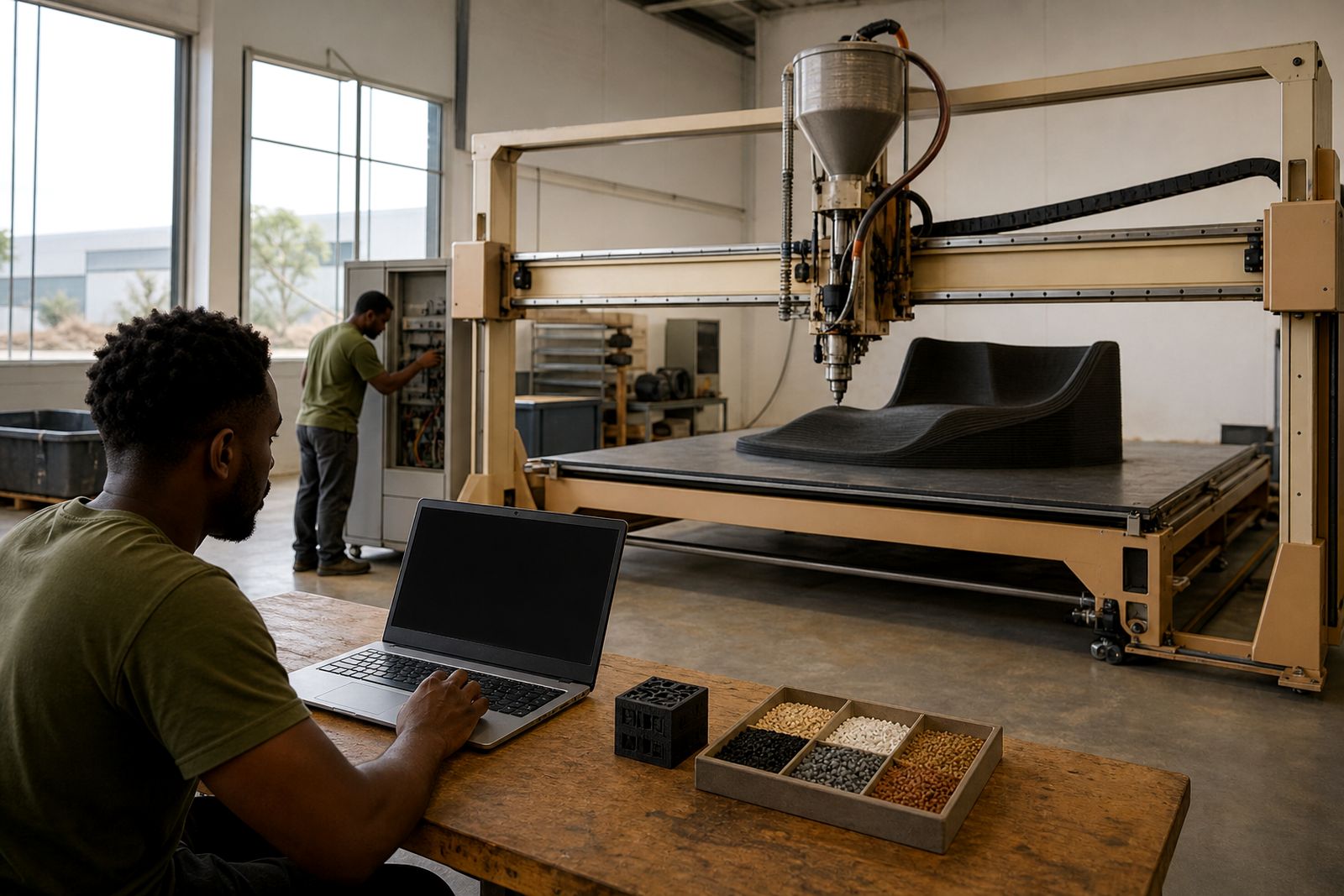
Guides
Practical reading on pellet printing, material handling, large nozzles and workshop setup for South African production teams.
Read more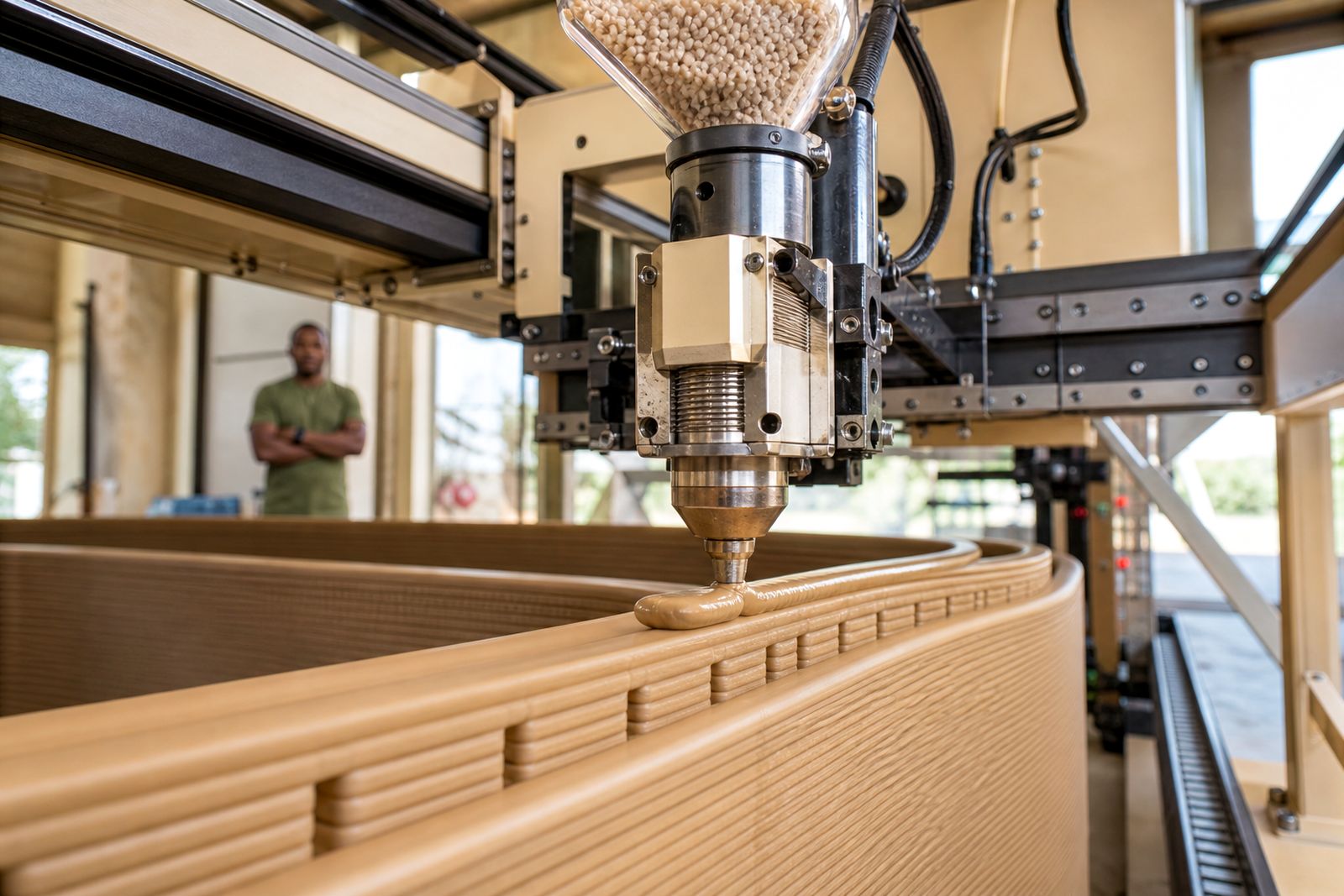
Where pellet printing fits in a South African workshop
Pellet printing suits teams that already understand making at scale. Furniture studios, pattern shops, composites teams, display fabricators and manufacturing plants often need parts too large for ordinary filament equipment and too iterative for a fully machined route. Printing from pellets can reduce material cost per part, cut waste from support and trimming in some jobs, and open the door to larger forms without joining many smaller sections.
In local conditions, the machine choice also has to fit the building and the workflow around it. A factory in Midrand may have different floor access, extraction routing and material storage conditions to a coastal workshop in Gqeberha or Durban where humidity creeps into open pellets. Teams in Cape Town may prioritise display pieces and seating, while plants in Gauteng may focus on patterns, thermoforming moulds and composite layup tools. The machine must match the work, not the other way round.
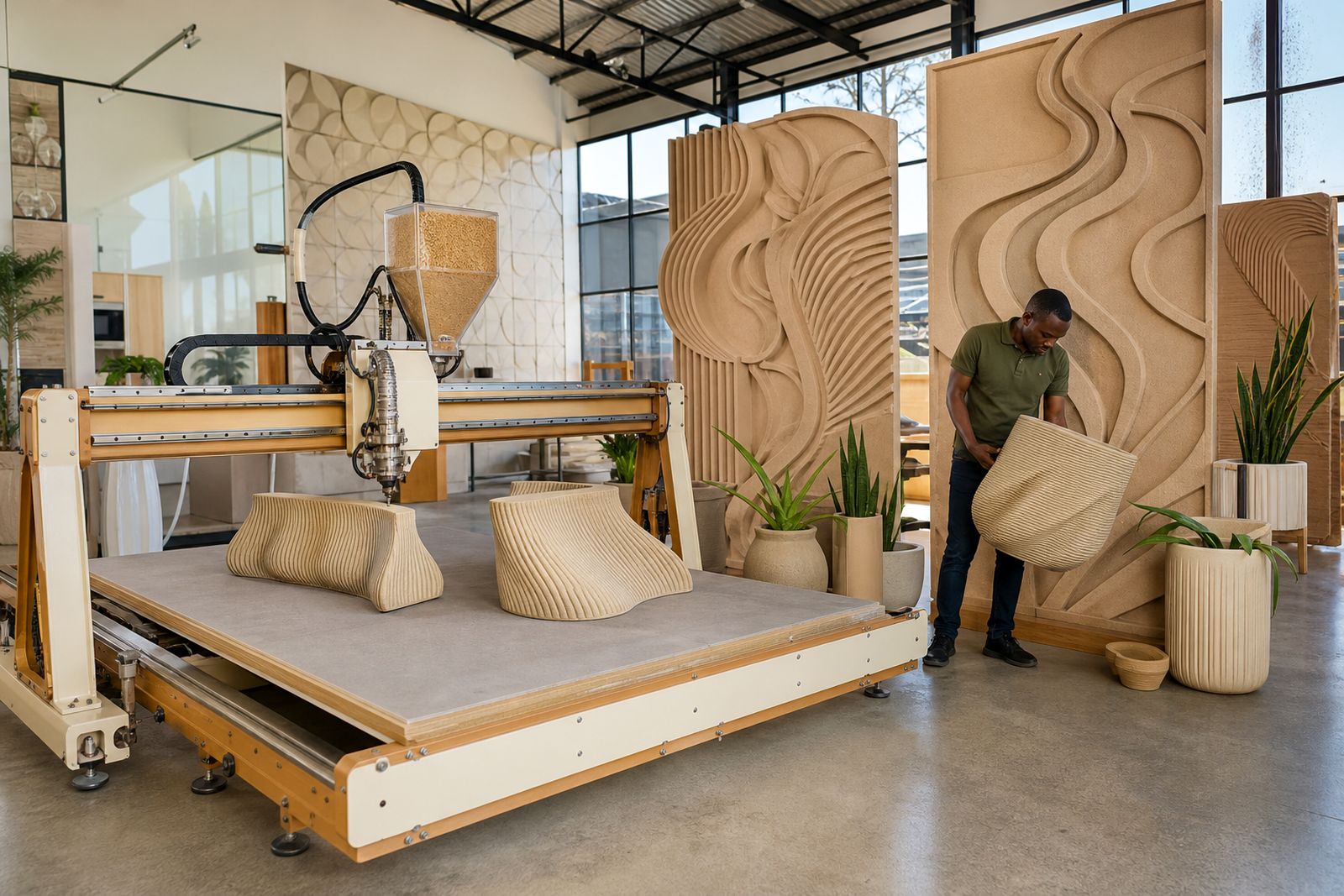
- Furniture parts such as chairs, tables, benches and planters
- Display and architectural pieces for retail, events and interiors
- Casting patterns and foundry-related forms
- Thermoforming moulds and composite layup tooling
- Large prototypes and production aids for factory use
A normal project on our side of the floor
Most projects start with the part family rather than the machine brochure. We look at the kind of components you want to print, the surface quality that matters, expected wall thickness, whether the parts will be machined after printing, and how often material changes are likely. From there we advise on a suitable printer configuration, pellet handling needs and the slicing approach for bead width, layer height and travel planning.
Before installation, we go through practical site points with your team. These include machine access into the building, the print area around the unit, power availability, material storage, extraction if needed for the chosen polymer, and operator access for loading, cleaning and maintenance. Once the machine is in place, operator training covers startup, shutdown, pellet preparation, nozzle changes where relevant, bed setup, routine checks and fault tracing. It is hands-on work, not just a folder left at reception.
After handover, support continues around service items and process questions linked to pellet printing. A lot of early success comes from getting the material dry enough, keeping feed stable and adjusting slicing to suit larger bead geometry. If a team is moving from filament or CNC-only production there is usually a short learning curve, but it becomes very practical once the first real parts are moving off the machine.
Materials, bead size and the finish you should expect
Pellet-fed printing gives you access to common industrial polymers in granule form, including PLA, PETG, ABS and PP, plus fibre-filled grades where the application calls for added stiffness or heat behaviour. Material choice is tied to use conditions. A display form for indoor retail has a different requirement from a thermoforming mould or a bench that will sit in sunlight. We help match the polymer to the part duty, finishing route and expected environment.
Large-nozzle printing is not about pretending the part came from a fine-detail machine. The process lays down broader beads, so the printed surface, bridging strategy and corner treatment need to be understood upfront. Some parts are used as printed, some are skimmed or machined, and some become the base for coatings or further mould work. Good results come from balancing throughput and finish rather than chasing the smallest layer line on a very big object, and that balance can shift from one job to the next.
- Material selection based on function, finish and post-processing
- Slicing guidance for larger nozzles and thicker layers
- Advice on bead geometry, wall strategies and support planning
- Preparation for machining, coating or mould finishing after print
Pellet handling matters more than most first-time users expect
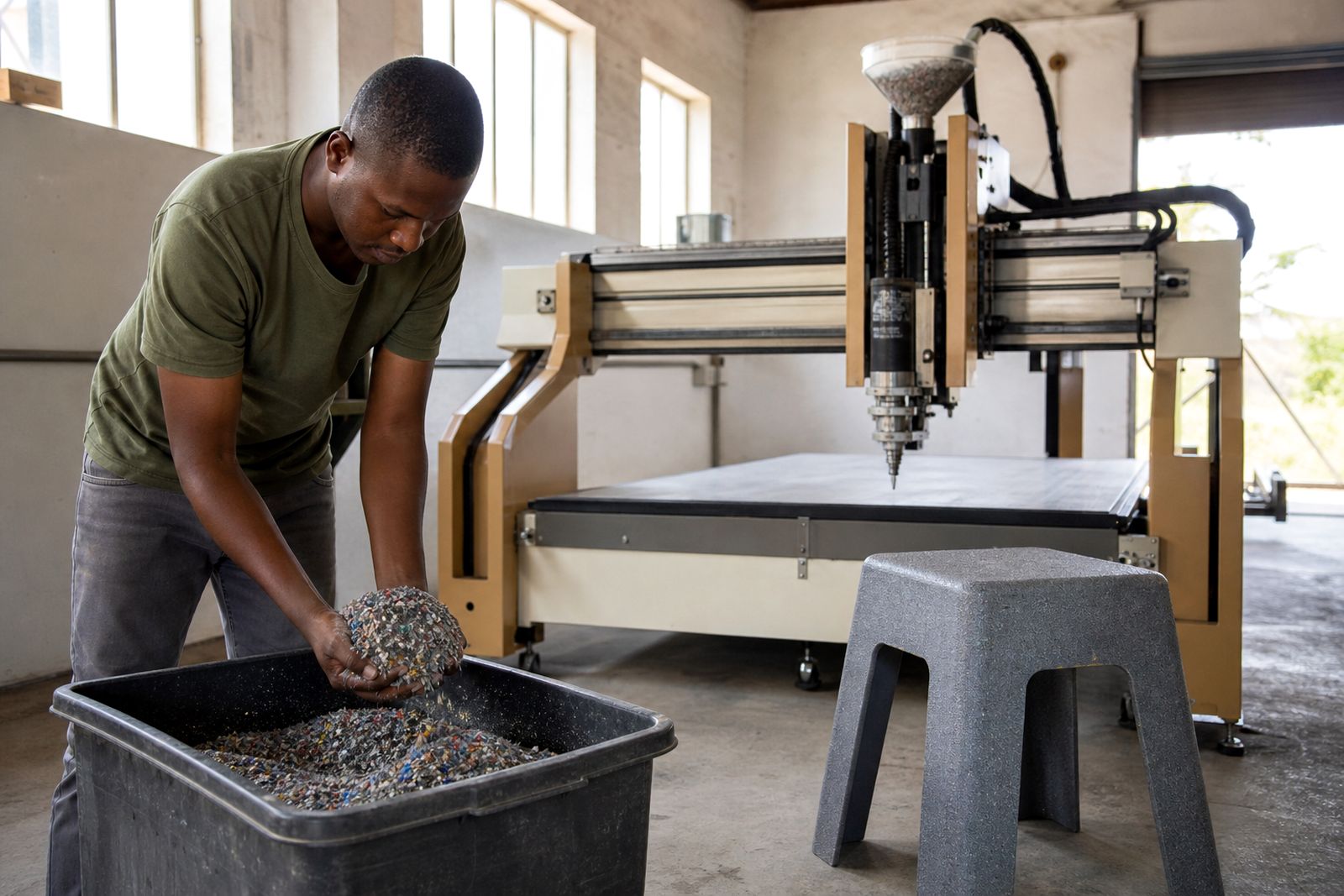
One trade detail often missed at the start is moisture control. Pellets that have absorbed moisture can lead to inconsistent extrusion, surface defects, popping at the nozzle and weaker print quality. In inland areas this can still be an issue, and on the coast it can become a daily management point. Material handling is therefore part of the production system, not an afterthought tucked in a corner.
We advise on drying and feeding arrangements that suit the machine and the materials you plan to run. Some polymers are more forgiving than others, while fibre-filled grades can make feed consistency and wear points more important. Clean storage, sensible hopper practice and the right drying routine save time on failed starts and poor finish. It sounds basic but it is often the difference between a printer that gets used properly and one that causes weekly frustration.
From Midrand to every province
Our base is in Midrand between Johannesburg and Pretoria, which puts us close to a large share of industrial work in Gauteng while keeping national travel practical. We install and support pellet-fed large-format 3D printers for workshops and factories in every province. That includes plants in major metros as well as regional manufacturing sites where a large-part additive process can replace imported moulds, reduce transport of oversized prototypes or bring tooling changes closer to the production floor.
If your team is assessing pellet printing for furniture production, mould making or oversized display work, start with the parts you need to make and the materials you expect to use. We can then advise on the printer category, pellet flow setup and operator requirements that fit your shop. For project discussions and machine enquiries, use our contact form.
From our notes
Questions we get asked
What is the main difference between pellet and filament printing for large parts?
Pellet printing feeds plastic granules through a screw extruder, which is better suited to high material throughput on large components. Filament machines are useful for smaller work, but pellet systems are aimed at bigger parts and production-focused output.
Can these printers be used for furniture as well as moulds?
Yes. Typical applications include chairs, tables, benches, planters, display forms, casting patterns, thermoforming moulds and composite layup tools. The material and slicing approach change according to the part duty and finish required.
Do you offer design services or contract printing?
No. Pellet3D supplies, installs and supports pellet-fed large-format 3D printers. We advise on machine choice, materials, site needs, slicing, training and service, but we do not design furniture for clients or run a volume contract printing shop.
Tell us about the job
Send sizes, materials and where you are through our contact form, and we will come back with the practical options.
Open the contact form