

Our pellet 3D printers
Our range covers pellet-fed large-format 3D printers built for serious part size, thicker bead deposition and lower material cost than many filament-based routes. This page helps you compare gantry layouts, screw extruder options and the kind of production each machine suits in South African workshops and factories.
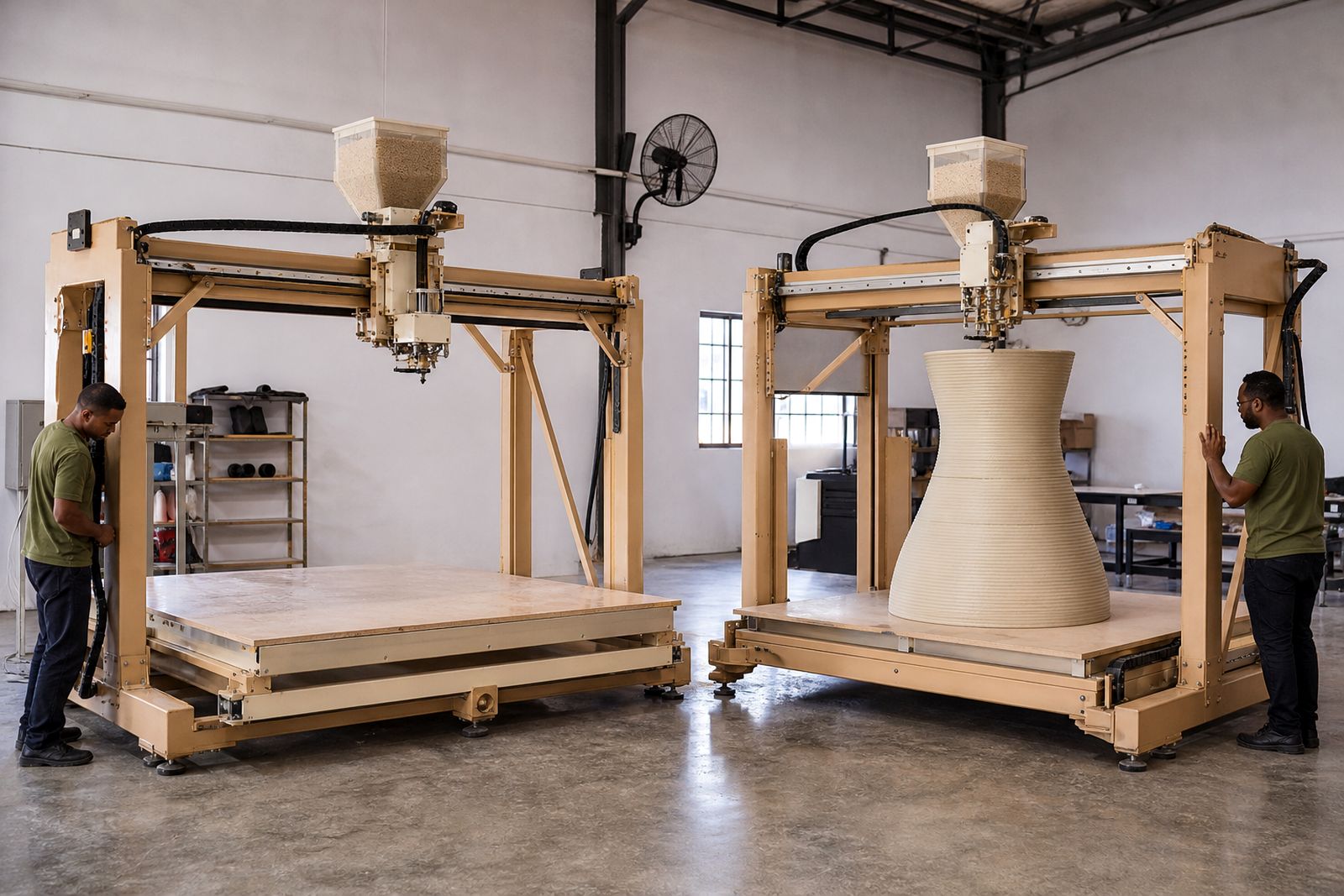
A printer range built around pellets, not spools
Every machine in this section uses plastic granules fed into a screw extruder, so the print system is set up for large parts and steady material flow rather than small-format prototyping. That matters when the job is a bench, planter, mould section or display form where print time, bead width and material handling affect the total cost more than fine cosmetic detail alone.
Our team in Midrand works with workshops between Johannesburg and Pretoria as well as factories in every province, helping clients match machine size and extrusion set-up to the parts they actually need to produce. We do not sell filament printers, and we do not take on volume contract printing or furniture design briefs. The focus here is the equipment itself, plus the advice needed to run it properly on your floor.
How the gantry changes the way a machine fits your floor
Gantry pellet printers are usually chosen for their reach across long or wide parts, their access around the build area and the practical way they fit furniture, mould and architectural work. The right frame is not only about footprint. It also affects operator access, lifting around the machine, guarding, pellet feed routing and how easily large finished parts can be removed.
- Smaller gantry footprints suit studios and compact production areas where aisle space is tight.
- Mid-range layouts often fit mixed work, from chairs and tables to thermoforming tools and display pieces.
- Larger gantries make sense where mould sections, benches or repeated oversized parts are part of normal production.
- Open access around the bed helps with cleaning, nozzle changes and set-up of longer jobs.
In coastal regions, humidity control becomes more important for pellet storage and feeding, especially with grades that pick up moisture quickly. On some floors that material handling detail is as important as the printer frame itself.
Extruder choices and what they mean in practice
The screw extruder is where a pellet machine earns its keep. Different extruder sizes and nozzle arrangements change output, bead shape, layer bonding and the kind of finish you can expect before trimming or coating. For furniture and broad display forms, higher output can shorten production time. For tooling and pattern work, control and bead consistency may matter more than outright volume.
- Higher-output extruders suit thick-wall parts and larger bead paths where speed matters.
- More moderate output can help on shapes with tighter direction changes and more varied wall features.
- Large nozzles reduce print duration on bulky geometry but leave a more visible deposited texture.
- Finer nozzles give more control on edges and transitions, though the job may take longer.
- Material choice influences nozzle wear, especially with fibre-filled pellets.
We help clients weigh these trade-offs before a machine is specified, so the printer is not over-bought for simple planters or under-specced for regular mould production. That decision saves a lot of avoidable rework later.
Matching machine type to the parts you want to make
Most buying mistakes happen when a printer is selected around headline size alone. A better route is to start with the parts, the finish expected after printing, the materials likely to be used and how often the machine will run on similar work. Furniture, moulds and promotional pieces all ask different things from the same hardware.
- Furniture pieces often need dependable layer bonding, stable flat sections and repeatable bead deposition over long paths.
- Casting patterns and composite tools usually need predictable dimensional behaviour and sensible allowance for machining or coating.
- Display and architectural forms often prioritise scale and visual impact, with finishing planned after printing.
- Prototype runs may need wider material flexibility than a dedicated production line.
If your team already has CAD and slicing capability, the next step is usually checking whether the machine will support the nozzle sizes, pellet grades and operator routine you have in mind. If not, we cover that during machine selection and training.
A practical comparison before you choose
These points usually separate one pellet printer configuration from another on a real shop floor.
- Choose a larger gantry when part dimensions regularly push beyond a compact work area and splitting parts would add too much joining labour.
- Choose a smaller or mid-size frame when handling access, floor space and lower-volume production count more than maximum reach.
- Choose higher extrusion output when the workload is dominated by bulky geometry such as benches, planters and broad mould backs.
- Choose a more controlled extrusion set-up when edge quality, feature definition and tighter process tuning matter more.
- Choose wider material compatibility when you expect to move between PLA, PETG, ABS, PP and filled grades across different jobs.
- Choose stronger drying and feeding support when your floor conditions are humid or pellets are stored for longer periods.
That is also where local site conditions matter. Factory power quality, dust, ambient heat and the route from pellet storage to machine all influence the final set-up, even when two clients print similar products.
What we help you decide before installation
Before a machine is placed, we work through the practical items that affect installation and day-to-day use: floor position, access for delivery into the workshop, pellet drying, extraction where needed, and operator workflow around the build zone. A pellet printer is not just a machine drop. It needs sensible planning so the line can run cleanly and the operator can manage long prints without confusion.
We also advise on slicing for large nozzles, material selection, maintenance points and service planning. If you are comparing options in this section and need help narrowing the range, send the basics of your application through our contact form and we can guide the discussion from there.
Explore the range
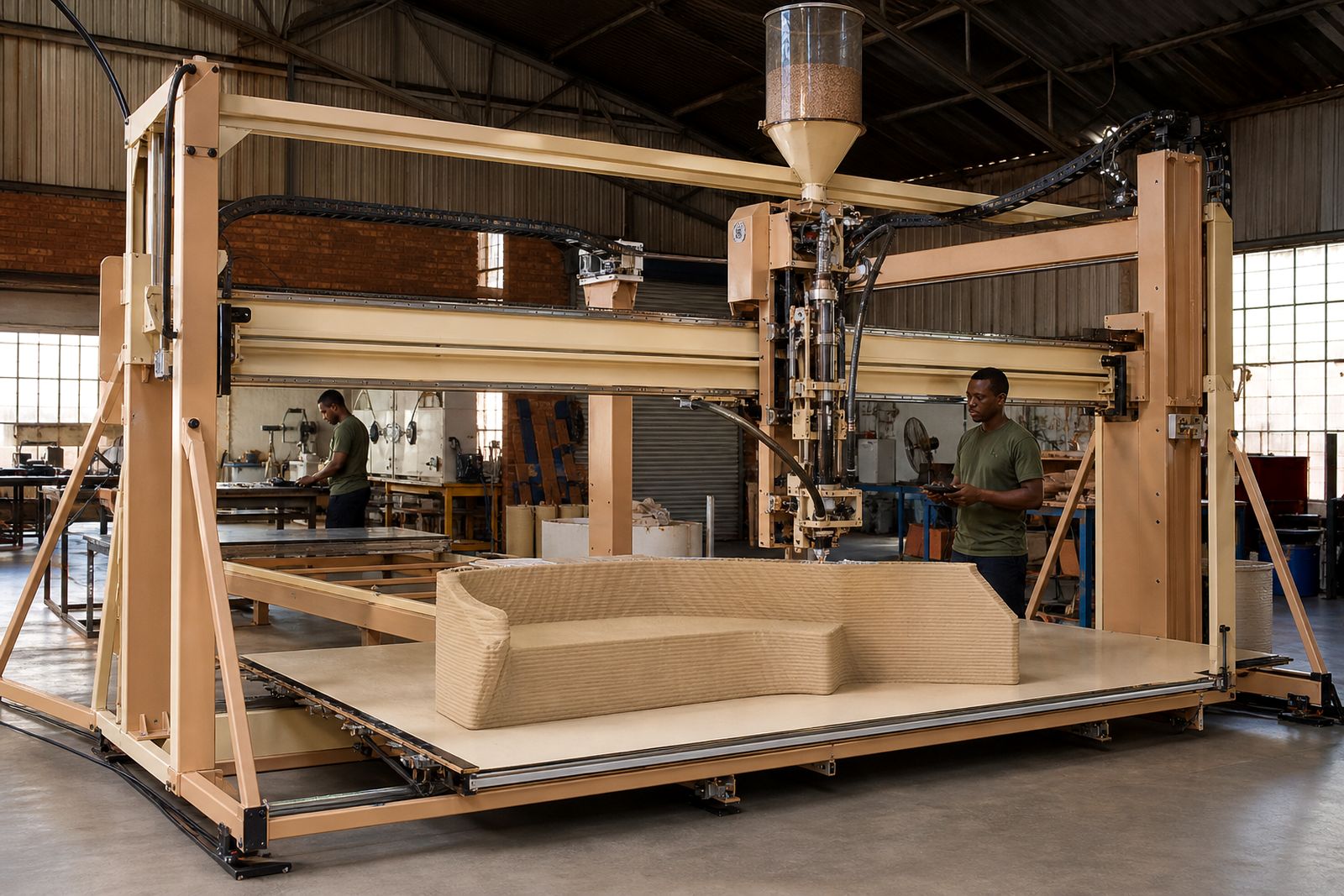
Gantry pellet printers
Open-frame pellet printers for large parts, practical material choice and workshop-ready installation support.
Read more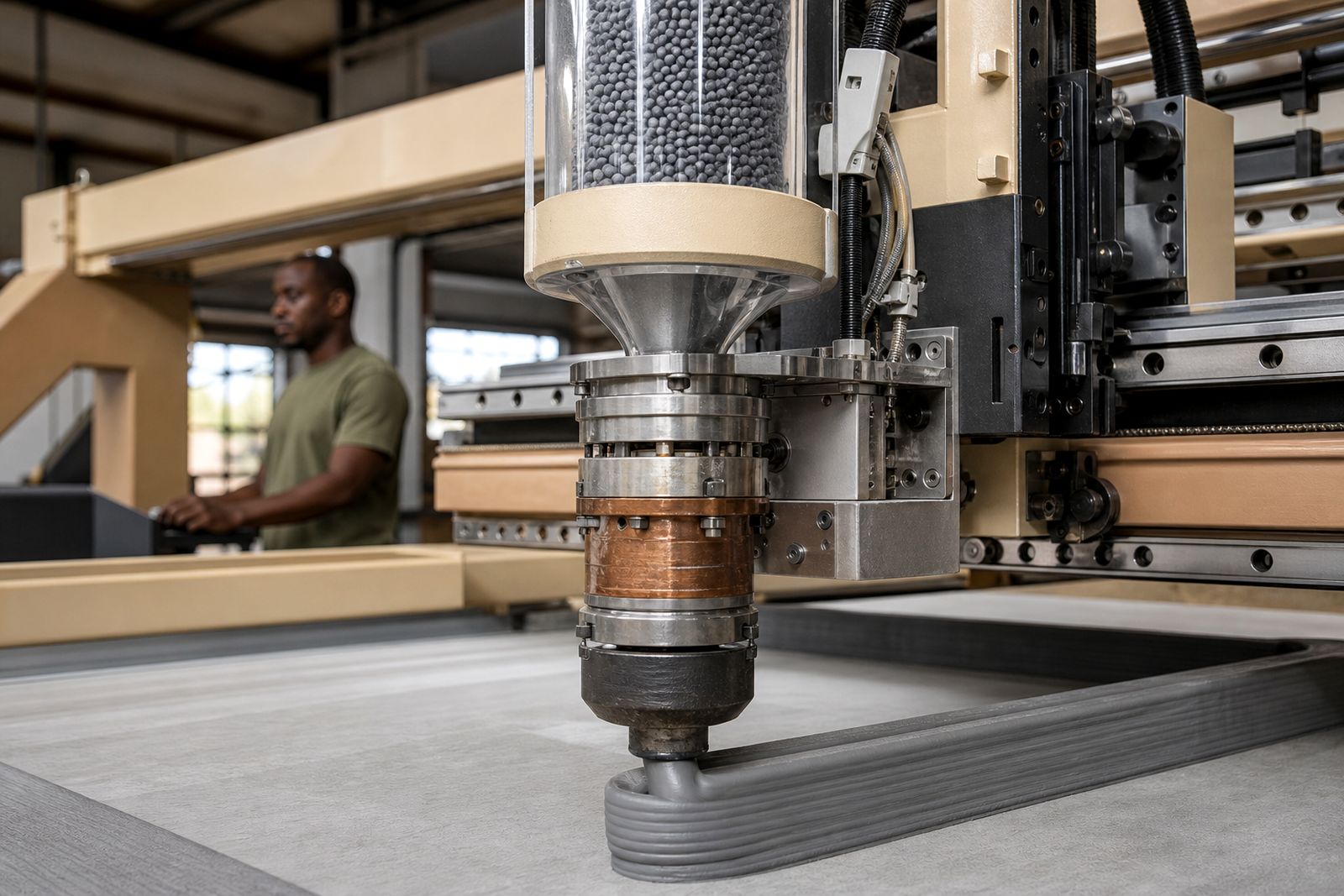
Screw extruder heads and nozzles
Screw extruder heads turn plastic pellets into wide, consistent beads for large parts and tooling.
Read more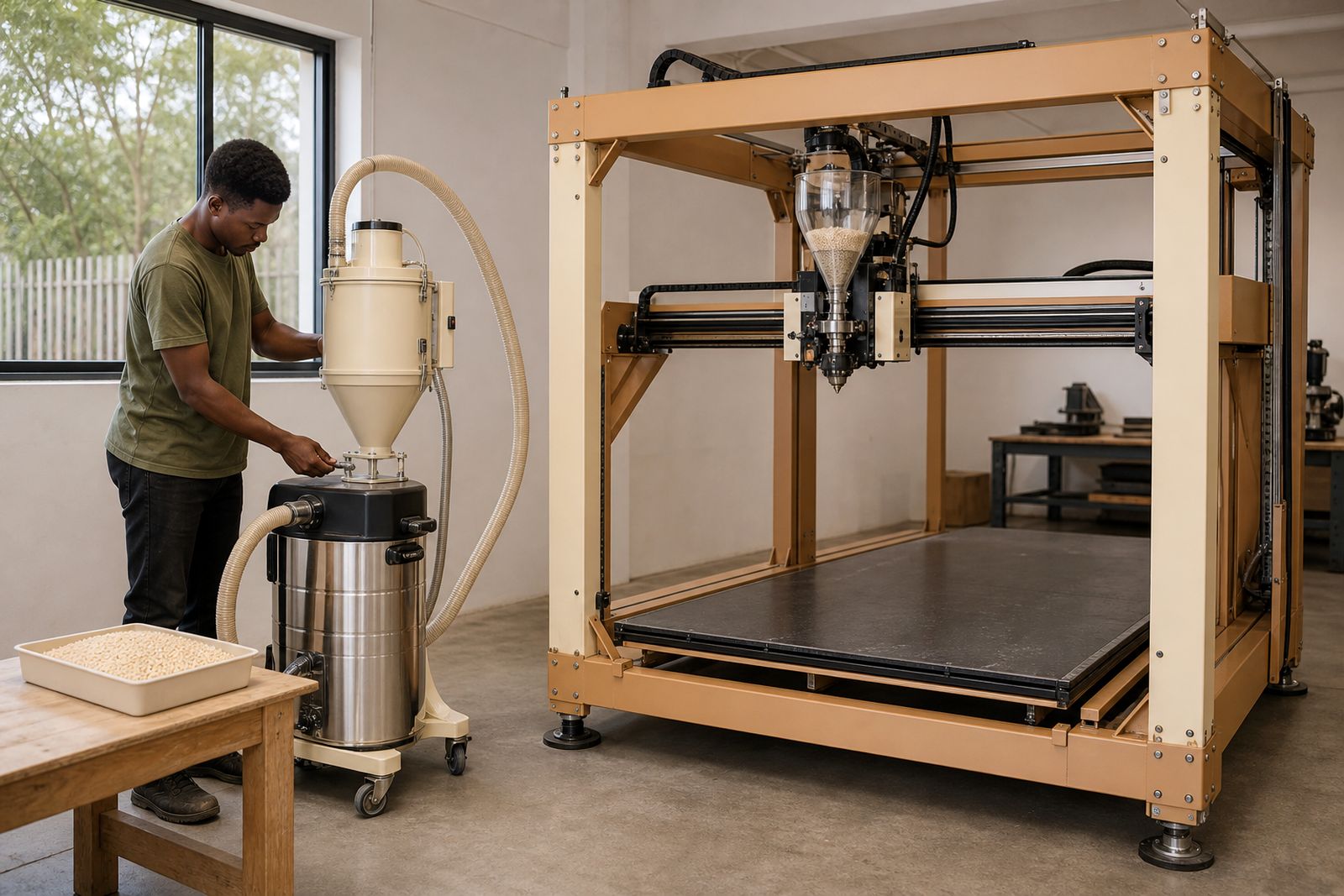
Pellet drying and feeding
Dry, steady pellet flow matters as much as the printer when large parts run for hours.
Read moreWhat our Pellet 3D Printing customers say
Verified Google reviews
Questions we get asked
Are these printers meant for furniture production or only for prototypes?
They are used for both, depending on the machine configuration and the finish standard expected after printing. Many clients look at them for chairs, tables, benches and planters, while others need moulds, casting patterns or display pieces.
Can the printers run more than one pellet material?
Yes, but the best set-up depends on the materials you plan to use most often. We advise on common options such as PLA, PETG, ABS, PP and fibre-filled grades, along with drying, nozzle wear and slicing implications.
Do you install and support machines outside Gauteng?
Yes. Our base is in Midrand, and we install and support pellet-fed large-format 3D printers for workshops and factories across South Africa.
Tell us about the job
Send sizes, materials and where you are through our contact form, and we will come back with the practical options.
Open the contact form