

What people print with pellets
Pellet-fed large-format 3D printing suits parts that are too big, too slow or too costly to make with standard filament systems. This section covers the main types of work people tackle with pellets, and where each route tends to fit on a South African factory or workshop floor.
Where pellet printing fits best
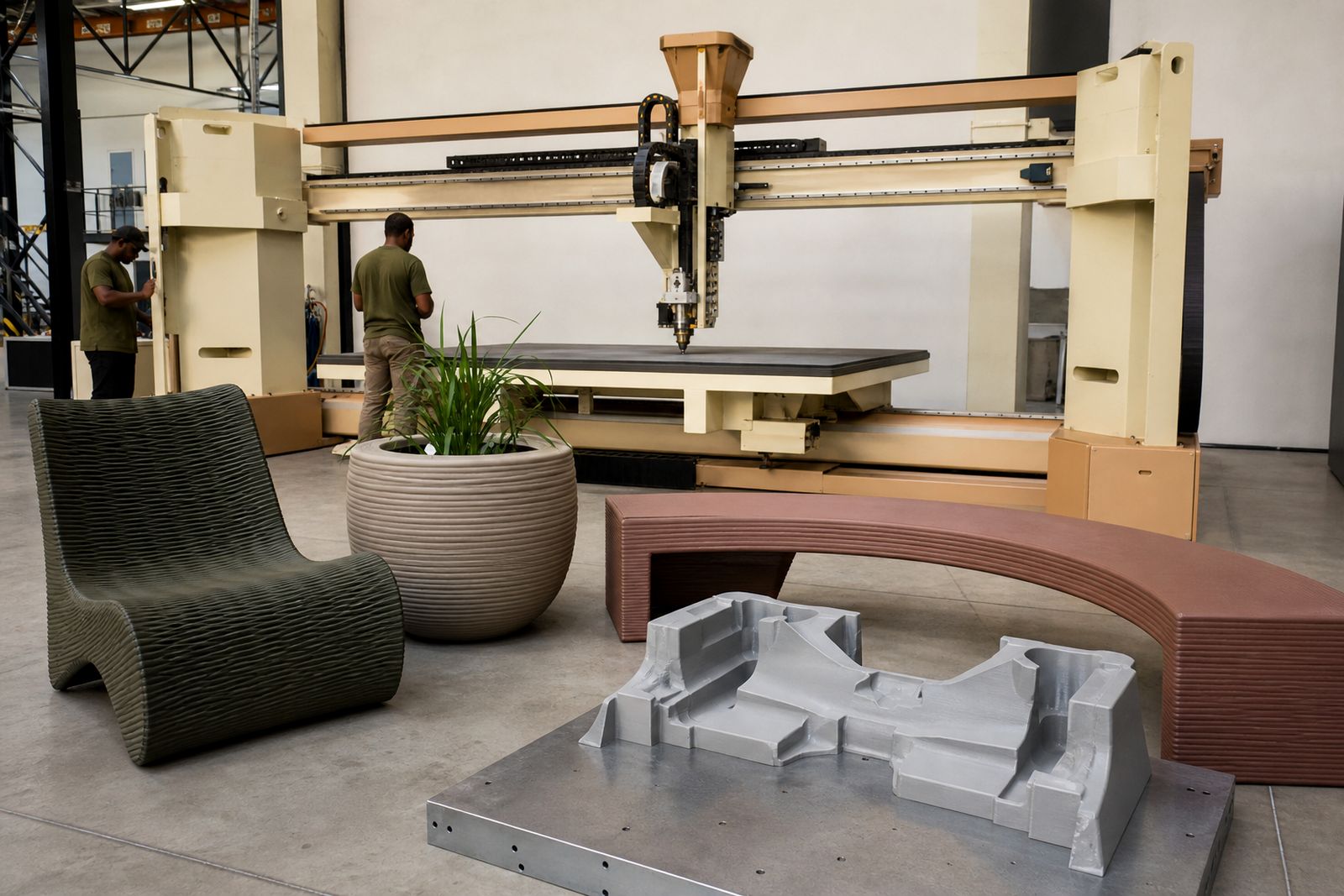
Pellet systems are used when the job calls for bigger parts, thicker bead deposition and direct use of plastic granules through a screw extruder. That makes them a good match for products and tools where output size matters more than cosmetic detail on tiny features. In local workshops this often means furniture, moulds, foundry patterns, thermoforming tools, display items and outdoor pieces that would be awkward to laminate, carve or assemble from many smaller sections.
The material choice matters just as much as the printer format. PLA can suit indoor prototypes and show pieces, while PETG, ABS, PP and fibre-filled grades are usually considered where heat, impact, stiffness or workshop handling place higher demands on the part. A lot depends on where the item will stand, how it will be fixed down and whether it must be machined after printing, so early decisions save plenty of rework later.
Furniture and other end-use pieces
Furniture is one of the clearest uses for pellet-fed printing because the parts are physically large and often benefit from thick walls, internal reinforcement strategies and practical surface finishing after print. Designers use this route for chairs, benches, side tables, planters and feature pieces where form matters, but where the production method also needs to control waste. The printed shell can be left with visible bead lines for a technical look, or prepared for sanding, filling and coating depending on the final setting.
- Indoor seating and occasional tables for studios, retail fit-outs and exhibitions.
- Outdoor benches and planters where the polymer grade must suit heat and weather exposure.
- Large decorative forms that would otherwise need mould-making before a first full-size sample.
- Short-run furniture parts where changing the shape between versions is part of the process.
For furniture, the key questions are usually stiffness, finish level, UV exposure and how the part will be joined to metal, timber or other printed sections. That side of the job needs proper planning, otherwise a nice model can turn into an awkward shop-floor part.
Moulds, patterns and production tooling
Another strong fit is tooling. Pellet printers are often chosen for casting patterns, thermoforming moulds, composite layup tools and trial fixtures because they can produce substantial forms without the long cycle of hand-built plugs. Where the surface has to be accurate, the print is commonly left with machining allowance so that final dimensions are cut in afterwards. This is normal practice and usually gives a better result than expecting the raw print to carry every tolerance on its own.
Factories weighing up pellet printing for tooling normally compare it with foam machining, laminated timber, hand-shaped composite plugs or outsourced mould work. The useful thing here is not only the part size, but the ability to revise geometry between tool versions without scrapping an entire manual method.
- Casting patterns for foundry work and larger moulded components.
- Thermoforming moulds where the printed body is finished for the forming surface.
- Composite tools for trim pieces, covers and prototype panels.
- Assembly aids and checking fixtures where bulk matters more than fine decorative finish.
Display, retail and architectural pieces
Pellet printing also suits the visual side of manufacturing. Large letters, feature forms, exhibition structures, pop-up retail pieces and architectural models can all benefit from a process that makes bold shapes without splitting them into too many small sections. In shopping centres or public venues, transport routes and access through doors or lifts still need checking, because a part that prints well in the workshop may need planned sectional joins for delivery.
For this category the decision usually turns on finish expectations. If the brief calls for a painted, filled surface with hidden layer lines, post-processing becomes a central part of costing and planning. If the bead pattern is accepted as part of the look, the production route is more direct and waste is often lower.
Choosing the right route for the job
Not every large part belongs in the same bucket. A chair, a thermoforming mould and an exhibition form may all be printed on pellet equipment, but they place very different demands on material, nozzle strategy and post-processing. The quickest way to narrow it down is to start with how the finished part will be used.
- Choose furniture printing when the part itself is the final product and appearance, stiffness and fixing points carry most of the brief.
- Choose moulds and tooling when the printed item is a production aid that may be machined, sealed or surfaced before use.
- Choose display or architectural work when scale and visual impact matter more than fine small-feature resolution.
- Choose patterns where shape accuracy and downstream casting or forming steps are the main concern.
If a project sits between categories, material behaviour often breaks the tie. A warm retail interior, a sunny patio in Durban, or a composite layup room in Gauteng all ask different things from the polymer and from the printed structure.
What we help you decide before installation
When a workshop or factory moves into pellet printing, the machine is only one part of the picture. The bigger gains usually come from choosing the right printer format, the right materials and a slicing approach that suits large nozzles and thick deposition. Our team helps clients in every province weigh up those practical points before equipment is placed on site.
That can include advice on pellet handling, drying where needed, screw extruder setup, material changeovers, part orientation, support strategy and operator training. We also look at the shop environment, because dust control, floor space, extraction needs and stable power all affect how well a large-format system behaves over a full production week. If you need help matching an application to the right machine class, send the outline through our contact form.
Explore the range
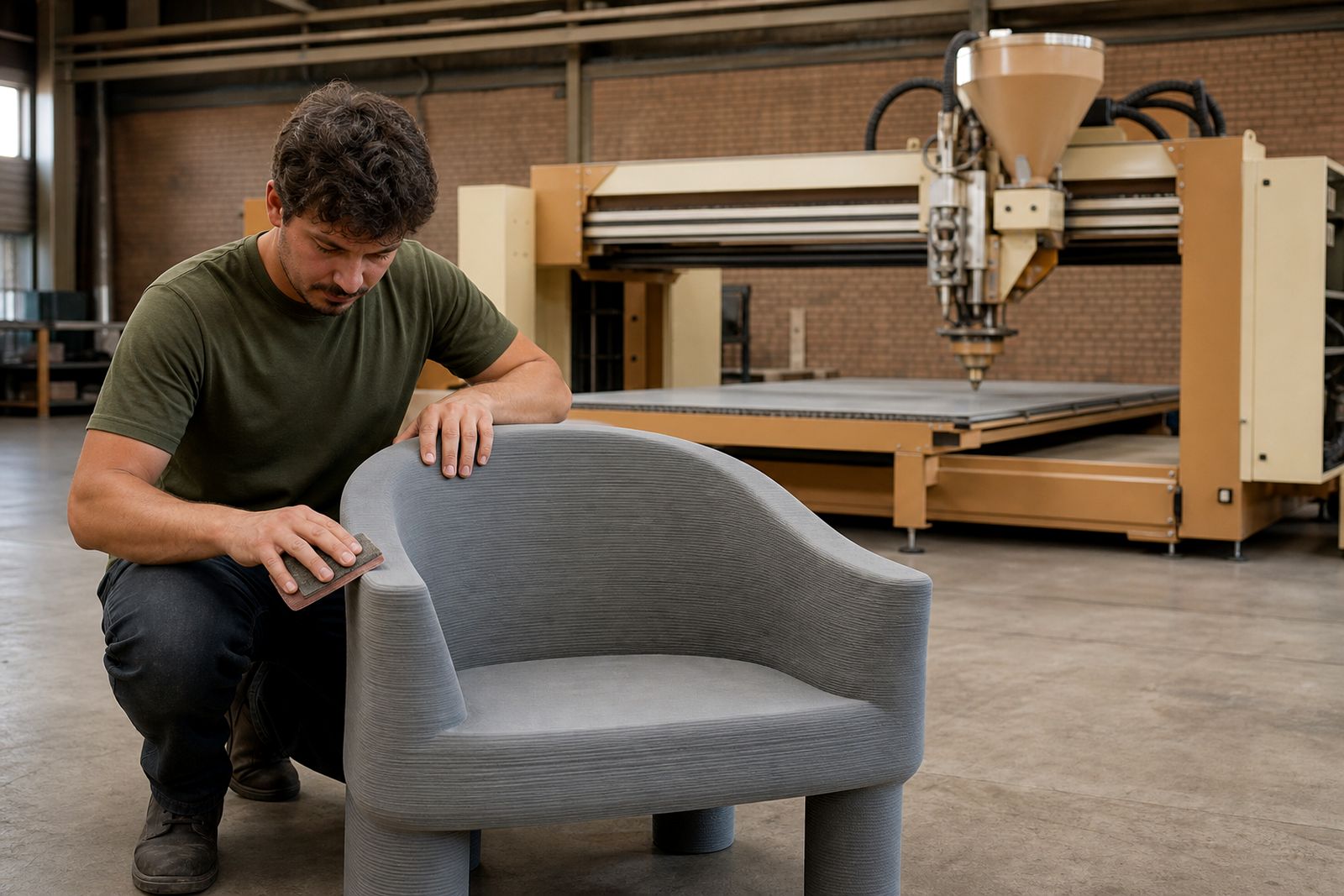
3D printed furniture
Practical notes on printing chairs, tables and benches in one piece with pellet-fed large-format systems.
Read more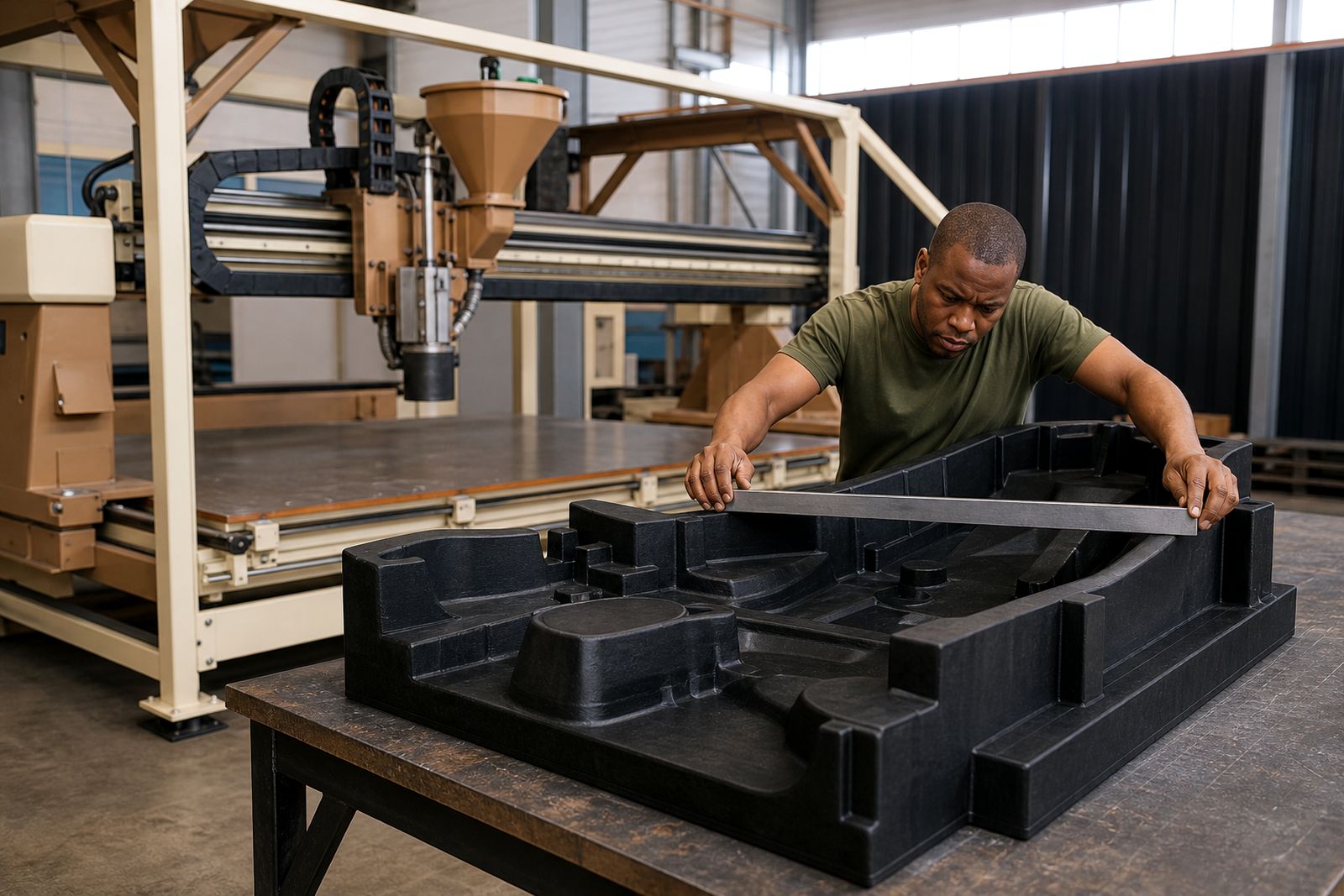
Moulds and tooling
Large printed moulds and tooling help workshops cut waste, shorten pattern making and handle bigger parts more sensibly.
Read more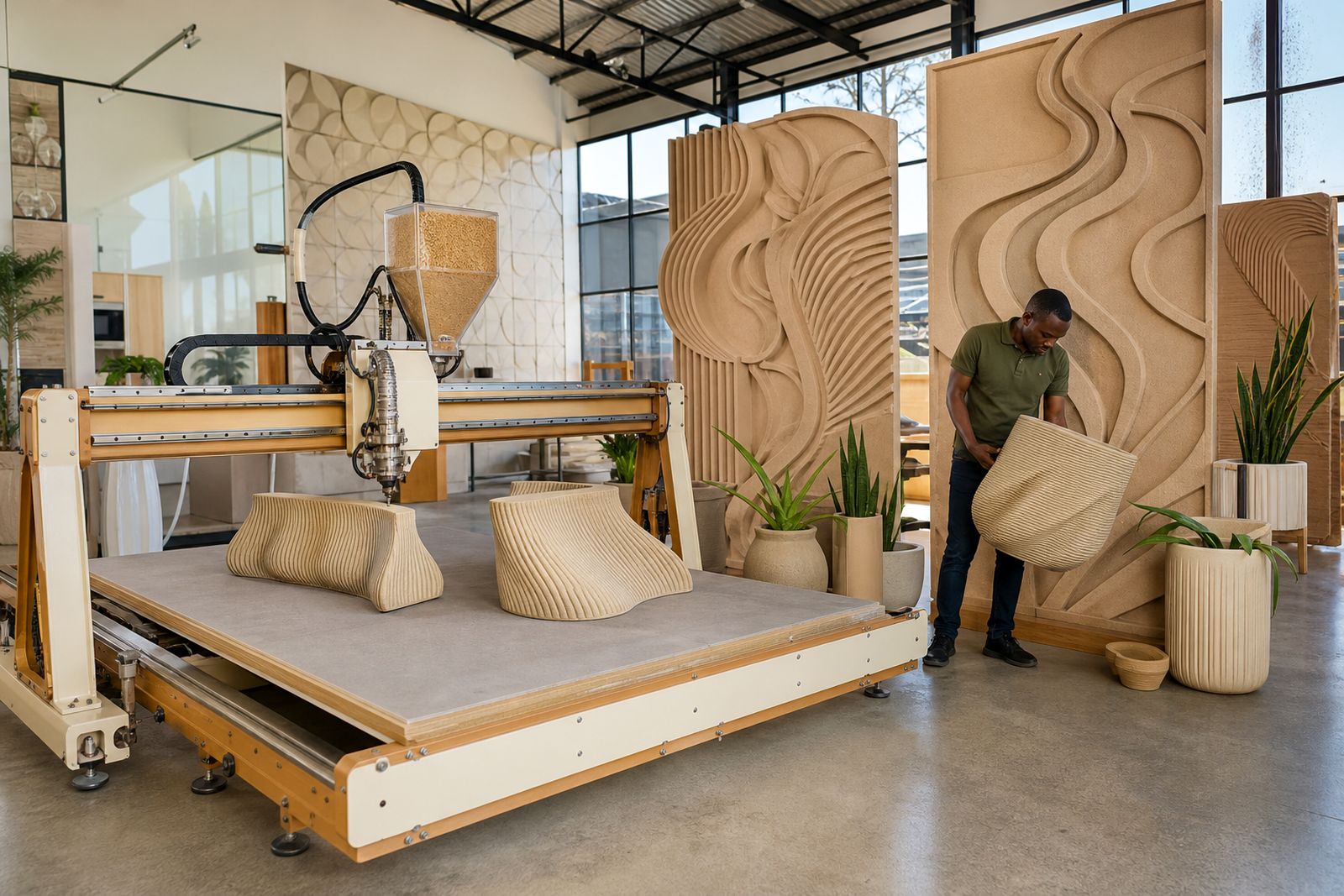
Display and architectural pieces
Practical guidance for printing large display pieces, feature panels and planters with pellet-fed machines.
Read moreWhat our Pellet 3D Printing customers say
Verified Google reviews
Questions we get asked
Can pellet printers make finished furniture, not only prototypes?
Yes. They are used for end-use furniture such as benches, chairs, planters and tables, provided the material, wall strategy and finishing method suit the real service conditions.
Are pellet printers mainly for moulds and tooling?
No. Tooling is a strong use case, but the same process is also used for display pieces, architectural forms, foundry patterns and short-run product components.
How do I decide between furniture, tooling and display applications?
Start with the job of the part. If it is the final product, furniture logic applies. If it supports another manufacturing process, treat it as tooling. If visual scale leads the brief, display and architectural planning usually makes more sense.
Tell us about the job
Send sizes, materials and where you are through our contact form, and we will come back with the practical options.
Open the contact form