

Installation and operator training
A pellet-fed large-format printer needs more than delivery and placement before it can produce stable parts. We handle installation, setup and operator training so your team can move into practical production with the right material flow, machine settings and daily checks.
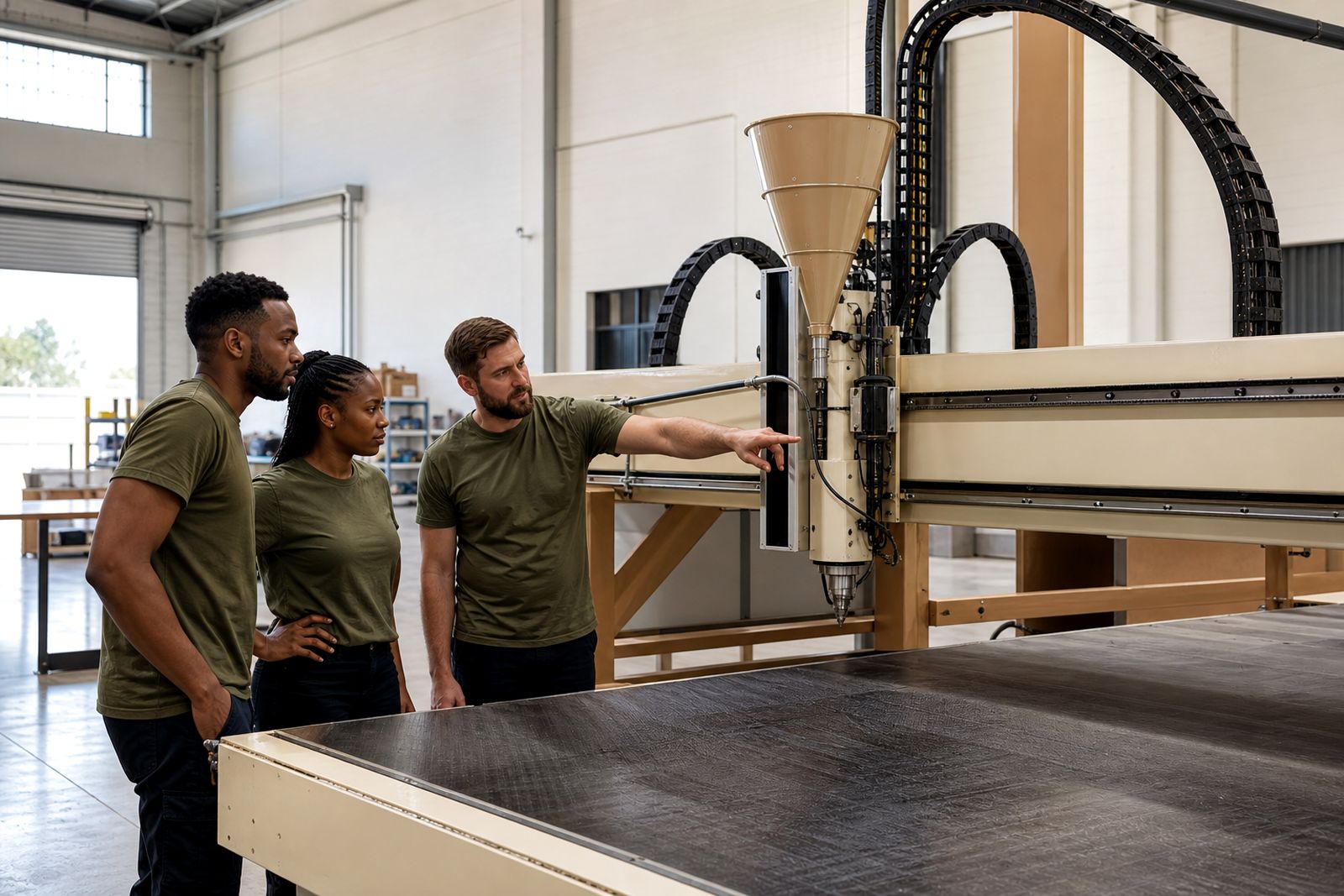
Getting the machine ready for production
Installation starts with the printer in its intended working position, level on the floor and connected to the correct power supply. Pellet systems are heavier and mechanically different from filament machines, so setup covers the frame, motion system, screw extruder, pellet feed path, heating zones and safety checks before any test print starts.
Our team works from a practical handover list on site. That includes electrical connection checks, machine levelling, movement checks on each axis, heater testing, extrusion checks and confirmation that the pellet feed is clean and dry enough for startup. If the printer is going into a factory with long operating hours, we also look at working space around the machine for loading pellets, removing printed parts and routine service access.
- Machine positioning and floor level checks
- Main power and isolator confirmation
- Motion, heater and control testing
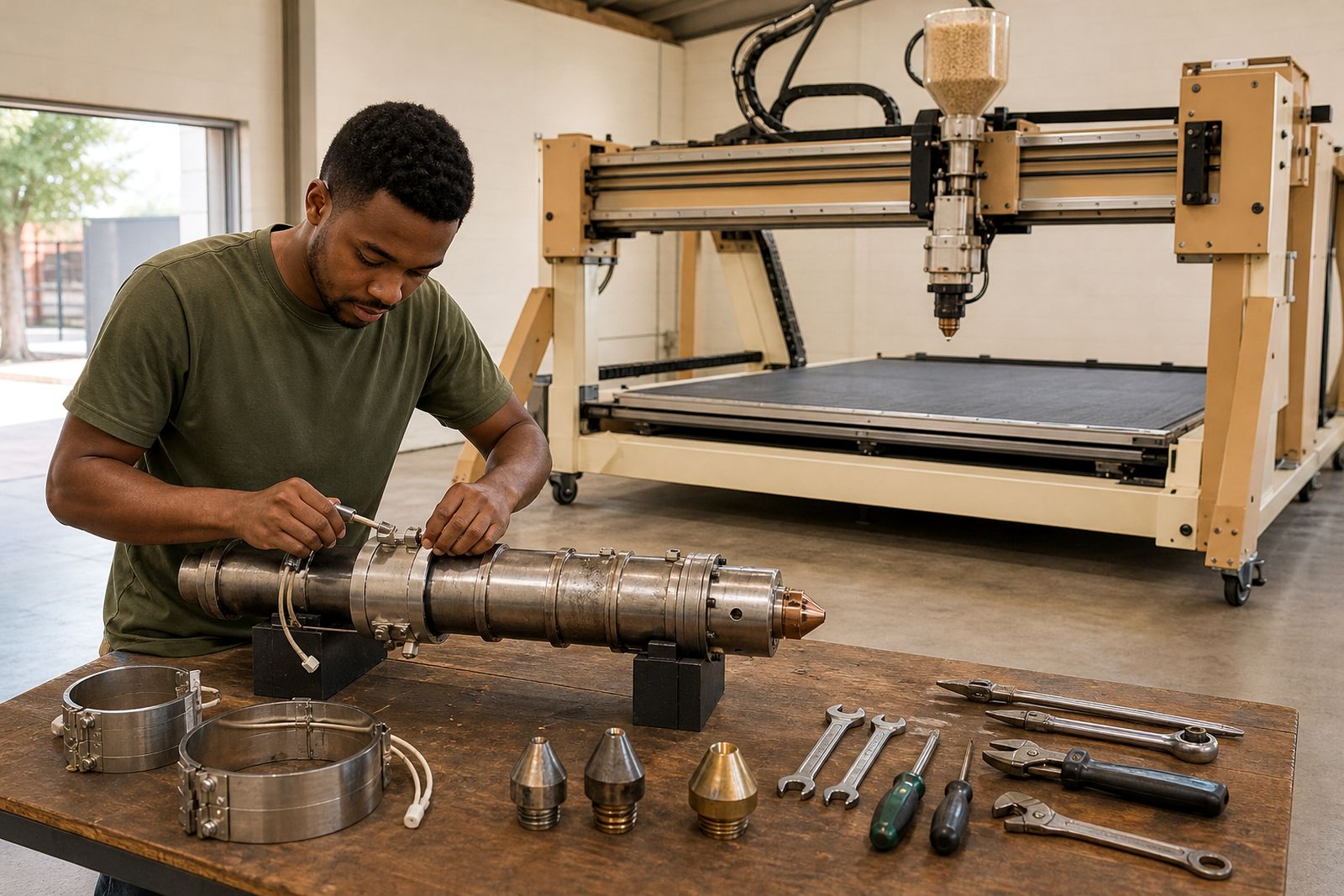
- Extruder and nozzle inspection before first heat-up
- Pellet feed path and dryer connection checks where fitted
What the installation visit includes
The installation visit is aimed at getting the system printing properly, not only turning it on. We set up the machine controls, check basic calibration, load suitable pellets for commissioning and run first prints that show extrusion consistency, layer placement and bed adhesion. On larger jobs this can include checking a drying unit, hopper loader or feed arrangement linked to the printer.
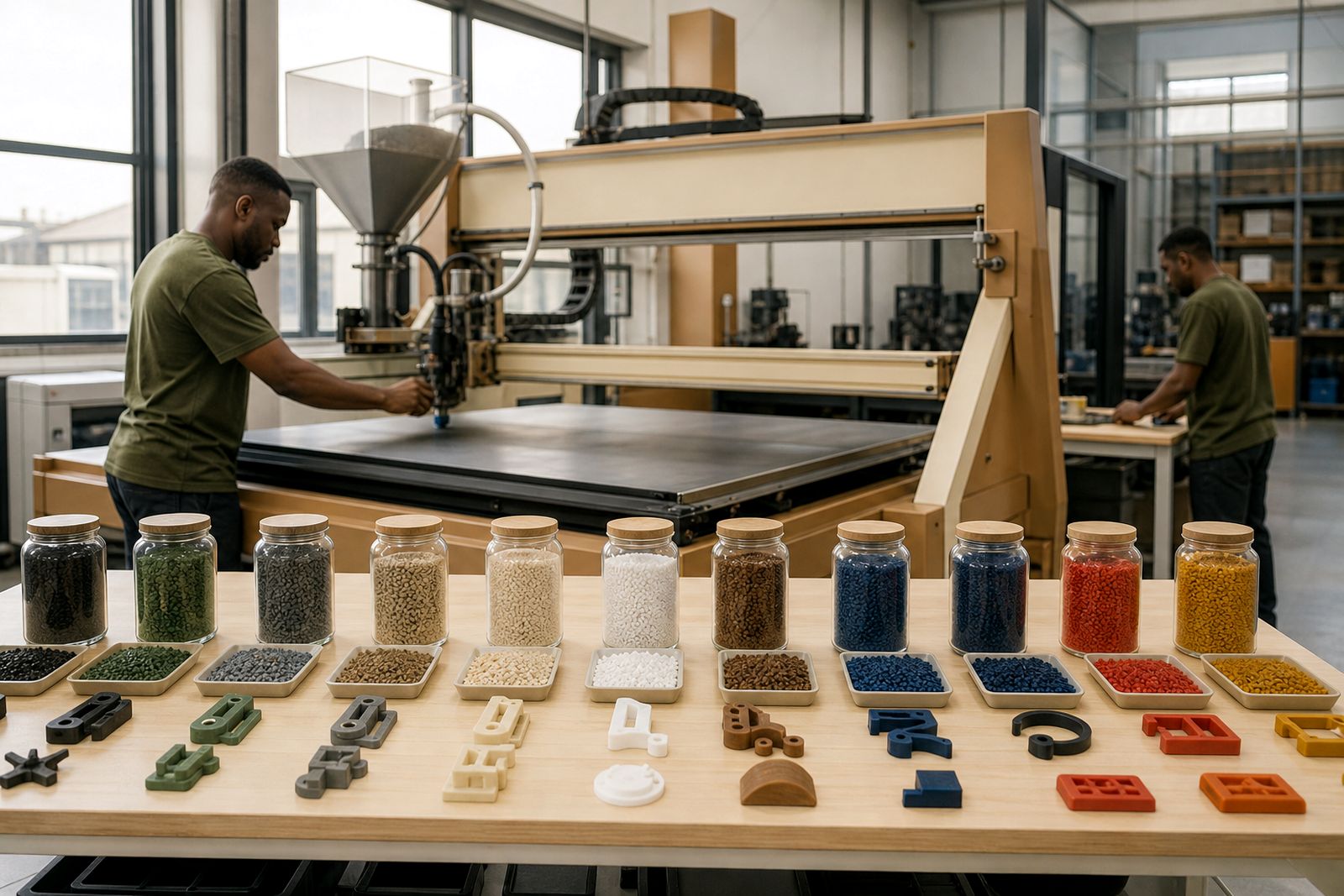
Where the application is furniture, moulds or architectural pieces, the first setup usually focuses on large-nozzle output, bead width, layer height and steady pellet flow. That matters because pellet-fed equipment responds differently from filament systems, especially on thicker walls, broad flat sections and long print runs. We will also note any site factors that affect output, such as temperature swings, dust and coastal humidity, which can upset moisture-sensitive materials if pellets are left open too long.
- Control setup and startup checks
- Basic calibration for printing stability
- Test extrusion and first sample parts
- Material handling guidance for the chosen pellet grade
- Operator handover on daily startup and shutdown
Training that matches the actual job on your floor
Operator training is done around the parts you expect to print, whether that is seating, display forms, mould patterns or tooling blocks. We cover the practical side first: loading pellets, preheating in the right order, checking dryer status where used, nozzle purging, bed preparation and monitoring bead shape during the early layers.
After that we move into print settings and routine decision-making. The team is shown how larger nozzles change slicing choices, how to read extrusion behaviour during a run, and when a setting change is sensible versus when material moisture or feed interruption is the real cause. This part of training helps avoid wasted pellets and long failed prints, which can happen quickly on large-format work.
Training can include supervisors, operators and maintenance staff in separate sessions if needed. That keeps daily running, print preparation and mechanical upkeep clear for each role, a small thing that saves confusion later.
- Safe startup, heating and shutdown sequence
- Pellet loading, drying and storage practice
- Slicing guidance for large nozzles and thicker layers
- Reading bead quality, adhesion and warping signs
- Cleaning, purging and basic preventive care
What your site should have ready
A smooth installation depends on the site being prepared before the machine arrives. The printer area should be clean, accessible for offloading and large enough for operation, service access and part removal. Power must be available at the required specification, with proper earthing and an accessible isolator near the machine position. If a dryer, loader or extraction arrangement forms part of the setup, those points should be ready as well.
Pellet material for commissioning should be kept sealed and dry. For materials such as PETG, ABS, PP and fibre-filled grades, moisture control is not optional. Damp pellets can cause surface defects, bubbles and weak layers even when the printer itself is set correctly.
- Clear floor space and safe access route
- Correct electrical supply and isolation point
- Material handling area for sealed pellet storage
- Operators available for training during commissioning
- Forklift or lifting support where site conditions require it
If you are unsure about utility layout or floor placement, send the details through our contact form before the visit and we can advise on the arrangement.
How installation pricing is worked out
Installation and training costs are usually based on the size of the printer system, the accessories included, the site location and the amount of operator training required. A straightforward setup at a prepared workshop in Gauteng is very different from a multi-day factory installation in another province with drying equipment, feed systems and several operator groups.
We also consider whether the machine is being commissioned for general familiarisation or for a defined production task such as mould work or furniture components. Where material-specific setup is needed for PLA, PETG, ABS, PP or fibre-filled pellets, extra time may be allowed for testing and print tuning. Travel and site conditions form part of the scope, and any special lifting or electrical work outside the printer itself is normally handled separately by the client's appointed contractors.
Aftercare once the first prints are done
Support does not end at the first successful print. Once the machine is in use, operators often need guidance on nozzle changes, material swaps, bead control or maintenance intervals as production starts to settle into a pattern. Our Midrand team supports workshops and factories in every province with follow-up technical help, service planning and spares for pellet-fed large-format systems.
Aftercare typically covers advice on print consistency, wear items and routine checks that keep the screw extruder and motion system working properly. If your team is moving from trial parts into full-size furniture or tooling, we can also help refine slicer settings and material handling practices so output stays usable rather than turning into scrap.
For ongoing support or to arrange installation planning, use our contact form.
What our Pellet 3D Printing customers say
Verified Google reviews
Questions we get asked
Do you train operators on our own parts and materials?
Yes. Training is more useful when it reflects your intended work, so we align setup and operator instruction with the pellet material and part type you expect to run.
Can you install outside Gauteng?
Yes. We install and support pellet-fed large-format printers for workshops and factories in every province, with scope adjusted for travel and site conditions.
Do we need dry pellets before commissioning?
In most cases, yes. Moisture in pellets can affect bead quality, layer bonding and surface finish, especially with hygroscopic materials, so sealed and properly dried material is important for a clean startup.
Also worth a look
Tell us about the job
Send sizes, materials and where you are through our contact form, and we will come back with the practical options.
Open the contact form