

Service and spares
Pellet-fed large-format 3D printers work hard on heat, pressure and abrasive material flow, so planned service matters. We support the wear parts and mechanical checks that keep screw extruders, heaters and nozzles printing cleanly in South African workshop conditions.
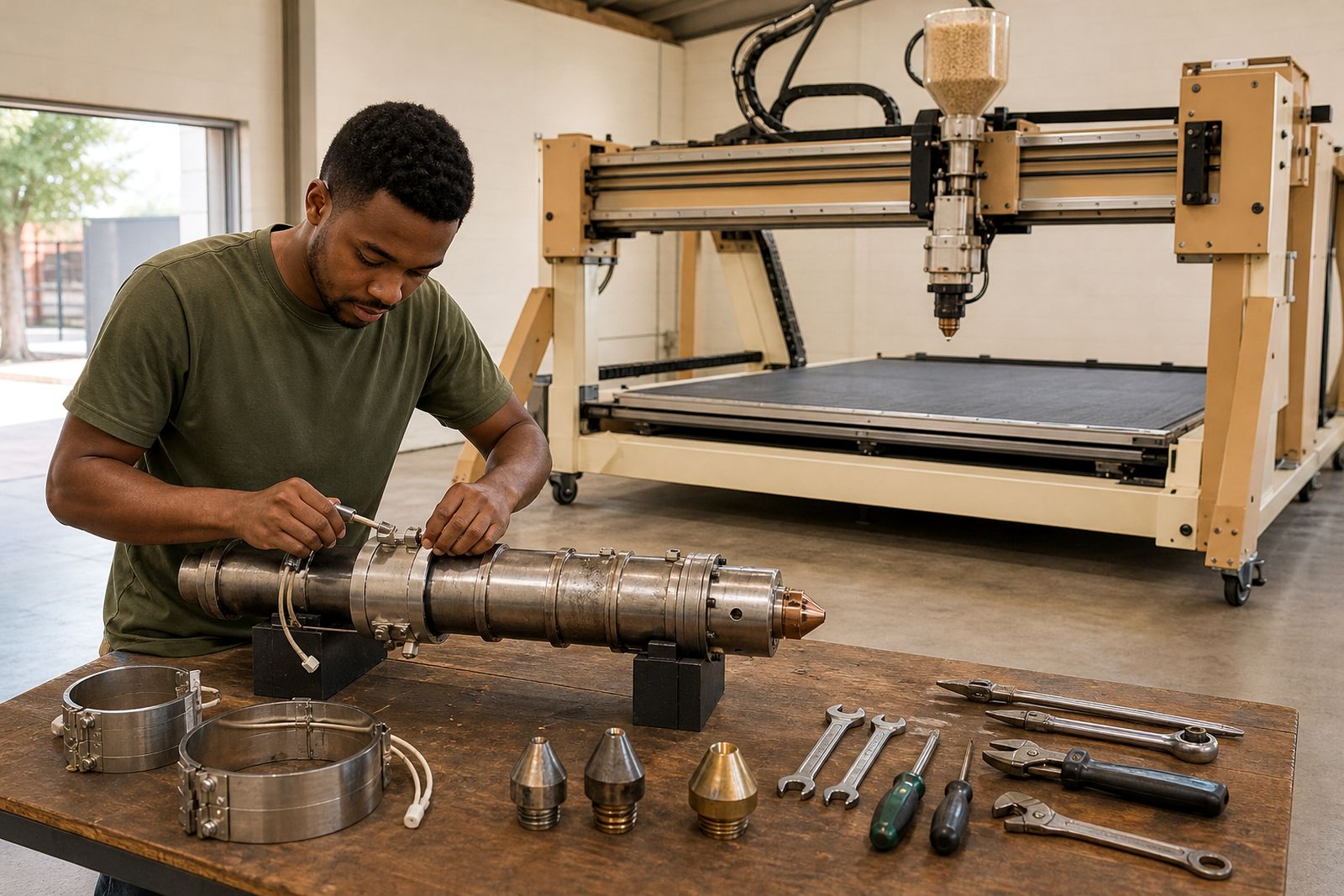
What our service covers on pellet systems
Our service work is centred on the parts that see heat, friction and constant material movement. On pellet printers, that usually means the screw extruder assembly, barrel, heater bands or cartridges, thermals, nozzles, feed path components and the settings linked to steady output. We also inspect motion hardware, bed condition, cable routing, safety items and the general print environment where these machines stand for long shifts.
Support can be planned around routine maintenance or arranged when print quality drops, feeding becomes erratic, a heater fails, the nozzle shows wear or the machine has stood idle for a while. In Gauteng we often see fine dust, winter temperature swings and busy factory floors affect consistency, while coastal workshops may deal with pellet moisture and corrosion risk.
- Inspection of screw, barrel and nozzle wear
- Replacement of heaters, sensors and related hot-end parts
- Feed path checks including dryer and hopper connections where fitted
- Motion and gantry review for large-part accuracy
- Extrusion tests for flow stability and bead shape
- Basic operator guidance after the work is done
Wear parts that matter most
Pellet systems differ from filament machines because the extruder is doing more mechanical work. A worn screw can reduce output stability, a marked barrel can affect pressure, and an oversized or damaged nozzle can spoil bead control on long runs. Fibre-filled grades speed up wear, especially where larger nozzles are used for furniture, moulds or display forms.
We keep service focused on the parts that have the biggest effect on print quality and machine uptime. Where replacement is the better route, we fit matching components suited to the machine configuration and the material range being run.
- Screws for pellet extrusion assemblies
- Barrels and liners where the machine uses them
- Nozzles in common large-format sizes
- Heater elements and temperature sensing parts
- Seals, couplings and feed-related consumables
- Selected electrical and control-side service items
Not every symptom points to a failed part. Sometimes the issue is wet pellets, a slicing profile that overdrives output, poor reheat after a pause, or bed conditions that let a large print drift off level. That is why service includes diagnosis, not only swapping components.
Step by step from fault report to recommissioning
We start with the machine model, the material being used and the fault pattern. Useful examples are under-extrusion after warm-up, surging during long walls, burnt material at the nozzle, heater alarms, rough surface finish or layer inconsistency on broad sections. Photos of the extruder area, control messages and sample parts help narrow it down before a visit.
On site, the technician checks mechanical condition, heat performance, feed condition and extrusion behaviour. If wear or failure is confirmed, the affected parts are removed and fitted, then the printer is tested under heat with a suitable material. After that, we review the print profile and operator routine so the same fault does not return from a settings issue.
- Initial fault review and machine details
- Site visit or planned maintenance booking
- Inspection, testing and strip-down where needed
- Replacement of approved service parts
- Heater, feed and extrusion verification
- Print test and operator handover
Where a machine has been stopped for some time, recommissioning may also include cleaning out aged material, checking pellet drying practice and resetting baseline temperatures. On some jobs a small change in nozzle choice or layer width makes a very noticeable difference.
What to prepare before the technician arrives
A clear working area around the printer saves time and avoids half-done checks. The machine should be accessible from the pellet feed side, the extruder side and the control side. Please keep a sample of the material that was running when the fault appeared, plus two or three printed examples showing the problem. If the site uses regrind or recycled pellets, note the blend and screen size as that can affect feed consistency.
For proper testing we may need the same pellet grade, the normal slicing file for that part type and any current nozzle settings. If your team has changed temperatures, speeds or bead widths recently, include those notes as well. A quick log from the operator is often enough, no long report needed.
- Safe access around the printer and gantry travel area
- Machine powered and available for heat testing
- Material samples from the affected run
- Recent slicing settings or machine profile export
- Examples of failed or inconsistent parts
- Authority for downtime during service and test prints
How service pricing is worked out
Service pricing depends on the call-out location, the condition of the machine, the time needed for diagnosis, and the parts required. A straightforward heater or nozzle replacement is not costed the same way as a full strip-down of a worn screw extruder, and a planned maintenance visit is usually easier to budget for than an urgent stoppage with unknown cause.
Travel from Midrand, labour time, replacement components and test material are the main factors. If the printer has damage caused by contaminated pellets, severe nozzle blockage or prolonged running with incorrect temperatures, that repair scope can increase. We keep the breakdown practical so the client can see where the work sits and what is being changed.
For larger factories with more than one pellet machine, it often makes sense to group inspections, wear checks and service parts into a single visit. That can reduce repeated stoppages and gives the operators one maintenance baseline across the fleet.
Aftercare and service notes for longer component life
Once the machine is back in operation, we leave practical notes for the team on temperatures, warm-up routine, shutdown practice and the material handling points that affect wear. This is especially useful where the printer alternates between neat polymers and fibre-filled grades. A machine can print well one week and start chewing through nozzles the next if pellet moisture or contamination is ignored, so the aftercare side matters more than many shops expect.
We also flag any items that are not immediate failures but should be watched at the next interval. That could be screw wear trend, heater performance drift, gantry alignment or feed hardware that is starting to loosen under vibration. If you need planned support for a workshop or factory in any province, send the machine details through our contact form and we will scope the service correctly.
What our Pellet 3D Printing customers say
Verified Google reviews
Questions we get asked
Do you service filament-based 3D printers?
No. This service page is for pellet-fed large-format 3D printers that use screw extrusion and plastic granules.
Can you help if print quality is poor but no part has failed yet?
Yes. In many cases the cause is a mix of wear, pellet moisture, feed inconsistency or slicing settings rather than a single failed component.
Do you keep parts for abrasive materials?
We support machines running standard and fibre-filled pellet grades, and we check wear closely where abrasive compounds are part of normal production.
Also worth a look
Tell us about the job
Send sizes, materials and where you are through our contact form, and we will come back with the practical options.
Open the contact form