

3D printed furniture
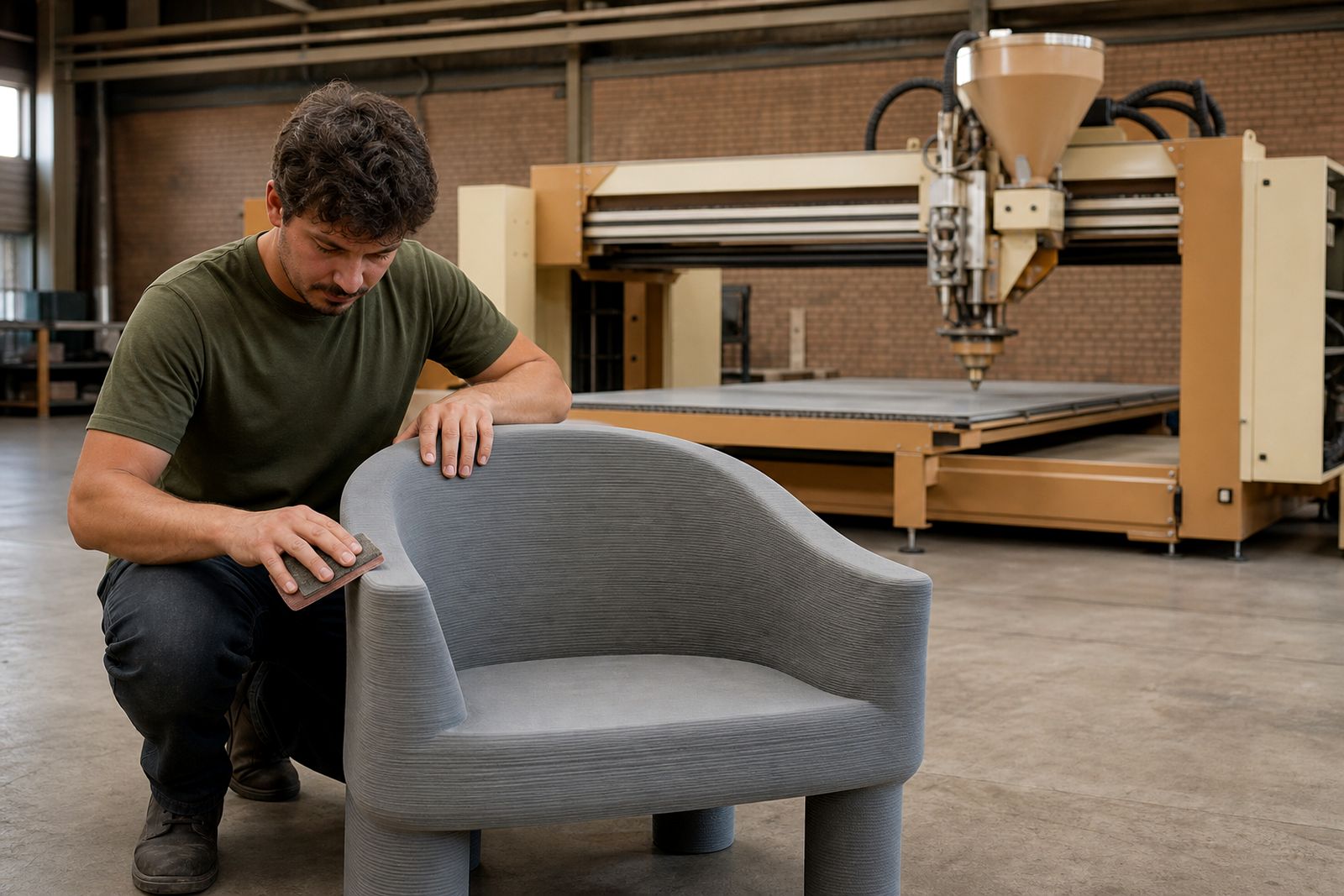
Furniture is one of the clearest uses for pellet-fed large-format 3D printing because the parts are large, repeatable and often costly to machine by hand. When a chair shell, bench seat or table base can be printed in one piece, workshops cut joining, trimming and material waste.
Where pellet printing fits in furniture work
Large-format pellet printing suits furniture best when the part is too big for a typical filament machine and too time-heavy for hand-built moulds or carved patterns. A one-piece seat, curved bench, sculpted side table or planter bench combo can move from CAD to a physical part without splitting the form into many smaller sections. That matters in studios and factories where assembly marks, weak join lines and sanding labour all add cost.
The real gain is not novelty. It is process control. Pellets feed through a screw extruder, so material cost is usually easier to manage on bulky parts and deposition rates are better suited to broad surfaces. For furniture this means you can produce full-scale prototypes, short production runs or tooling masters with a route that matches the size of the object rather than forcing the object to fit a small machine.
- One-piece forms reduce bonding and mechanical fixing.
- Large nozzles help fill volume quickly on thick sections.
- Pellet materials offer a wider route into utility grades and fibre-filled options.
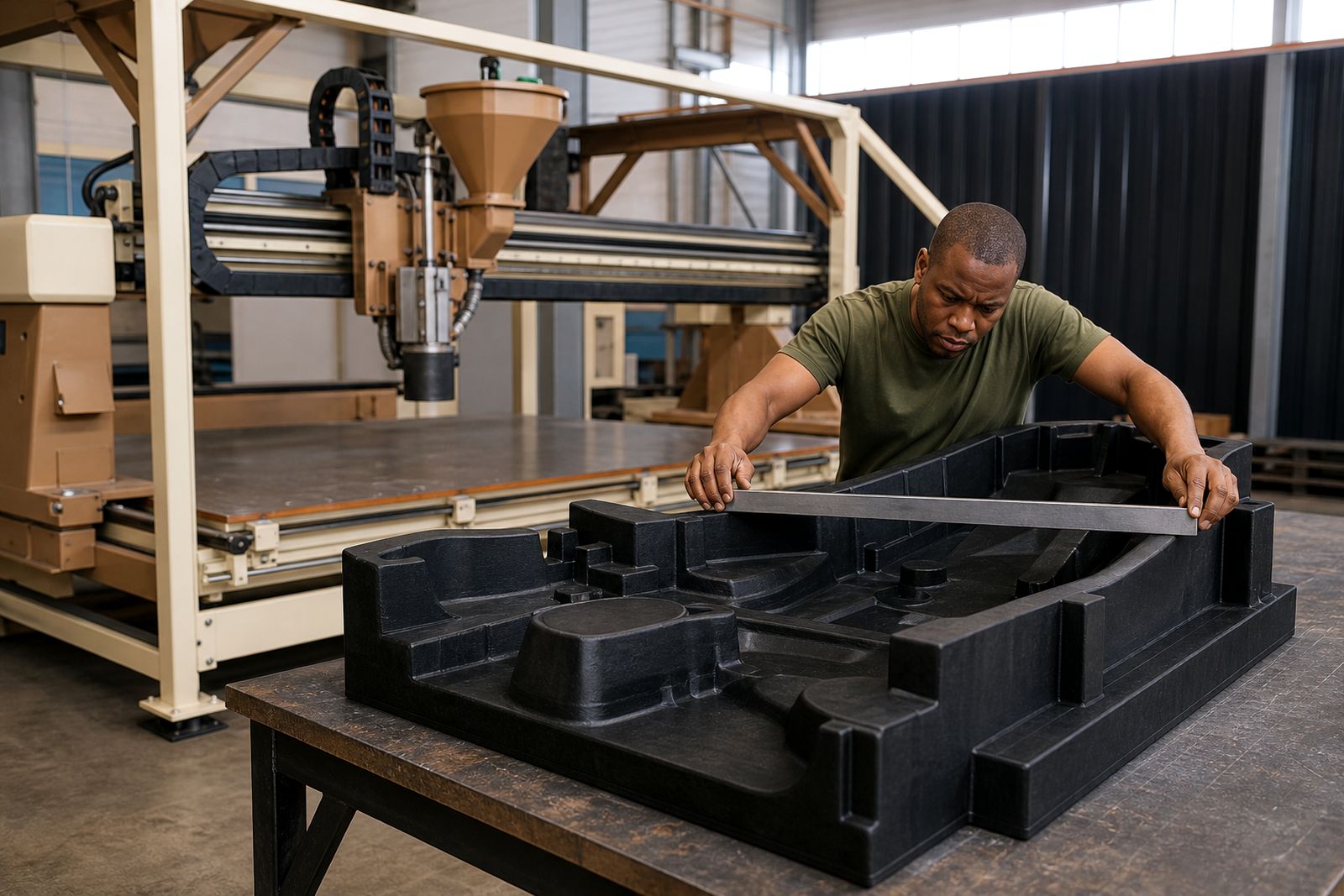
- Printed parts can be used as final pieces, patterns or mould bases depending on the finish required.
Chairs, tables and benches need different print logic
Not all furniture behaves the same on the machine. A chair shell carries concentrated load where people sit back and shift weight. A table base deals with torsion and rocking. A bench often has a long span, so heat build-up and cooling behaviour become part of the structural conversation. The print plan must reflect the job, not only the shape.
For chairs, the key question is where the highest stress sits once the part is in use. Layer direction, wall thickness, rib placement and the transition from seat to backrest need proper thought before slicing starts. Tables usually allow more freedom because the top and base can be separated by function. A decorative pedestal might print as one body while the top remains another material. Benches often reward wider footprints and modest curves rather than sudden section changes, because steady bead placement gives more predictable cooling.
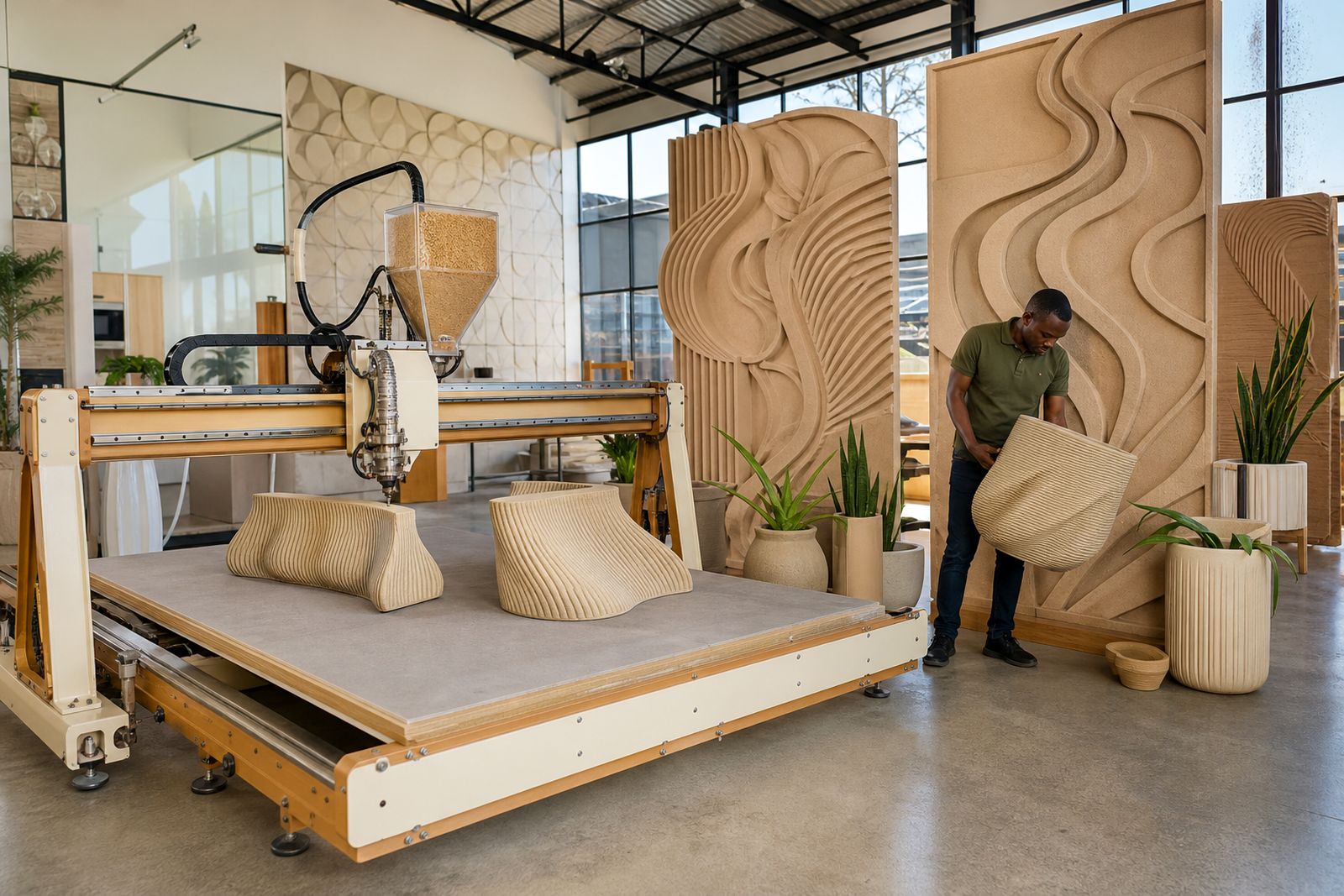
There is also the finish expectation. Some retail and hospitality pieces look good with visible layer lines and a bead-built texture. Others need machining, filling or coating after printing. That choice should be made early because it affects nozzle size, bead width and how much stock you leave for post-processing.
Materials that make sense for furniture
Material choice should match where the furniture will live and how it will be used. A display piece for an indoor launch has a different brief from a bench under a covered patio in Durban, or a café table base in a Johannesburg shop with heavy daily use. Pellet systems open access to common polymers used in production work, but each grade brings trade-offs in warpage, stiffness, impact strength and finish.
- PLA can suit concept models, indoor display furniture and quick validation where heat exposure is limited.
- PETG is often considered where a balance of printability and toughness is needed.
- ABS can be useful for harder-wearing parts, though temperature control matters during printing.
- PP deserves attention for certain lightweight utility pieces but needs a process that respects shrinkage and surface energy.
- Fibre-filled grades may improve stiffness for some forms, though nozzle wear and bead behaviour need checking.
Moisture control is not a side issue. In coastal conditions pellets can take up moisture quickly, which shows up as inconsistent extrusion, pitting or weaker surface quality. Drying and controlled feed handling are part of furniture production, especially on large prints that run for many hours. A workshop in Gauteng may have a simpler time than one near the coast, but both still need a material routine that operators can repeat without guesswork.
A Midrand workshop example
One local workshop near Midrand needed a faster route for outdoor seating prototypes and low-quantity site pieces. Their old method used cut sections, laminated layers and a lot of hand fairing before a painted finish. The forms looked right in renderings but ate labour on the floor, and every design change meant another cycle of cutting and reshaping.
They moved the job onto a pellet-fed large-format printer for seat shells and bench bodies with broad radii and integrated leg geometry. Instead of chasing a perfectly smooth print straight off the machine, the operator sliced for stable bead paths and allowed enough outer stock for sanding and coating. Material handling was tightened up, the nozzle choice was matched to the scale of the pieces, and test coupons were printed first to check bead fusion and surface behaviour. That small step saved a lot of wasted material later on.
The result was not magic. It was a better fit between process and product. The workshop reduced assembly work, cut the number of templates on the floor and made design revisions with less disruption. On some pieces they kept the printed texture visible. On others they finished the part for a cleaner painted look, depending on where the furniture was going.
Practical design rules before you send the file
Large furniture parts print best when the geometry respects the process. Sharp changes in section, thin unsupported edges and decorative details scaled for CNC often create trouble in pellet printing. The smartest furniture files are usually the ones that accept bead size, cooling needs and support strategy from the start.
- Keep wall transitions gradual where possible.
- Use ribs and returns for stiffness rather than only adding bulk.
- Allow room for machining or sanding if a refined finish is needed.
- Think about how the part sits on the bed and how support will be removed.
- Check whether the object should be printed as a final part, a mould master or a pattern for another process.
It also helps to decide what is truly worth printing in one piece. A bench may benefit from one-piece production, while a dining table could make more sense as a printed base with a separate top in timber, stone or composite. The point is not to print every component. The point is to print the components that gain the most from additive production.
What Pellet3D helps with on furniture projects
For furniture work, Pellet3D advises on machine fit, material direction, slicing choices and the site setup needed for large-format pellet printing. That includes discussion around operator workflow, pellet drying, nozzle selection and the level of finish the part must reach before handover to paint, machining or assembly. The aim is to match the printer to the kind of furniture being made, whether that is display seating, production benches, moulds for composite pieces or oversized statement forms.
We do not design furniture for clients and we do not run a contract printing line for volume production. The focus is on supplying, installing and supporting pellet-fed large-format systems for workshops and factories that want this capability in-house. If you are comparing one-piece furniture printing against filament methods or traditional build-ups, our contact form is the right place to start that conversation.
What our Pellet 3D Printing customers say
Verified Google reviews
Questions we get asked
Can pellet-fed printers make finished furniture parts?
Yes, depending on the design, material and finish standard. Some pieces are used with the printed texture visible, while others are sanded, coated or machined after printing.
Are one-piece prints always better for furniture?
No. One-piece production is useful where it removes joins, speeds up assembly or improves the form, but some items work better as a printed base with other components made separately.
Which materials are common for 3D printed furniture?
Projects often look at PLA, PETG, ABS, PP and selected fibre-filled grades. The best choice depends on load, finish, indoor or outdoor use, and how the workshop manages drying and processing.
Tell us about the job
Send sizes, materials and where you are through our contact form, and we will come back with the practical options.
Open the contact form