

Gantry pellet printers
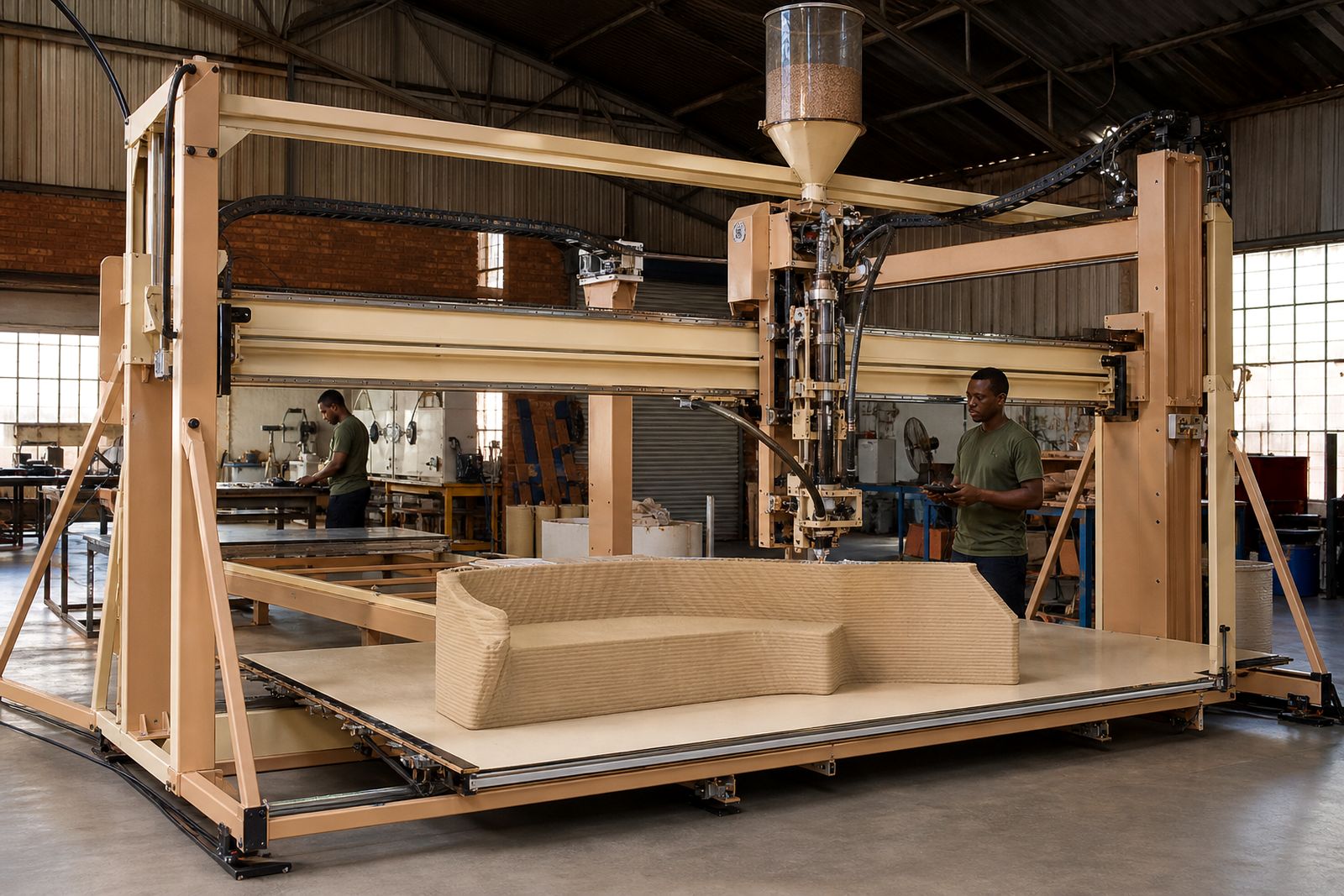
Gantry pellet printers are built for large parts that do not fit the pace or economics of filament machines. Pellet3D supplies open-frame systems for workshops and factories that need furniture-size output, mould work and big visual pieces.
Open-frame printing for bigger parts
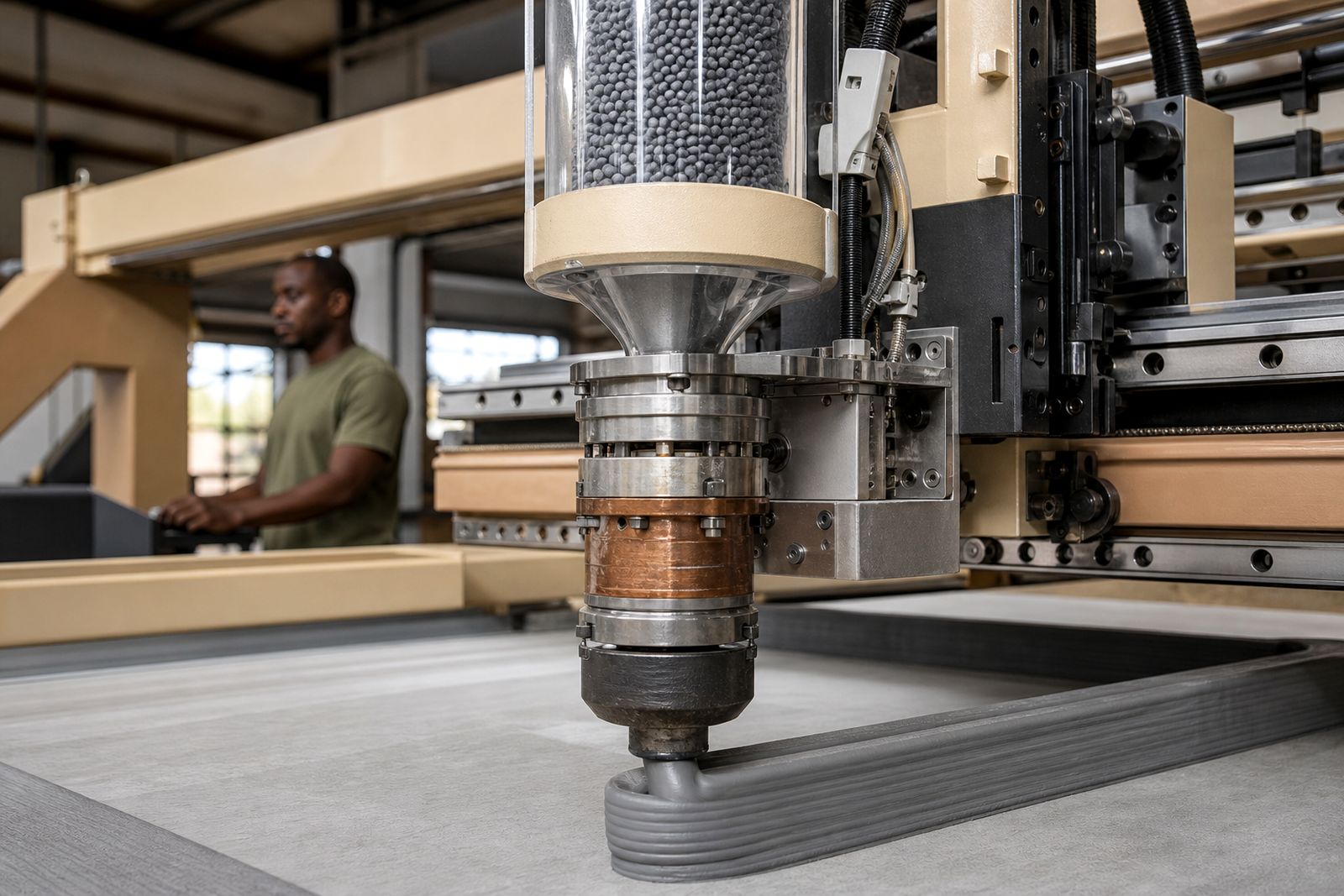
A gantry pellet printer uses a moving bridge and carriage over a fixed print area, with plastic pellets fed into a screw extruder rather than strand filament. That layout suits broad parts such as benches, chairs, tabletops, planters, patterns and mould sections where print area matters more than a closed cabinet. The machine stays accessible from several sides, which helps when loading a large build plate, checking bead laydown or lifting out a finished part with workshop handling gear.
For South African furniture studios, display workshops and mould shops, this format makes sense when part size and material cost push past the comfort zone of filament. Pellets are easier to source in production grades, and large nozzles can move material at a rate that makes substantial parts practical. Surface finish is different to a small fine-detail machine, but the trade-off works well where sanding, sealing, trimming or machining are already part of the job.
Machine range, options and working limits
Our gantry range covers different frame sizes, extrusion capacities and material handling options, but the choice should follow the parts you actually want to make. A furniture workshop printing occasional stools and side tables needs a different setup from a factory building mould sections and layup tools. We look at part footprint, target wall thickness, expected bead width, material family and the level of finish needed after printing.
- Open gantry frames for large-format parts with good all-round access.
- Screw extruder configurations matched to higher flow pellet output.
- Nozzle options for broader beads, faster laydown and different material behaviour.
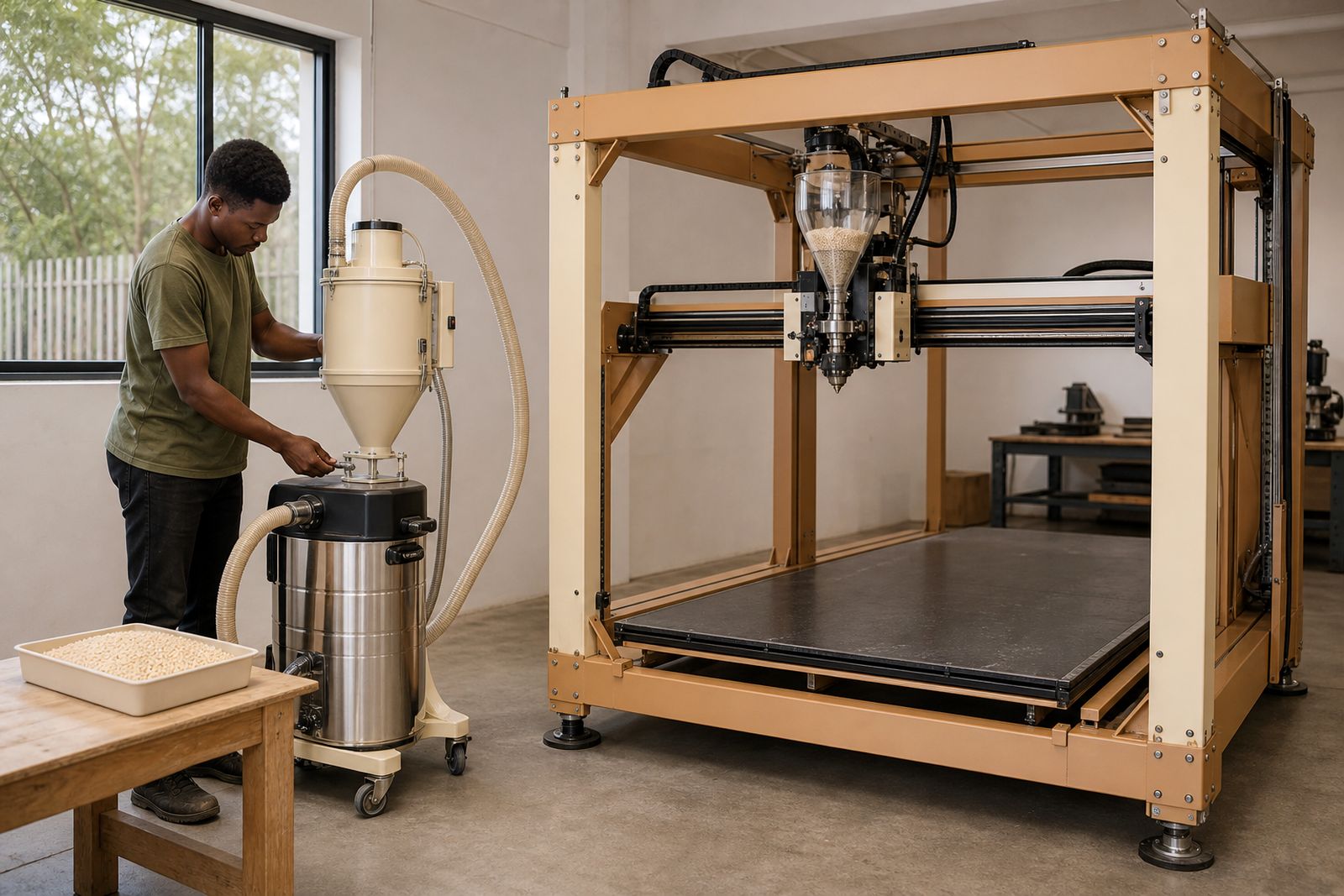
- Pellet feeding and drying arrangements where moisture control matters.
- Build surfaces and adhesion methods selected for part size and polymer type.
These machines do have limits. They are not the right pick for very small cosmetic parts, tight miniature detail or jobs where every surface must leave the machine ready for retail display. Very tall narrow prints can need extra planning for stability, and some polymers demand stricter temperature control than an open-frame workshop can provide in winter or in a draughty coastal space. If your work centres on compact engineering parts, a pellet gantry can be the wrong tool even if the material cost looks attractive.
Where a gantry pellet printer fits well
The strongest fit is in production environments that already understand making, finishing and handling large components. A furniture manufacturer can print shells, seating forms and moulds, then move them into trimming, reinforcement or coating steps. A display fabricator can produce oversize letterforms, retail features and event pieces without splitting every job into many small panels. Tooling teams can print patterns, thermoforming moulds and composite support tooling where lead time on conventional machining is hard to justify.
- Furniture pieces and components with post-processing built into the workflow.
- Planters, benches and other broad forms for indoor or sheltered outdoor use.
- Casting patterns, foundry forms and mould masters.
- Thermoforming moulds and composite layup tools.
- Display items, exhibition forms and architectural features.
It suits teams that can dedicate floor area to one large machine and move parts safely. It does not suit a cramped office setup, nor a studio that needs silent operation and dust-free finishing in the same room. If mains quality is poor or workshop temperatures swing sharply, we will factor that into the recommendation because print consistency can drift if the environment is neglected a bit.
Installation needs on site
Before installation, the printer location should be considered like any other piece of workshop equipment. The frame needs level flooring, access for offloading and enough clearance around the machine for maintenance, pellet loading and part removal. In Midrand, Johannesburg, Pretoria and the rest of the country, site conditions vary widely, from polished factory slabs to lighter industrial units with tight roller door openings, so we check practical details first.
- Stable floor area with room around the machine, not just the footprint.
- Reliable mains supply suited to the chosen heater and motion system.
- Dry pellet storage close to the machine, especially in humid coastal areas.
- Ventilation appropriate to the polymers being processed.
- Safe material handling for large printed parts and build plates.
Open-frame printers also need sensible control of dust and loose workshop debris. They are not fragile, but contaminated pellets, damp material and poor housekeeping create avoidable print faults. Where municipalities or property rules affect extraction, loading access or operating hours in mixed-use parks, those should be sorted before delivery. We cover installation, setup and operator training so the machine enters a workable routine rather than standing idle after placement.
Care, daily checks and operator habits
A pellet gantry rewards steady habits more than complicated rituals. Material must stay dry where the polymer calls for drying, the screw and nozzle need regular inspection, and the build surface should be prepared consistently. Most quality problems seen on large-format jobs come from skipped basics: mixed pellets, damp feedstock, poor first-layer setup or over-optimistic speed on a broad bead.
Operators should also understand that large-nozzle slicing behaves differently from fine filament profiles. Layer height, bead overlap, cooling and path strategy affect strength and finish in very visible ways. When a workshop changes from PLA to PP or moves into fibre-filled grades, those settings and handling steps need to change too. We advise on practical material use, slicing choices and service items, with support that matches workshop production rather than hobby use.
What to send when you enquire
The clearest starting point is a short note on the parts you want to make and the space where the machine will stand. Through our contact form, tell us whether the work is furniture, moulds, display pieces or tooling, and whether you expect one-off development, short runs or regular production. That lets us narrow the frame size, extrusion output and material path without wasting time on unsuitable options.
- Typical part type and the largest overall size you need to print.
- Main materials you expect to run, such as PLA, PETG, ABS, PP or fibre-filled grades.
- Surface finish expectations and what post-processing you already do in-house.
- Available floor space, power supply and whether the site is inland or coastal.
- Who will operate the printer and their level of slicing or machine experience.
If you already have sample files or drawings, mention that too. We do not design furniture for clients and we do not run contract printing at volume, but we do help match the machine to the production task, train operators and support the printer once it is on your floor.
What our Pellet 3D Printing customers say
Verified Google reviews
Questions we get asked
Are gantry pellet printers suitable for finished furniture straight off the machine?
They can produce the main form efficiently, but most furniture pieces still need trimming, sanding, sealing, coating or assembly before final use. The machine is strongest where post-processing is already part of the workshop flow.
Can these machines run recycled or regrind pellets?
In some cases yes, but the answer depends on pellet consistency, moisture control, contamination levels and the result you need on the part. We assess that with the material plan, nozzle choice and feed system in mind.
Do you supply smaller filament printers as well?
No. Pellet3D focuses on pellet-fed large-format systems, with installation, training and service for workshops and factories that need bigger output.
Tell us about the job
Send sizes, materials and where you are through our contact form, and we will come back with the practical options.
Open the contact form