

Pellet drying and feeding
Large-format pellet printing only stays clean and consistent when the material arrives dry and feeds evenly to the extruder. We supply dryers, hoppers and vacuum loading equipment matched to pellet-fed 3D printers used for furniture, moulds and large production parts.
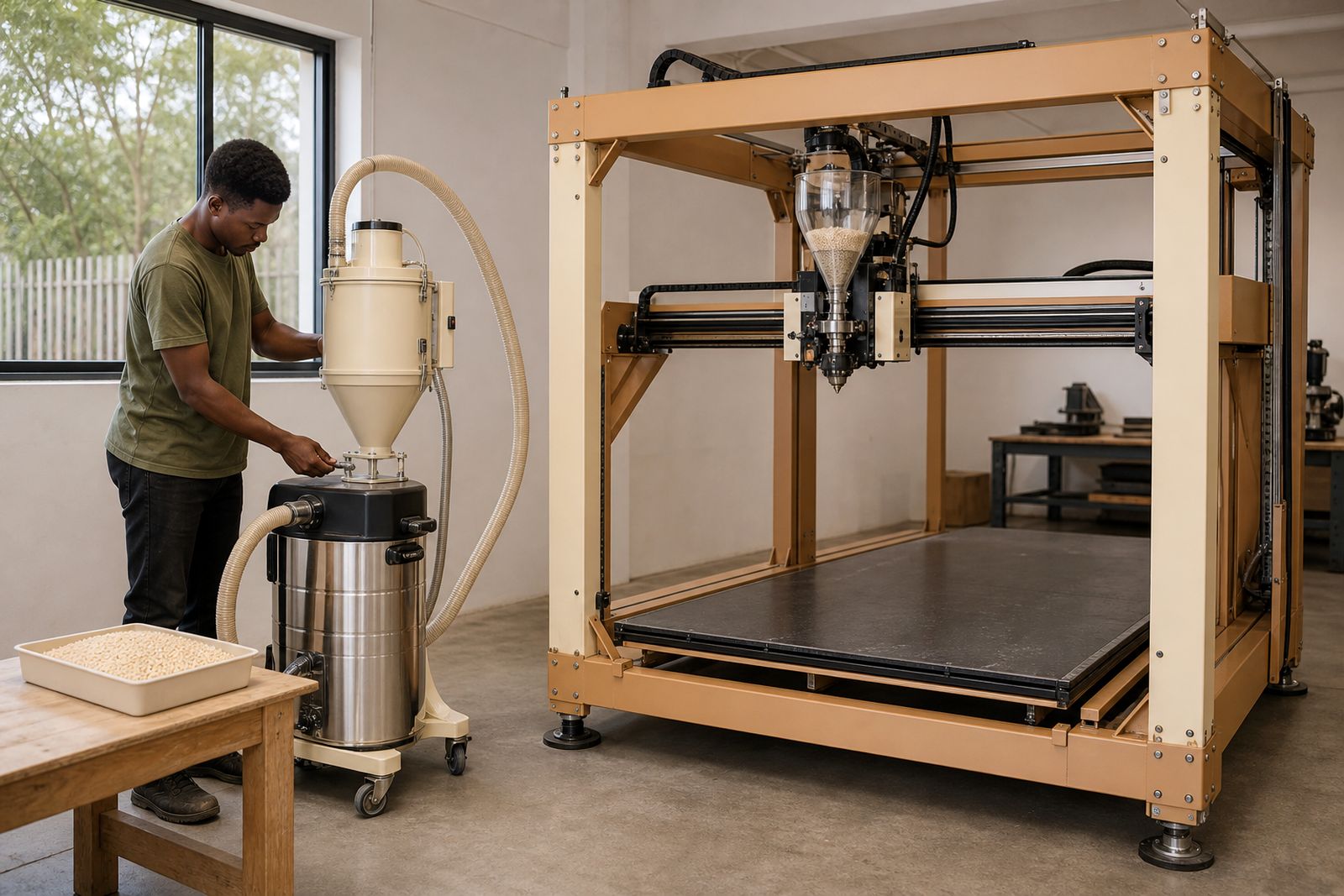
What this equipment does on a pellet printer line
Pellet drying and feeding equipment sits upstream of the printer and deals with two common causes of poor output: moisture in the granules and irregular material flow. With hygroscopic materials such as PETG and some fibre-filled grades, even a small amount of absorbed moisture can show up as bubbles, rough surfaces, poor layer bonding or unstable extrusion. A proper drying and loading setup helps the screw extruder receive a more consistent feed rate, which matters on long furniture panels, mould sections and thick-wall display pieces.
On a pellet-fed system the material path usually starts with sealed storage, moves through a hopper dryer or drying bin, then feeds by gravity or vacuum loader into the printer hopper. That chain needs to match the print rate, pellet size and working environment. In coastal areas where humidity sits high for much of the year, the dryer is often not optional, and in workshops with dusty grinding or timber work nearby, enclosed handling becomes more important than many teams expect.
- Hopper dryers for routine day-to-day pellet preparation.
- Vacuum loaders for cleaner transfer from storage drums or bins.
- Receiver hoppers that keep material above the printer ready for continuous extrusion.
- Feed line layouts suited to single-material or quick material-change work.
Sizes, options and working limits
The right setup depends on throughput rather than on the printer alone. A small dryer can be enough for occasional prototyping in PLA, while a production workshop printing larger benches, mould tools or repeated part batches may need a bigger drying reserve and automatic loading to stop the operator climbing ladders with sacks through the day. We help match the drying volume and loader duty to the expected nozzle size, layer height, material type and shift pattern.
Most systems fall into a few practical groups. Compact hopper dryers suit lower daily material use and shorter print runs. Mid-size drying hoppers cover mixed work where the machine alternates between furniture components and tooling. Larger central drying and loading arrangements suit factories that want fewer manual interventions and a tidier pellet path. Working limits usually show up in three places: drying temperature range, airflow and dehumidification performance, and the transfer distance or lift height the loader can manage without starving the hopper.
- Compact setups for lower throughput and frequent material changes.
- Mid-size hoppers for regular workshop production.
- Higher-capacity drying and loading for factory duty cycles.
- Options for clear sight glasses, level sensing, alarms and enclosed transfer.
Not every polymer needs the same treatment. PLA can often be managed with lighter drying control, while PETG, ABS, PP and fibre-filled pellets each need their own temperature window and handling approach. Regrind blends can also feed differently from virgin pellets, so the loader and hopper geometry matter more than people think.
Where drying and feeding suits, and where it does not
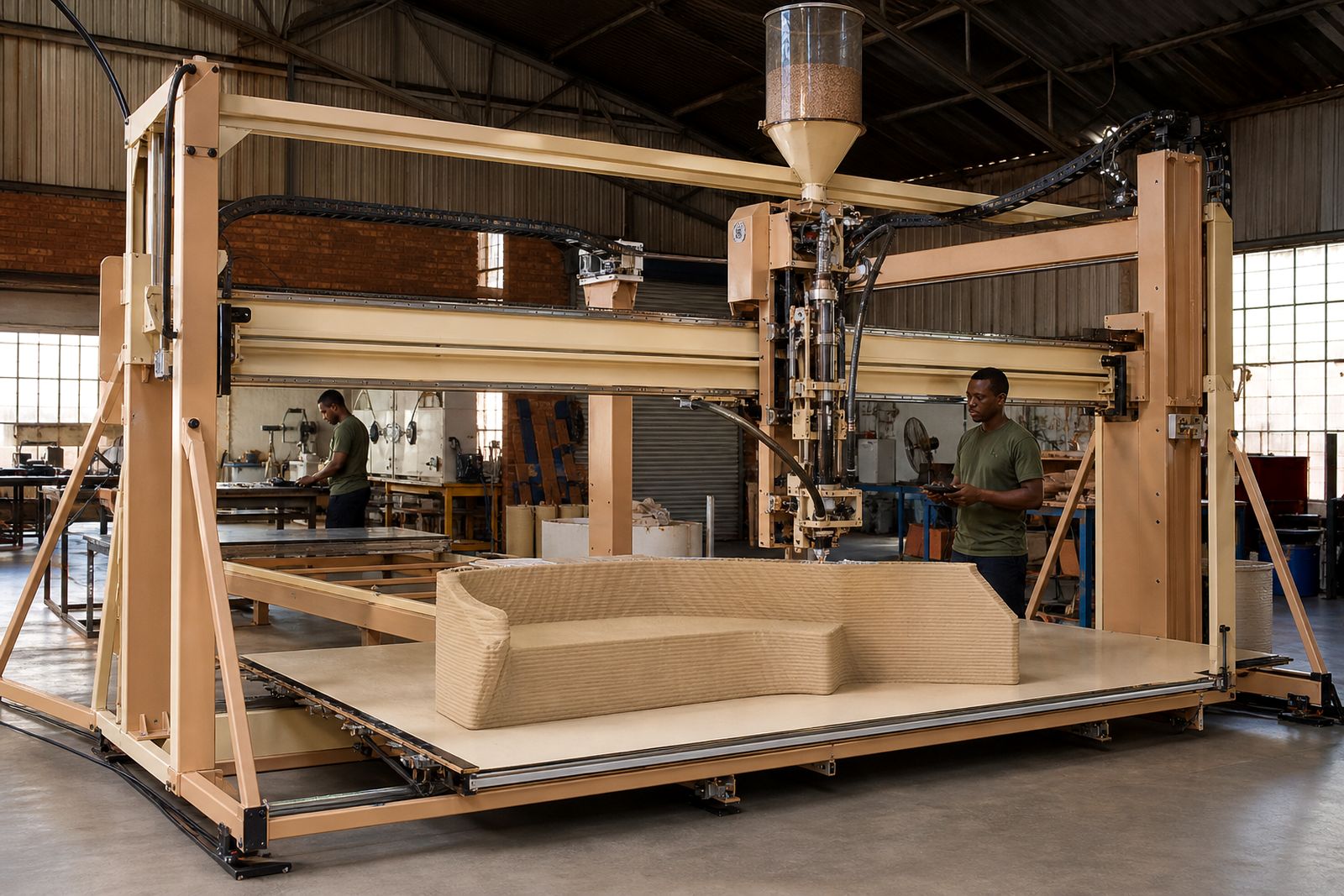
This equipment suits pellet printing where print quality and process stability matter over many hours. It makes sense for workshops producing chairs, tables, planters, casting patterns, thermoforming moulds and layup tools, especially where thick bead widths and long runs make any interruption expensive in material and machine time. It also helps when the pellets are stored for a while before use, or when material arrives from a humid transport route and needs conditioning before printing.
It is less useful when the work is very occasional and confined to easy-running dry materials kept in sealed indoor storage, although even then a simple hopper and loader can improve housekeeping. It is also not the right answer for every print fault. If a part is failing because of poor slicing, incorrect nozzle temperature, worn screw components or weak frame calibration, adding a dryer alone will not fix it. Dry material helps, but it cannot cover up a process that is off elsewhere.
- Well suited to long prints, larger nozzles and continuous extrusion.
- Useful in humid regions and workshops with open-bag material handling.
- Helpful for fibre-filled grades that need steadier feed behaviour.
- Not a substitute for correct slicing, nozzle setup or machine maintenance.
Installation needs in a South African workshop
Drying and loading equipment needs a sensible place in the material flow, not just an empty corner. We look at floor area, access for pellet bags or bins, overhead clearance above the printer hopper and whether the operator can clean and inspect the line safely. Electrical supply matters because dryers and loaders draw steady power, and on sites with load-shedding exposure it is worth planning how material conditioning is managed before a long print resumes. A dryer losing heat mid-process can put damp pellets straight back into the hopper if the routine is not thought through.
Workshops in Midrand, Johannesburg, Pretoria and further afield often differ more in housekeeping and airflow than in floor size. Fine dust from routing, sanding or trimming printed parts can contaminate open material handling, so sealed transfer lines and lid arrangements are often a better spend than oversizing the dryer. Some municipal and landlord rules also affect extraction routing and machine placement inside shared industrial parks, so it helps to flag these details early.
- Mains power sized for heater load, controls and vacuum transfer.
- Dry indoor placement away from wash-down zones and open doors.
- Safe access for filling, cleaning and filter changes.
- Material storage nearby so the operator is not dragging sacks across the shop.
Care, cleaning and day-to-day use
Good results depend on routine care. Dryer filters need inspection, loader hoses need checking for wear and leaks, and hopper interiors should be cleaned when changing between materials or colours. Fibre-filled pellets deserve extra attention because dust and short fibres can build up in places that seem minor at first but later affect feed consistency. A lot of feeding trouble starts with one partly blocked pickup line or a lid seal that no longer closes properly.
Operators should also keep an eye on pellet condition as it enters the system. If the granules show dust, clumping or obvious moisture signs, the issue is often upstream in storage rather than at the printer. We cover practical operating steps during installation and training so the team understands drying time, hopper refill habits and how to avoid mixing partly conditioned material with a fresh wet batch, which can make extrusion look slighly random from one layer band to the next.
Details to include when you enquire
To point you toward the right dryer, hopper and loader arrangement, we need a clear picture of the printer duty and the material handling around it. The most useful enquiries mention the main polymers, expected part types and whether the machine is running occasional prototypes or repeated production pieces. If you already know the nozzle range and bead size you expect to use, include that too, because it affects pellet consumption and feed stability more than many buyers realise.
Send these details through our contact form so we can advise on a practical setup for your site.
- Your province and town, plus whether the printer is in a workshop or factory.
- Main materials such as PLA, PETG, ABS, PP or fibre-filled grades.
- Whether you use virgin pellets, recycled pellets or regrind blends.
- Typical parts, for example benches, planters, moulds or display pieces.
- How often the machine will run and whether long unattended sections are expected.
- Any limits on floor space, height, power supply or dust control.
What our Pellet 3D Printing customers say
Verified Google reviews
Questions we get asked
Do all pellet materials need drying?
No. Some materials are more moisture-sensitive than others, but many print shops still benefit from controlled drying because pellets often absorb moisture during storage and handling. The need is highest with materials that show bubbling, rough surfaces or weaker bonding when damp.
Can I add drying and loading equipment later?
Yes, in many cases the material handling line can be added or expanded after the printer is in place. The layout should still be planned around hopper position, access, power and the expected print rate so that later upgrades do not create awkward hose runs or refill points.
Will a dryer fix poor print quality on its own?
Not always. Dry pellets help with extrusion consistency, but print quality also depends on slicing, nozzle settings, screw condition, feed stability and the mechanical condition of the printer. We look at the whole process when advising on a setup.
Tell us about the job
Send sizes, materials and where you are through our contact form, and we will come back with the practical options.
Open the contact form