

Screw extruder heads and nozzles
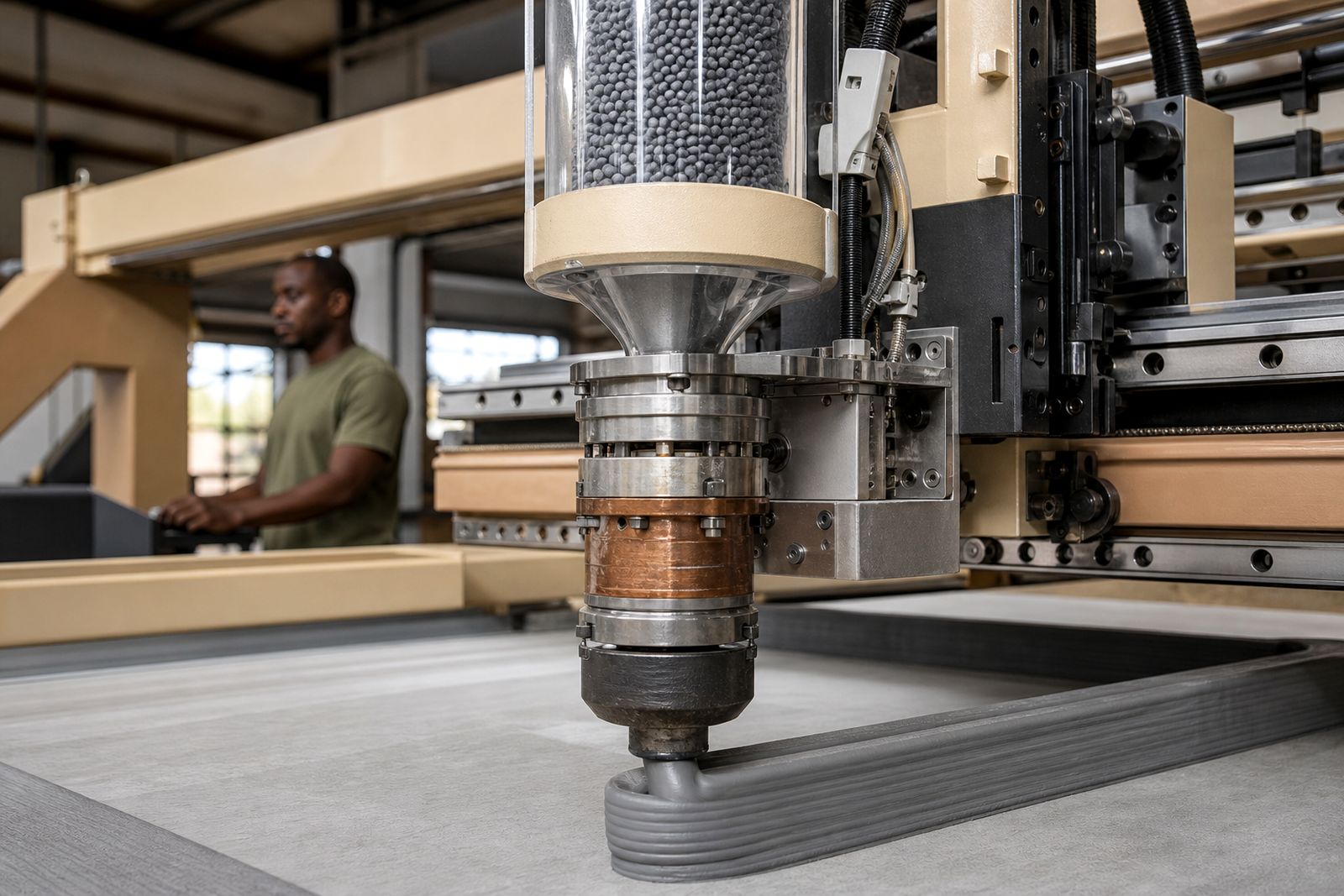
A pellet printer depends on the extruder head more than any other assembly. It meters, melts and pushes plastic granules through a nozzle sized for the part, the material and the finish you need.
How a screw extruder head works
Unlike a filament hot end, a pellet head uses a rotating screw inside a heated barrel. Pellets drop from the hopper into the screw channel, then the screw conveys, compresses and melts the material before it reaches the nozzle. That action gives steadier feed on large-format work where long print runs and thicker beads matter more than very fine detail.
The screw does more than move material forward. It mixes the melt, helps even out temperature across the plastic and builds the pressure needed for a stable bead. On furniture, moulds and display pieces this matters because bead consistency affects wall strength, layer bonding and the amount of hand finishing later. A head that is right for the polymer and the nozzle will usually print cleaner corners and more even start-stop points.
Because pellets behave differently from filament, the head must be matched to drying, feed rate and nozzle choice. A wet pellet stream, worn screw or nozzle that is too small for a filled grade can make the print rough very quickly, and thats usually visible within the first layers.
Nozzle sizes and what they change on the print
Nozzle diameter controls bead width, layer height range and how quickly the machine can lay down material. Smaller nozzles give tighter corners and a neater surface, but they reduce output and can struggle with some fibre-filled compounds. Larger nozzles move more material per pass and suit bulky parts, yet they leave a more pronounced layer line and need broader design features to look right.
- Smaller nozzles are better for finer edges, modest text size and parts where surface clean-up must be limited.
- Mid-range nozzles suit mixed work such as benches, planters, thermoforming tools and display forms.
- Larger nozzles suit thick-walled furniture shells, mould blocks and structural pieces where print time matters more than cosmetics.
- Layer height is normally set as a fraction of nozzle diameter, not as an isolated number.
In practice, nozzle selection is tied to the polymer, the screw output and the motion system. A nozzle that works well in PLA may not be the best choice for PP or a glass-filled grade. If the part needs broad flat walls and steady production, a wider nozzle often gives a better result than pushing a small nozzle too hard.
Material fit, wear and working limits
These heads are used with pellet materials such as PLA, PETG, ABS, PP and selected fibre-filled grades. Each polymer family has its own melt behaviour, shrink profile and sensitivity to moisture. PETG and filled materials can print very well through pellet systems, but drying and temperature control need closer attention. PP can be excellent for some mould and industrial work, although warpage management and bed adhesion need planning.
- Standard nozzles suit unfilled and lightly filled materials used for furniture and visual parts.
- Wear-resistant nozzle and screw options are the better choice for carbon or glass-filled compounds.
- Moisture-sensitive pellets should be dried to the material requirement before they reach the barrel.
- Frequent colour or polymer changes need purge planning to avoid contamination in the melt zone.
There are also jobs where a pellet head is not the right answer. Very small lettering, sharp cosmetic detailing, thin snap-fit features and near-polished visible faces usually need a different process or much more finishing time. A large-format pellet printer is at its best when the design accepts a visible bead pattern and dimensions are driven by function first, looks second.
Where this setup suits production best
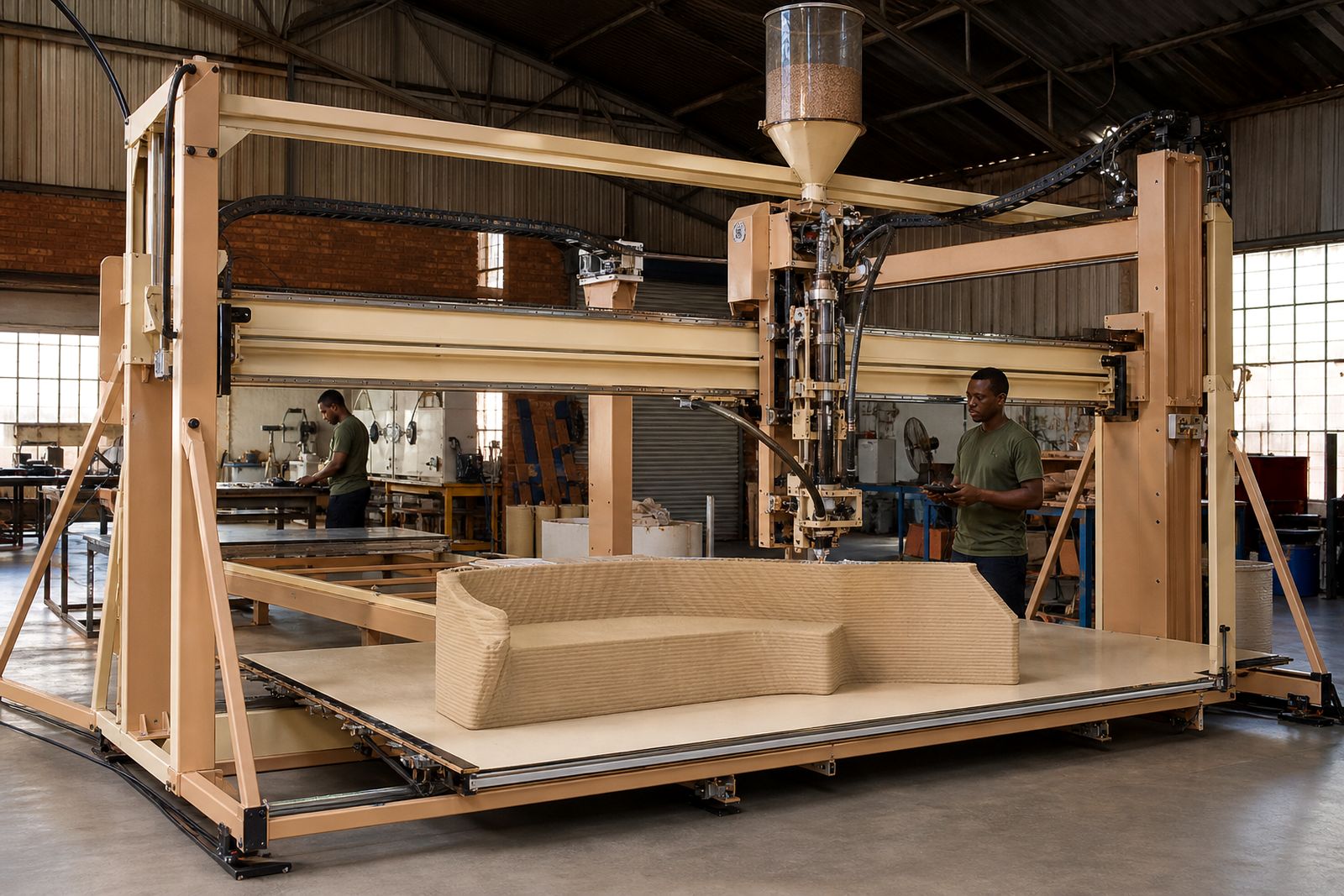
Screw extruder heads make sense where parts are physically large and the cost of filament would be hard to justify. In South African workshops this often means furniture components, benches, planters, exhibition forms, foundry patterns, thermoforming moulds and composite layup tools. They also suit teams that want to test recycled or regrind pellet streams under controlled conditions rather than rely only on spool material.
For mould and tooling work, a pellet head gives useful output on thick sections and broad surfaces. For furniture, it allows wider bead strategies that can become part of the look rather than something to hide. Where the brief calls for compact features, tiny radii or fine ornamental detail, the process can still work but it may not be the best use of the machine.
We advise on matching the head and nozzle to the parts you intend to make, not only to the machine frame. That matters because a planter, a chair shell and a thermoforming tool all place different demands on bead width, cooling and material stability.
Installation needs and day-to-day care
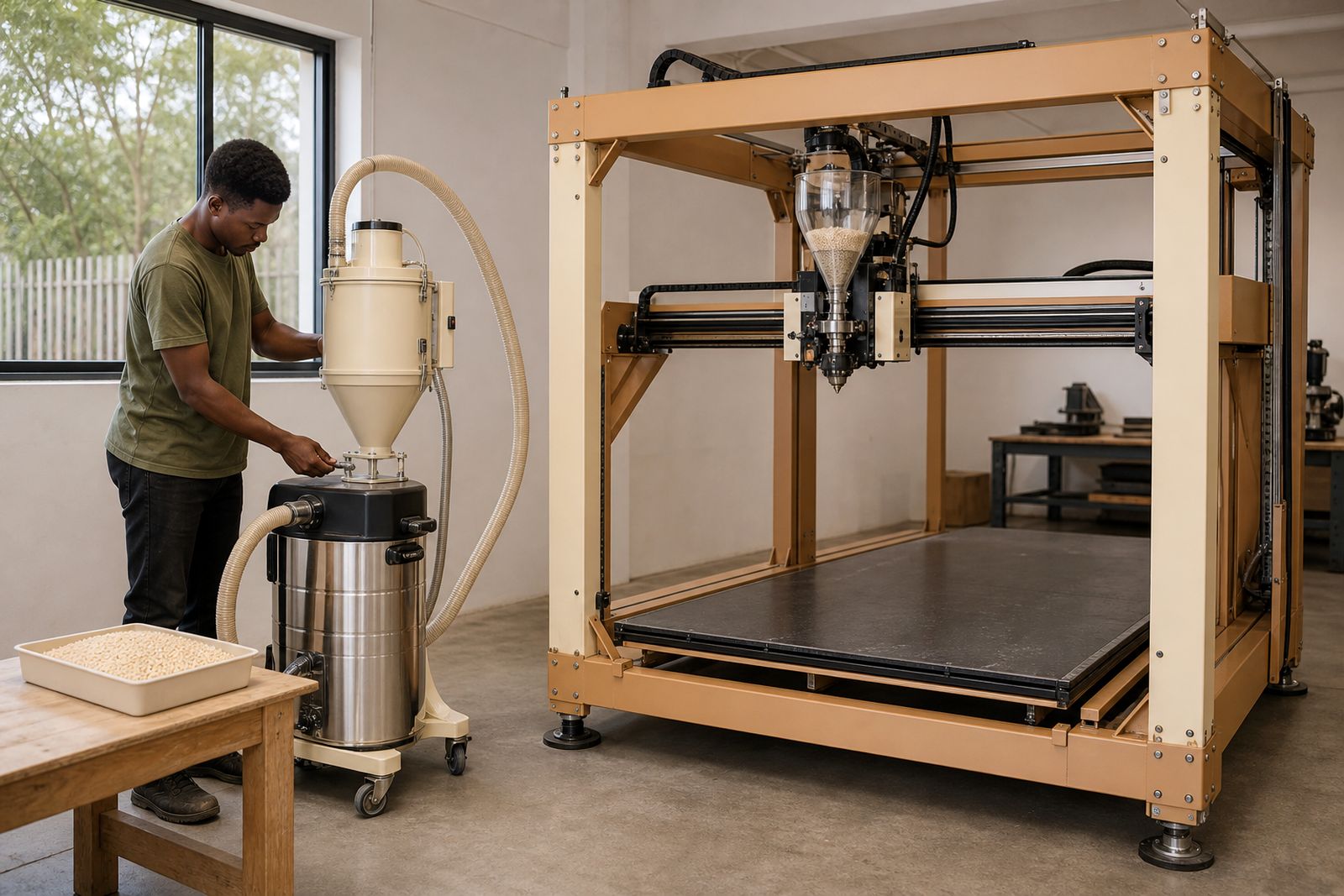
The extruder head is only one part of the print system, so site setup needs to account for feed path, pellet drying and access for cleaning. In Midrand and across inland factory areas dust control matters, while in coastal workshops humidity usually makes pellet storage and drying more critical. Stable mains power is important because barrel heaters, drives and controls must hold temperature consistently through long prints.
- Allow room for hopper access, nozzle changes and safe barrel maintenance.
- Keep pellets sealed and off the floor, especially in humid conditions.
- Use the correct drying setup for hygroscopic materials before and during printing where needed.
- Inspect the nozzle face, heater connections and thermocouple seating as part of normal shutdown checks.
- Schedule cleaning and wear inspection after abrasive filled materials.
Routine care is mostly practical workshop discipline. Clean pellets, the right temperatures and timely wear checks prevent many extrusion faults before they start. If output begins to fluctuate, stringing increases or the bead shape becomes irregular, the nozzle, screw wear and pellet condition should be checked first.
Details to include when you ask about a head or nozzle
When we help with an extruder head setup, the useful starting point is the job itself. A machine making benches or moulds needs a different balance from one making show pieces with tighter visual demands. Send the basics through our contact form and we can match the head, nozzle and material route more sensibly.
- The kind of parts you want to print, such as furniture, tooling or display forms.
- The main material you plan to run, including any fibre-filled or recycled content.
- The largest wall thicknesses and the level of surface finish you expect off the machine.
- Whether you want quicker output, finer appearance, or a balance between the two.
- Your workshop location, because humidity and operating conditions affect pellet handling.
- Whether you need installation guidance, operator training or ongoing service support.
If you already have sample geometry or photos of current parts include those too. That makes it easier to judge whether a smaller or larger nozzle will suit the work, and whether the material path needs extra drying or wear protection.
What our Pellet 3D Printing customers say
Verified Google reviews
Questions we get asked
Can one extruder head run different pellet materials?
Yes, provided the head is configured for the material family and the changeover is managed properly. Temperature settings, drying and purge practice matter when moving between polymers or colours.
Does a larger nozzle always mean better productivity?
Not always. A larger nozzle can raise output, but it also changes surface texture, corner definition and minimum feature size. The best choice depends on the part, not only on speed.
Are fibre-filled pellets suitable for these heads?
They can be, but abrasive grades need suitable wear parts and sensible maintenance intervals. Drying and nozzle selection are also more important with filled materials.
Tell us about the job
Send sizes, materials and where you are through our contact form, and we will come back with the practical options.
Open the contact form